Once a barn is designed and built correctly, the next question becomes simple—but critical:
What is the best way to water horses in daily life—for your horses, your staff, your climate, and your budget?
This article looks beyond plumbing and fixtures and focuses on real-world operation:
- how horses actually drink
- how different systems affect daily chores
- how climate changes the equation
- and what watering really costs over time
Why Watering Choices Matter More Than Most People Think
Water is the single most important nutrient a horse consumes.
- 5–10 gallons per day at rest
- 10–15+ gallons per day in hot weather, during training, or while lactating
Inadequate or inconsistent water intake contributes directly to:
- colic
- dehydration
- poor performance
- reduced feed intake
- preventable health emergencies
The best watering system is the one that:
- horses use willingly
- staff can maintain consistently
- works reliably in your climate
- fits your daily workflow
A watering system that looks good on paper but fails in daily reality will eventually cost you—in time, labour, or horse health.
How Horses Actually Drink (For Non-Horse People)
Horses prefer to drink:
- with their head lowered
(typical water height: 24–28 inches for horses 16 hands and over) - from a stable, predictable water source
- without startling noises or sudden movement
- without competition or obstruction
Horses are creatures of habit. Sudden changes in water style, water temperature and water access often result in reduced intake, especially during:
- travel
- illness
- stress
This is why design and consistency matter just as much as the fixture itself.
Buckets 101: What They’re Really Like Day to Day
Best Suited For
- Private barns
- Small operations
- Horses needing close monitoring
- Temporary or flexible stall use
What Owners Like
- You can see exactly how much the horse drank
- Easy to add electrolytes or medication
- Familiar, simple, trusted
What Owners Often Underestimate
- Time commitment (every day, no exceptions)
- Winter frustration if not planned properly
- Increased bedding use from spills
- More frequent cleaning to prevent contamination
When Buckets Work Best
- When water access is fast and convenient
- When staff numbers are low but consistent
- When climate allows easy filling year-round
Buckets Fail When
- hoses freeze
- water access is far away
- staff rush or skip cleanings
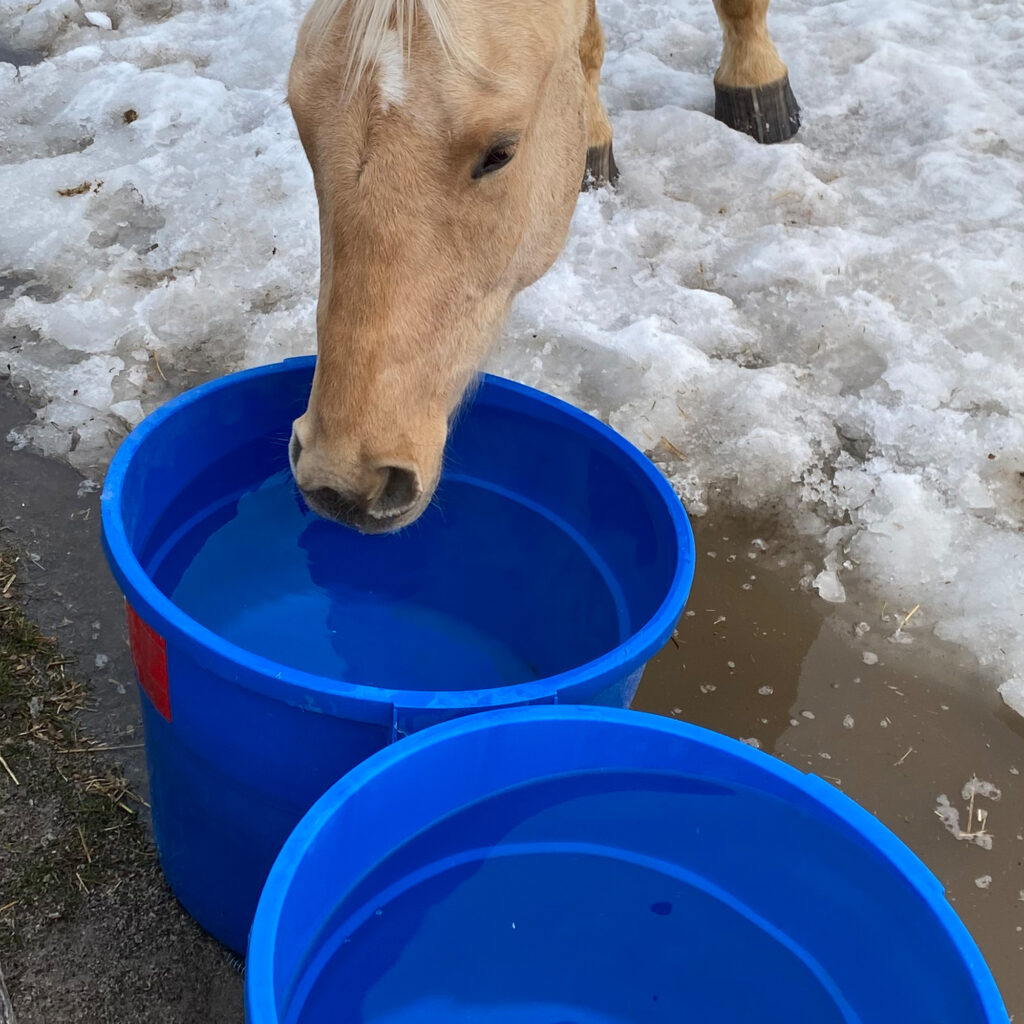
Buckets with Shut-Off Valves: An Owner’s Perspective
This option often surprises owners who haven’t seen it before.
Why Owners Love It
- Walk the aisle, turn valves, fill buckets—done
- No hoses
- No lifting
- No guessing how much the horse drank
- Two buckets provide redundancy and peace of mind
Daily Reality
- Faster than hose-filled buckets
- Cleaner aisles
- Very intuitive for staff and boarders
Key Limitation
This system only works in non-freezing environments. If you get overnight freezes, this is not the right solution.
Automatic Waterers: What Owners Need to Know
Why Many Barns Choose Them
- Major labour savings
- No daily filling
- Clean, uncluttered stalls
- Excellent for larger barns or limited staff
Common Concerns (And The Reality)
“I can’t tell how much my horse drank.”
True—unless:
- staff are trained to observe behaviour
- metered systems are used
- buckets are temporarily used for monitoring
“What if it breaks?”
That’s why:
- stall-level shutoffs matter
- hybrid systems (bucket hook backup) are smart
“Will my horse use it?”
Most horses adapt quickly, but:
- some prefer float bowls over paddles
- nervous horses may need a short transition
At System Equine, we’re proud to provide our customers with a wide range of watering solutions and automatic waterers – including the Drinking Post! Learn more about the Drinking Post Automatic Waterer in this helpful video.
Push / Paddle vs Float Bowl (Simple Explanation)
Float Bowl
- Always has visible water
- Familiar to many horses
- Can collect debris if not cleaned
- Can stick and overflow if neglected
Push / Paddle
- Water flows only when pressed
- Often stays cleaner
- Requires learning and confidence
Neither is “better”. It depends on:
- horse temperament
- barn preference
- maintenance routine
The Hybrid Approach: Why Many Professionals Choose It
What it looks like:
- Automatic waterer for daily use
- Bucket hook available for:
- illness
- travel recovery
- medication
- emergencies
Why it works:
- Best of both worlds
- No single point of failure
- Flexible as needs change
This is increasingly considered best practice in modern barns.
Climate Reality Check
Cold Climates
- Buckets require heated options and power
- Hoses freeze
- Automatic waterers must be properly designed
- Frost-free systems save time and frustration
Warm Climates
- Buckets with valves shine
- Automatic waterers are simpler to maintain
- Freeze protection is less complex
The wrong system in the wrong climate leads to daily frustration.
Matching the System to the Type of Barn
Private / Hobby Barn
- Buckets or bucket + valve systems
- Simplicity and visibility matter most
Boarding Barn
- Automatic waterers or hybrid systems
- Labour efficiency is critical
- Redundancy matters
Training / Performance Barn
- Automatic waterers + monitoring strategy
- Consistency and intake tracking matter
Breeding / Foaling Barn
- Buckets often preferred for monitoring
- Redundant water access is essential

The Real Cost of Watering: Labour Comparison
Example: 15-Stall Barn
Labour rate: $20/hour
Assumptions:
- Buckets filled 2× per day
- Automatic waterers checked daily + scrubbed weekly
- 365 days/year
Hand Watering with Buckets
Average time per stall per fill:
~2.5 minutes
Daily time:
15 stalls × 2 fills × 2.5 min
= 75 minutes/day (1.25 hours)
Labour cost
- Daily: $25/day
- Weekly: $175/week
- Yearly: $9,125/year
In winter or with poor hose access, this number often increases.
Automatic Waterers
Daily check:
~10 seconds per stall → ~2.5 minutes/day
Cleaning (averaged):
~3 minutes per stall, once per week
= ~6.5 minutes/day
Total daily time:
~9 minutes/day (0.15 hours)
Labour cost
- Daily: $3/day
- Weekly: $21/week
- Yearly: $1,095/year
Side-by-Side Summary
| Method | Time / Day | Cost / Year |
| Buckets (hand fill) | ~75 min | $9,125 |
| Automatic waterers | ~9 min | $1,095 |
Annual Labour Savings
$9,125 − $1,095 = $8,030 per year
That equals:
- ~400 labour hours per year
- ~50 full 8-hour workdays
- ~10 weeks of part-time labour
Final Takeaway: Finding Solutions to Water Horses on Your Farm
There is no single “best” way to water horses.
There is a best solution for:
- your climate
- your staff
- your horses
- your tolerance for daily maintenance
For more information or help finding the right solutions to water horses on your farm, contact our team of experts at System Equine today.