TL;DR:
- Horse fencing must prioritize visibility, strength, and smooth surfaces to prevent injuries.
- Proper installation and regular maintenance are essential for ensuring ongoing fence safety.
- Combining materials and following safety standards helps tailor fencing to horses’ behavior and risks.
Not every fence that works for cattle or sheep is safe for horses. Horses are athletes with a powerful flight response, and when they feel threatened, they run first and think second. That split-second reaction turns an ordinary fence into a potential hazard. Property fencing for horses means barriers designed specifically to contain horses safely while preventing the injuries that generic livestock fencing can cause. This guide covers what makes horse fencing different, the safety standards that matter most, the best material options, and how to install and maintain your fence so your horses stay protected year-round.
Table of Contents
- What is property fencing for horses?
- Safety priorities: What makes a horse fence truly safe?
- Popular types of horse fencing: Pros, cons, and how they compare
- Installation and maintenance: What horse owners must know
- Advanced tips: Edge cases, stallions, and combining fence types
- A new perspective on horse fencing: Beyond conventional wisdom
- Next steps: Find the right horse fencing solution
- Frequently asked questions
Key Takeaways
| Point | Details |
|---|---|
| Prioritize horse safety | Choose fencing with high visibility, horse-friendly materials, and proper height to reduce injury risks. |
| Match fence type to needs | Different fencing types offer unique pros and cons—combine materials for best results and use electric as a safe supplement. |
| Maintain regularly | Frequent inspections and timely repairs prevent most injuries and extend your fence’s useful life. |
| Consider special cases | Adjust design for stallions or paddocks by increasing height and adding electric strands for added security. |
What is property fencing for horses?
Horse fencing is not simply a boundary line. It is an active safety system. The goal is containment, yes, but the deeper purpose is injury prevention and support for natural equine behavior like grazing, moving freely, and interacting with herd mates.
“Property fencing for horses refers to barriers designed specifically to safely contain horses on a property, allowing exercise and grazing while preventing escapes and injuries due to their flight response and athletic nature.” — University of Georgia Extension
What makes horse fencing distinct comes down to biology. A horse’s first instinct under stress is to flee at speed. If a fence is in the way, the horse may crash through it, get tangled in it, or injure itself trying to jump it. That behavior profile creates challenges that fencing for cattle, sheep, or goats simply does not face in the same way.
Here is how horse fencing challenges differ from other livestock fencing:
- Strength and flexibility: Horses hit fences with far more force than most other livestock. A fence that holds a cow may shatter or create sharp edges under horse pressure.
- Visibility: Horses need to see the fence clearly. Low-visibility fencing like thin wire can be invisible at speed, leading to direct collisions and deep lacerations.
- Opening size: Horses can catch hooves and heads in openings that would safely contain cattle. Gaps that seem harmless become entrapment hazards.
- Height requirements: Horses, especially athletic breeds or stallions, can clear fences that would stop other animals without effort.
- Smooth contact surface: Barbed wire and rough metal edges that other livestock may brush against without major injury can cause severe cuts on horses.
Focusing on keeping horses safe means treating the fence as a piece of equipment that interacts directly with the animal, not just as a perimeter marker. Every material choice, post spacing decision, and height selection has a direct effect on horse welfare.
Safety priorities: What makes a horse fence truly safe?
Once you understand why horses need specialized fencing, the next step is knowing what a genuinely safe horse fence looks like. The safety factors are specific and measurable.
According to the University of Georgia Extension, safe horse fencing requires high visibility, sufficient strength and durability, smooth horse-friendly materials without sharp edges or barbs, a minimum perimeter height of 5 feet (60 inches), interior fence height of at least 4.5 feet (54 inches), and a bottom clearance of 6 to 8 inches off the ground.
Here is a checklist of the core safety priorities to evaluate any fence:
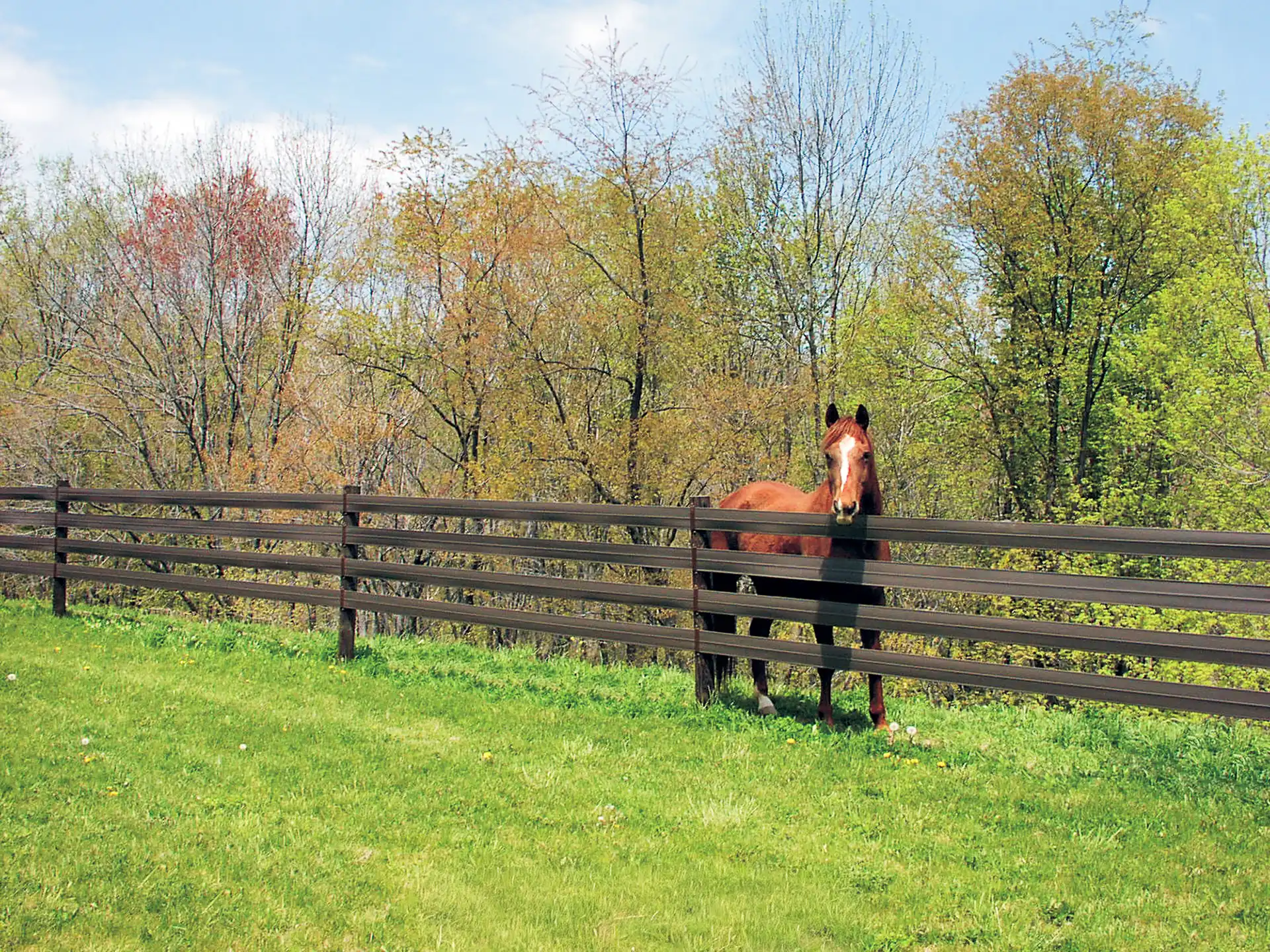
- High visibility: Horses must be able to see the fence at a distance, especially when moving fast. White board fencing, wide-tape electric fencing, and coated polymer rails are all strong choices.
- No sharp edges or barbs: Fence-related lacerations are among the most common horse injuries, and they are largely preventable with smooth materials over barbed or rough wire options.
- Correct height: 5 feet for exterior perimeters and 4.5 feet for interior paddock divisions. Anything shorter invites jumping attempts and neck-reaching behavior that can lead to entrapment.
- Adequate bottom clearance: 6 to 8 inches off the ground prevents horses from pawing under the fence and catching a hoof.
- Post placement on the horse’s side: Interior posts on the horse’s side create a smooth surface on the interior and reduce the risk of impact injuries.
- No large openings: Vertical gaps larger than 4 inches can catch a hoof or head, turning a calm moment into a serious emergency.
Pro Tip: Walk your fence line once a month. Look for sagging wire, broken rails, loose staples, and posts shifting in the ground. Most fence-related injuries happen because a small maintenance issue was left unaddressed. Catching problems early takes minutes. Treating a laceration takes much longer and costs far more.
Reviewing fence safety for horses is not a one-time task. Conditions change with seasons, and horses test boundaries constantly.
Popular types of horse fencing: Pros, cons, and how they compare
Choosing the right fencing material means balancing safety, cost, maintenance, and your specific horses’ needs. Here is a breakdown of the three most common options:
| Material | Safety rating | Upfront cost | Maintenance level |
|---|---|---|---|
| Rail/plank (wood, PVC, polymer) | High | Medium to high | Low to medium |
| Mesh wire (no-climb, 12.5 gauge) | High | Medium | Low |
| Electric (tape or polywire) | Medium (as supplement) | Low | Medium |
| Barbed wire | Very low | Low | Low |
Rail and plank fencing is the gold standard for horse visibility and aesthetic appeal. Wood rails are traditional and impact-absorbent, though they require regular painting and can splinter. PVC and polymer options with high-tensile wire inserts offer durability with less upkeep. The University of Georgia Extension horse fencing types guide recommends rail/plank fencing for its high visibility and safe impact response.
- Pros: Excellent visibility, smooth surface, strong horse impact resistance
- Cons: Higher upfront cost, wood requires regular maintenance
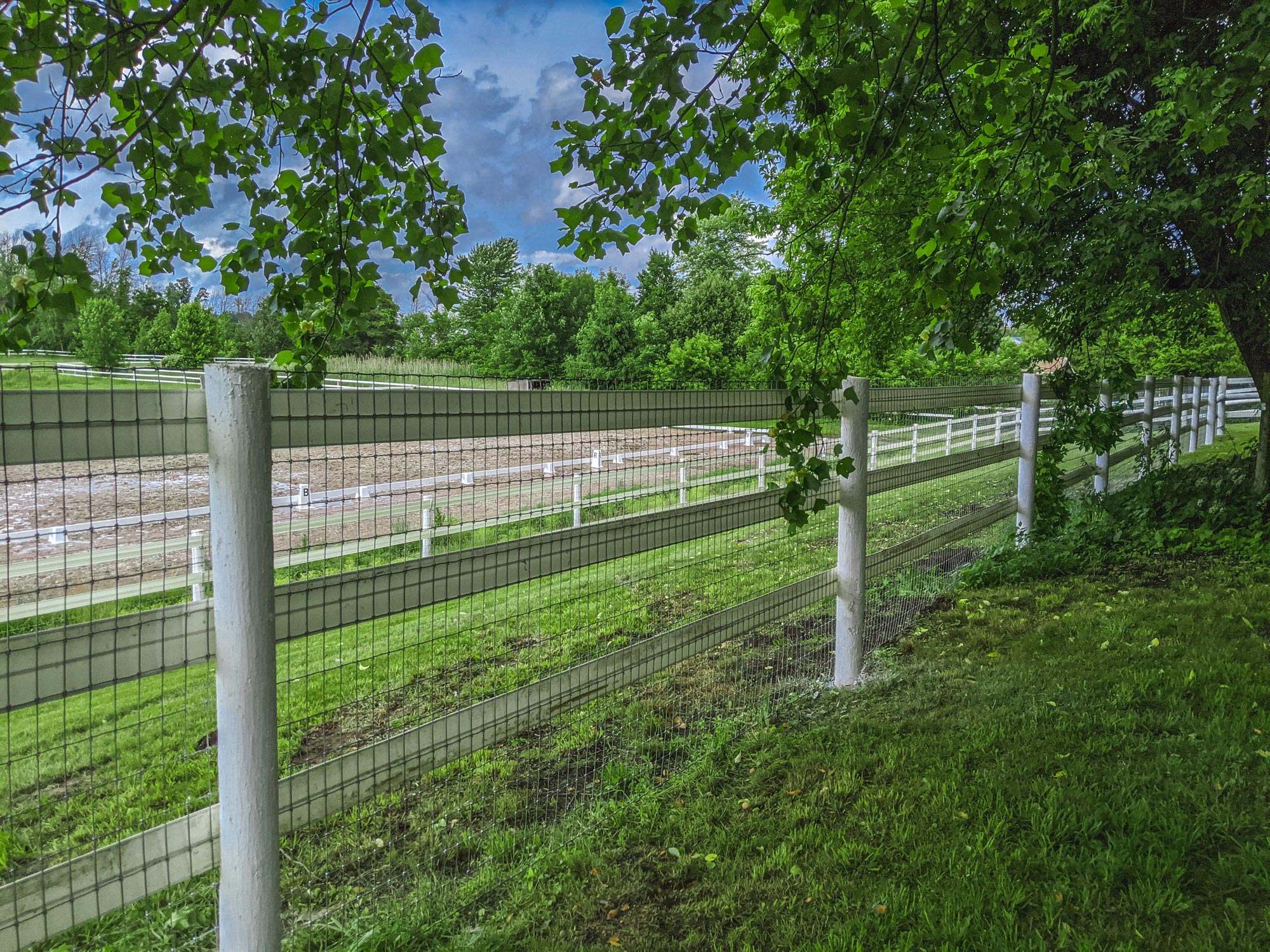
Mesh wire fencing (no-climb or square-knot design, minimum 12.5 gauge) provides solid containment while keeping openings small enough to prevent hoof and head entrapment. It works especially well for smaller paddocks and mixed herds.
- Pros: Strong containment, prevents entrapment, long lifespan
- Cons: Lower visibility than rail, horses can push against it
Electric fencing using visible tape or polywire is best used as a supplement rather than a standalone system. It is cost-effective for temporary divisions. If you are introducing horses to electric fences for the first time, a careful training period is essential.
- Pros: Affordable, flexible, effective behavioral deterrent
- Cons: Requires reliable power and grounding, not suitable as primary containment
Barbed wire and standard farm woven wire with large openings should be avoided entirely for horses. The injury risk is simply too high.
Installation and maintenance: What horse owners must know
Even the best fencing material fails if it is installed incorrectly. Proper installation is what turns a good product into a dependable safety system.
Here are the essential installation steps to follow:
- Set posts on the horse’s side of the fence. This keeps the smooth interior surface facing the paddock and reduces injury risk from post edges on impact.
- Space posts correctly. Eight to twelve feet apart is standard depending on material. Closer spacing improves strength for high-traffic areas.
- Tension wire and rails properly. High-tensile wires need periodic tightening over time as ground shifts and material settles. Sagging wire is a leading cause of entanglement injuries.
- Ground electric fences correctly. Poor grounding is one of the most common electric fence failures. A fence that does not deliver a consistent charge stops being a deterrent quickly.
- Combine fence types where needed. Adding a top rail to mesh wire improves visibility dramatically. Perimeter areas benefit from mesh plus a visible top element.
Maintenance routine to follow every month:
| Task | Frequency | Why it matters |
|---|---|---|
| Check wire tension | Monthly | Prevents entanglement |
| Inspect for broken rails | Monthly | Prevents splinter injuries |
| Test electric fence charge | Weekly | Ensures containment |
| Check post stability | Seasonally | Prevents fence collapse |
| Inspect bottom clearance | Monthly | Prevents hoof entrapment |
Knowing the signs you need new horse fencing can prevent a maintenance issue from becoming a serious safety problem. When posts are rotting, rails are cracking repeatedly, or wire is constantly sagging, replacement is more cost-effective than ongoing repairs.
Pro Tip: Always repair wire or rails at the first sign of slack or damage. A fence that is 90% intact is not 90% safe. One weak section is all it takes for an injury or escape.
For complex installations, professional horse fence installation ensures the job is done right from the start.
Advanced tips: Edge cases, stallions, and combining fence types
Most guides cover the basics well. But there are situations that require extra consideration, and missing them can mean serious problems down the road.
Stallions and high-energy horses need fences built to a higher standard. The University of Georgia Extension recommends fence height to horse eye level, roughly 4 to 6 inches above the withers, for stallion paddocks. An electric top strand on shared fences adds an additional deterrent against reaching over or challenging the boundary.
Here are advanced considerations for specific situations:
- Shared paddock boundaries: When two groups of horses share a fence line, double-fence the boundary with a gap of at least 4 feet. This prevents horses from injuring each other through the fence.
- Combining mesh with a top rail: Mesh wire provides containment while a wood or polymer top rail adds the visibility horses need. This combination addresses two critical safety needs at once.
- Gap control: Vertical gaps over 4 inches are a serious risk for head and hoof entrapment. Mesh wire with small openings is the best solution for areas where horses crowd the fence.
- Corner design: Rounded or angled corners reduce the risk of horses trapping themselves when panicking and running along the fence line.
“Expert consensus from university extensions prioritizes visibility and smooth contact over mere containment, as horses challenge fences by running into or pawing them rather than breaking through like cattle.”
For a thorough overview of all options, the complete horse fencing guide covers regional considerations and material combinations in greater depth.
A new perspective on horse fencing: Beyond conventional wisdom
Here is something most people do not realize until they have dealt with a fence-related injury: the true cost of cheap or generic fencing is not the repair bill. It is the vet bill, the lost training time, the stress on the horse, and the anxiety that follows every time you turn your animal out.
Most conventional advice focuses on containment strength and upfront cost. That framing misses the point entirely. A fence’s real job is safe contact. Horses will always test boundaries. The question is what happens when they do.
We believe the most undervalued quality in any horse fence is visibility, not strength. A horse that can see the fence does not run into it. That single factor prevents more injuries than any gauge of wire or thickness of post.
We also encourage horse owners to stop treating fencing as a one-time capital decision. Review your fence every season. Materials improve. Flexible fencing solutions now exist that were not available a decade ago. Staying current with what is available is part of responsible horse ownership.
Next steps: Find the right horse fencing solution
You now have a clear picture of what makes horse fencing different, which materials perform best, and how to keep your setup in safe working condition year-round. The next step is putting that knowledge to work.
At System Equine, we have been designing and supplying equestrian fencing since 1987. Our range of horse fencing options covers every property size and horse type, from small private paddocks to large commercial operations. Whether you need guidance on materials, a custom layout, or professional installation support, we are here to help. Visit our fence safety guide or contact our team directly for personalized recommendations based on your specific property and herd needs.
Frequently asked questions
Why are standard livestock fences unsafe for horses?
Horses are more prone to fence injuries than other livestock because of their flight response, which causes them to collide with or become entangled in fencing that lacks visibility or smooth surfaces. Standard livestock fencing is not designed with these risks in mind.
What is the minimum recommended fence height for horses?
Perimeter fences should be at least 5 feet tall, and interior divisions need a minimum of 4.5 feet for safe containment. These minimum height requirements are based on the athletic ability and behavior of horses under stress.
Can electric fences be used for horses?
Yes, electric fences work well as a supplement when they use visible tape or polywire and are properly powered and grounded. They are not recommended as a standalone primary fence for horses.
How often should horse fences be inspected?
Inspect your horse fence at minimum once a month and always after severe weather. Regular inspections catch loose wires, broken rails, and grounding issues before they cause injury.
Recommended
- How fencing keeps horses safe: expert guide for farm owners
- How To Choose The Right Electric Fence – System Equine
- How To Introduce Your Horses To Electric Fences Safely (Guide)
System Equine — Your Equine Solutions Partner
Don’t forget to follow us on social media to see more of our work!