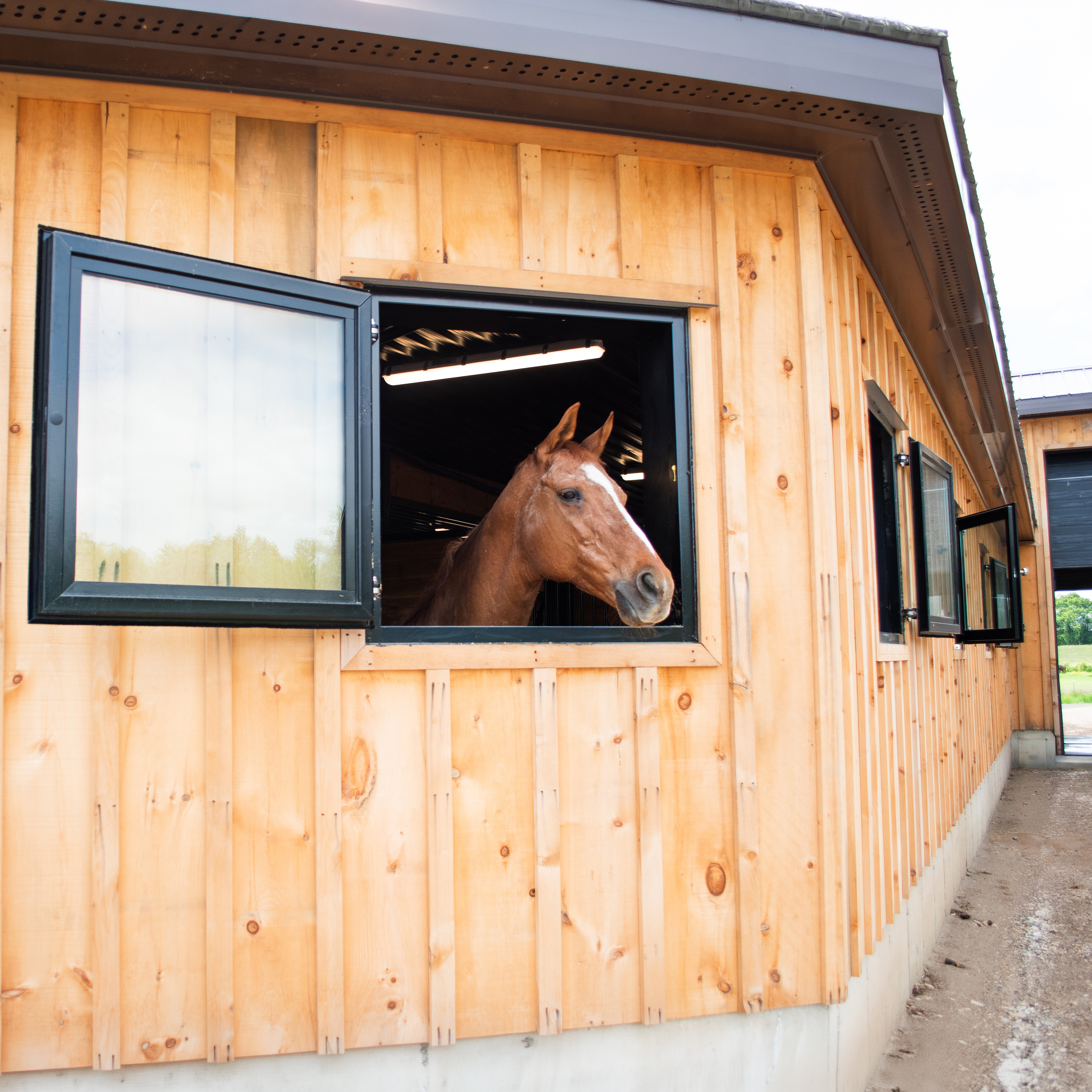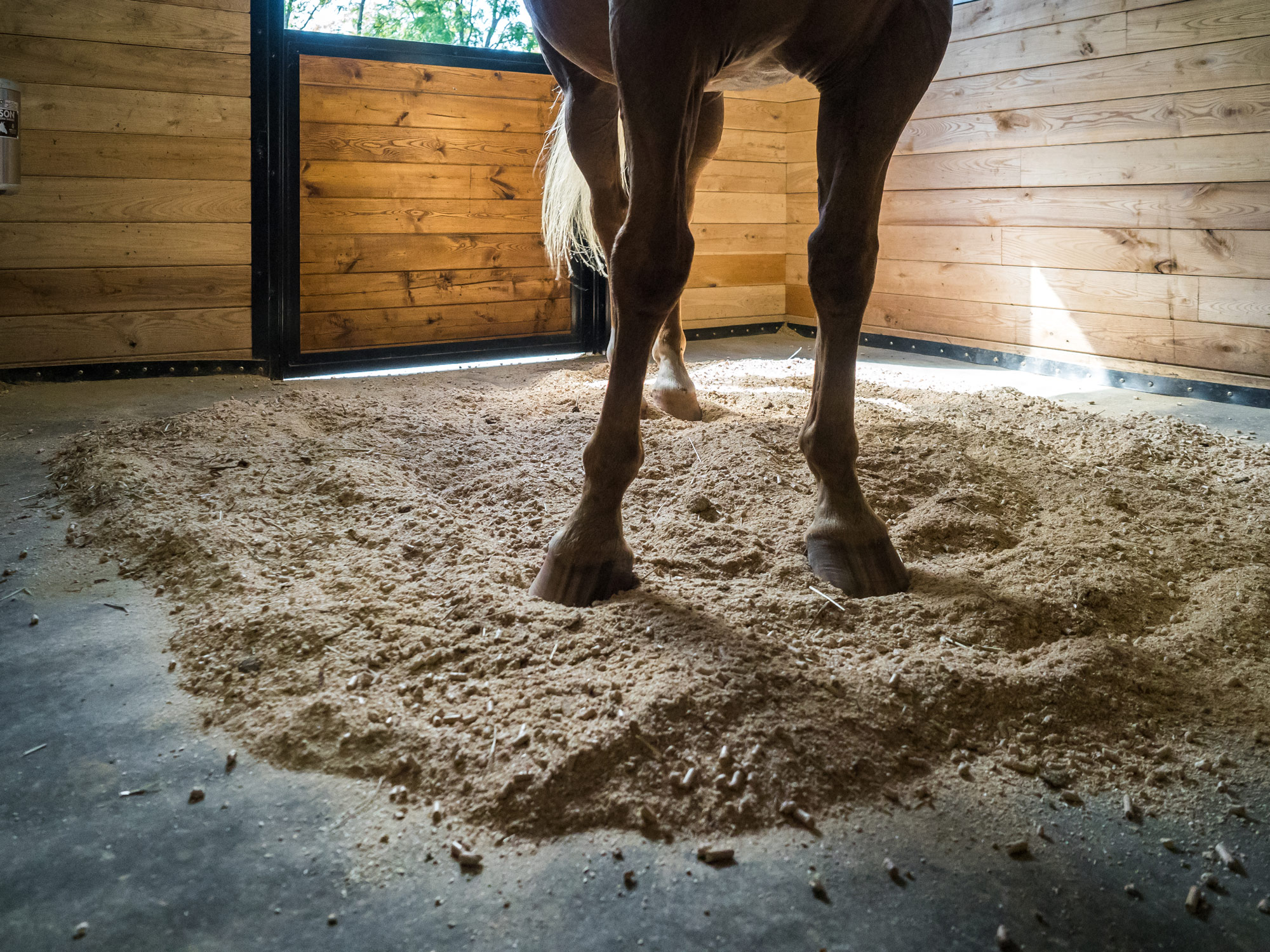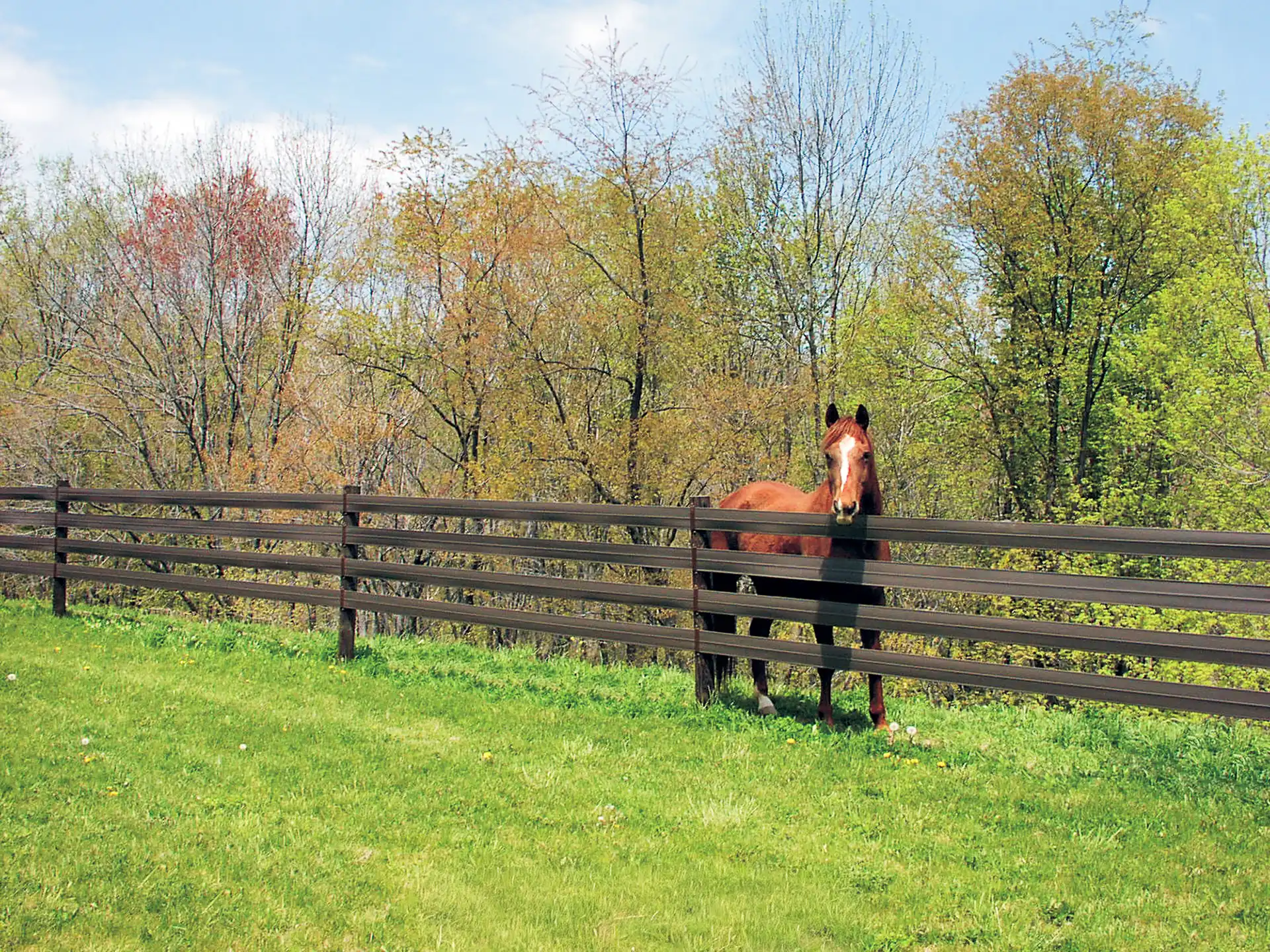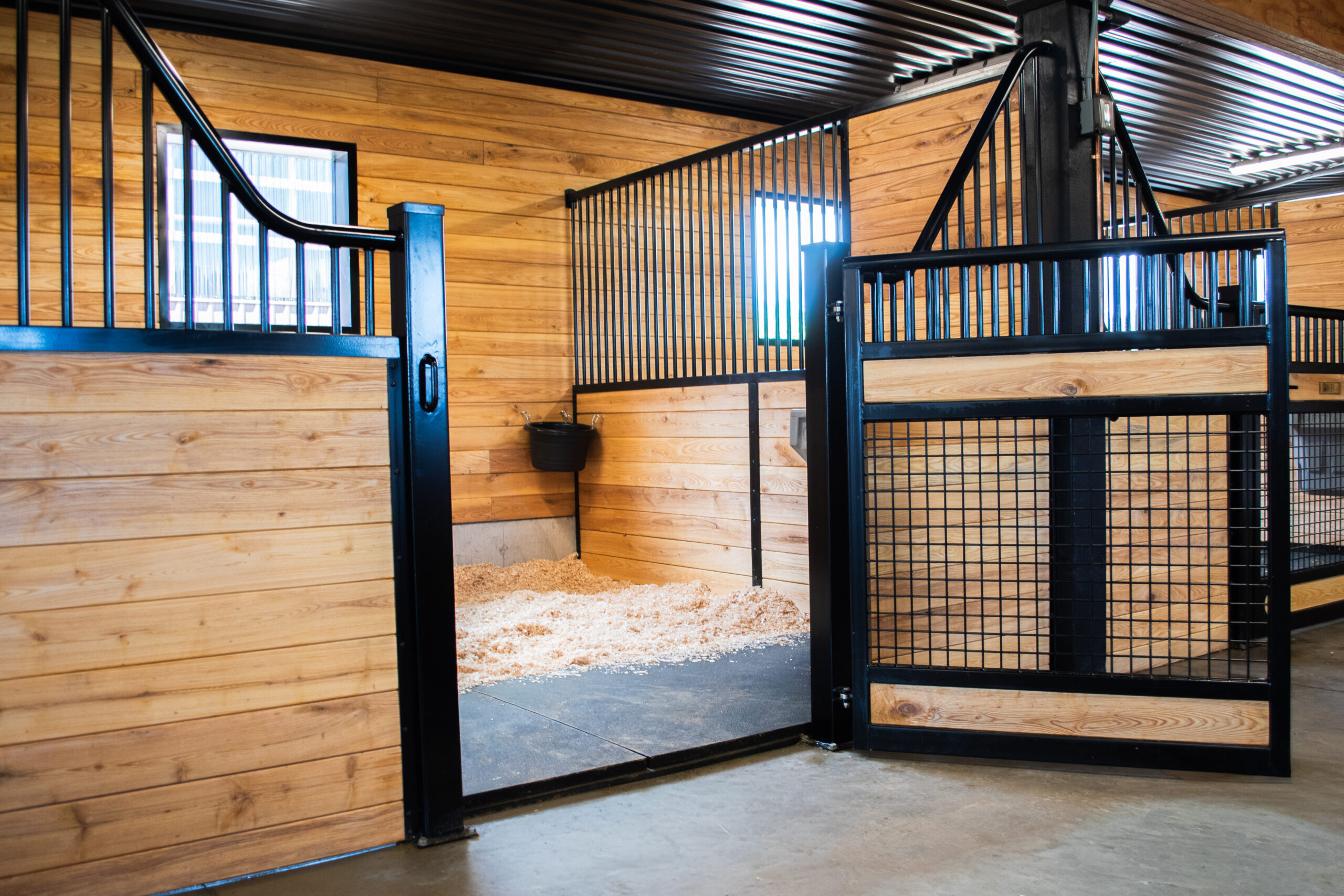
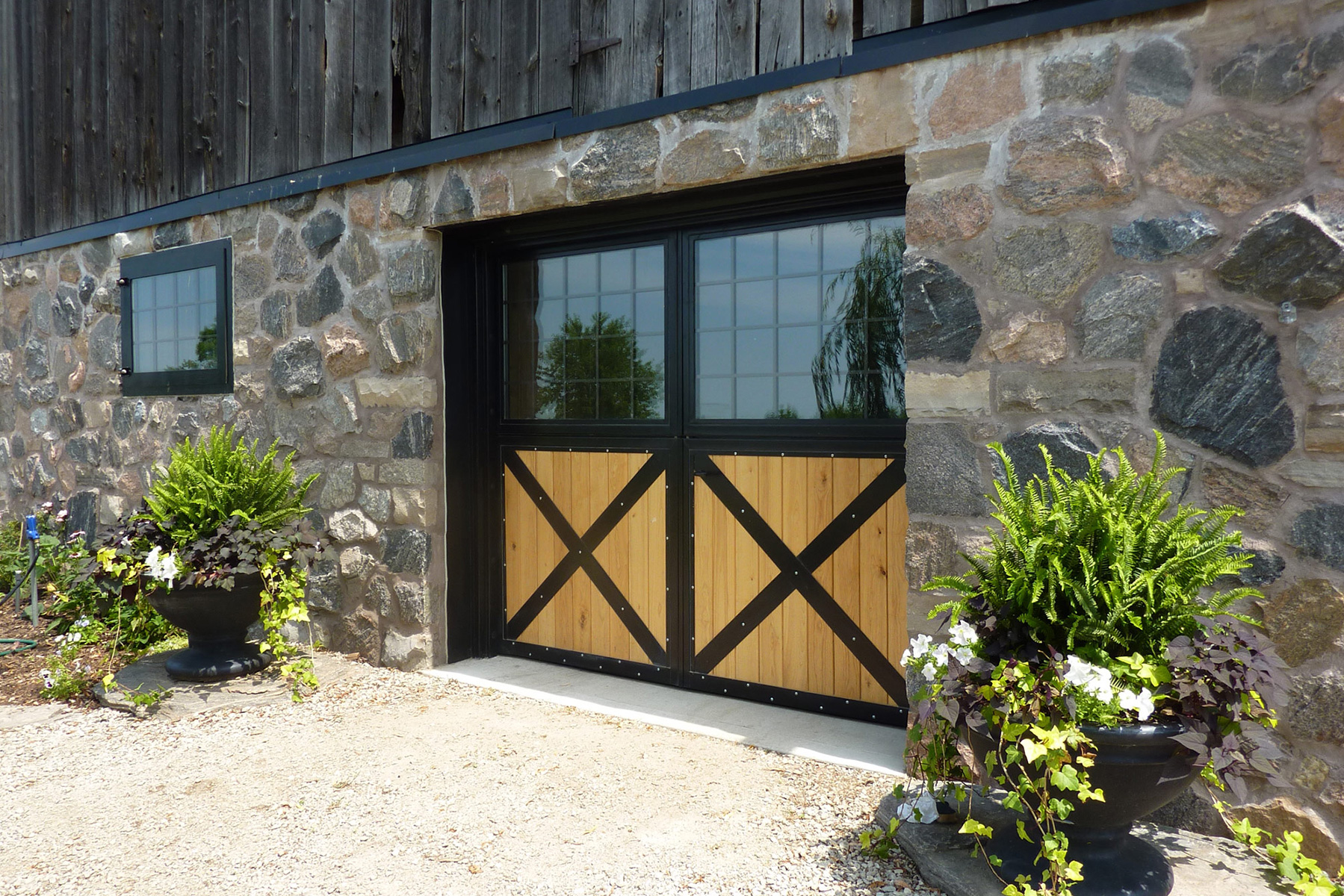
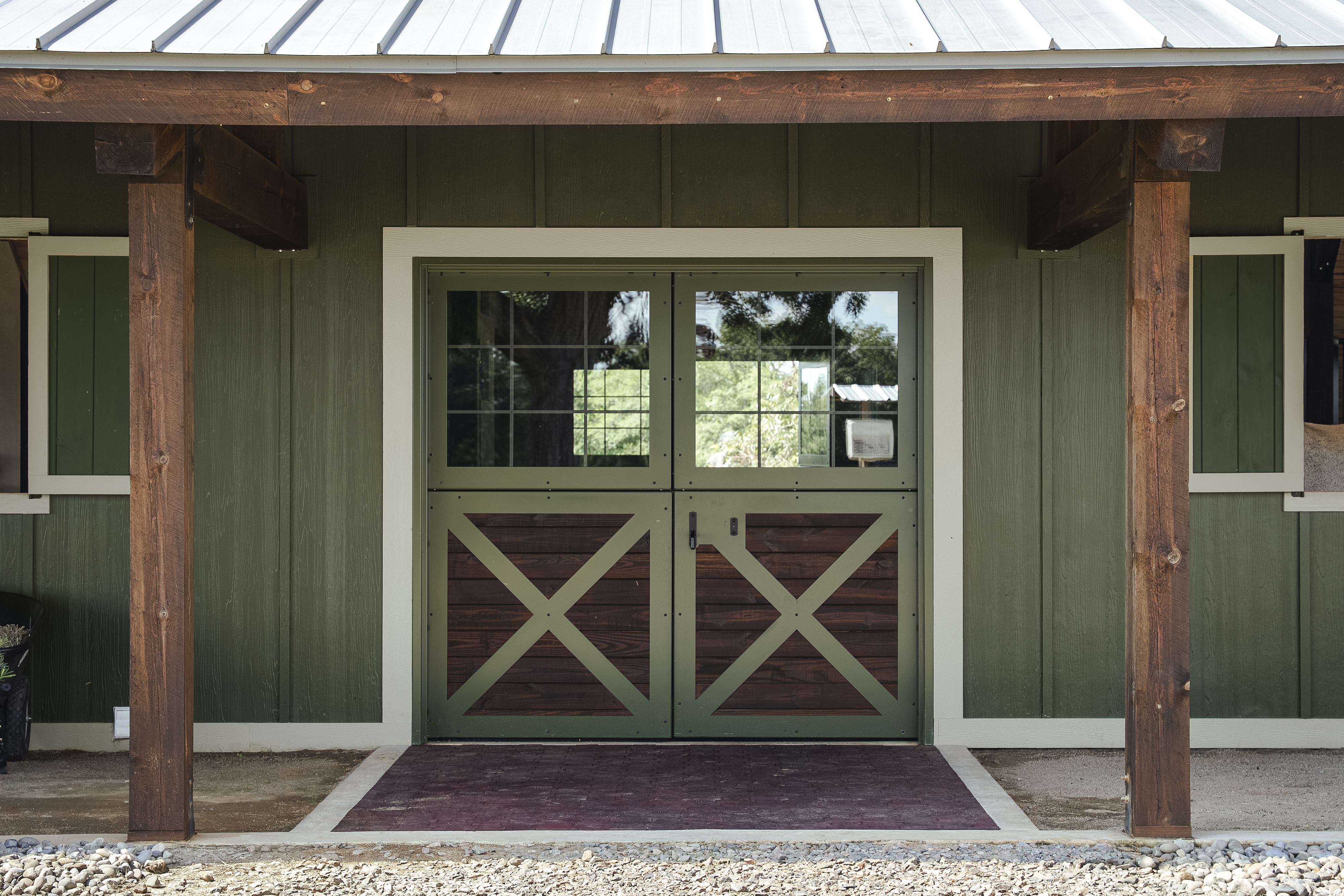
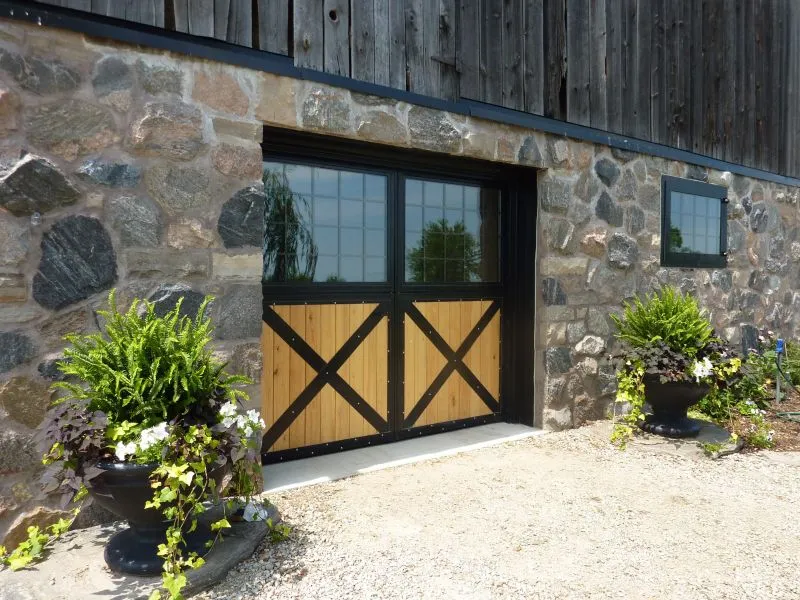
Barn Dutch Doors (also known as stable doors) are split horizontally, so the top and bottom sections operate independently. This allows airflow, visibility, and horse interaction while maintaining containment and safety.
This guide is written so barn owners, architects, and contractors can decide:
- whether Dutch doors are right for the barn
- which configuration to choose
- how to install them correctly
- what hinges and latches to spec
1. Why Dutch Doors Are Used in Horse Barns
Key benefits
- Ventilation and natural light
- Horse socialization and visibility
- Weather control (bottom closed, top open)
- Quick monitoring without entering stall
- Classic barn aesthetics and property value boost
Potential drawbacks
- Snow buildup and wind exposure (cold climates)
- More hardware and alignment required
- Horse chewing and kicking risk (requires protection plates)
Decision insight:
Dutch doors work best where turnout access, airflow, and horse visibility are priorities.

Configuration Options for Barn Dutch Doors (Critical Decision)
A. Single Barn Dutch Doors
Use When:
- Standard stall or paddock access
- Low traffic openings
- One horse per opening
Pros:
- Simpler hardware
- Lower cost
- Easier installation
Cons:
- Limited opening width
- Large doors can be heavy
- Make sure you choose a double latch for horses that kick
B. Double Dutch Doors (French-Style)
Use when:
- Large paddock openings
- At the end of barn Aisleways
- Equipment movement
- High-end barns
CRITICAL Design Rule:
Identify the primary daily-use leaf (active door)
- Secondary door gets Top bolts and cane bolts
- Primary door receives main latch and handle
This ensures smooth daily operation and avoids both doors moving.
3. Swing Direction Options (Major Design Choice)
Swing Out
Pins back against the barn wall(recommended for paddock doors).
PRO TIP:
Doors to swing and lock against the wall, need to be installed to the outside finish wall of the barn. Often that means the footing wall is not out far enough. See our guide on Guide to Contractors and Architects when designing your horse barn.
Pros:
- Prevents horse pushing door open
- Improves interior stall space
- Better drainage and bedding management
Cons:
- Requires clearance outside
- Snow buildup risk
Swing In
Not recommended for single doors into a stall.
Pros:
- Protected from weather
- Good for covered aisles
Cons:
- Takes interior stall space
- Horse pressure risk
Hardware Options (Hinges, Latches, Holdbacks)
Hinges (performance-critical)
Adjustable heavy-duty barn hinges
✔ Alignment correction
✔ Door sag preventionDelrin Washer inside
✔ Stainless Steel
✔ Door sag prevention
✔ Ideal for steel Dutch doors
Strap hinges
✔ Rustic look
✔ Strong load capacity
Butt hinges
✔ Hidden installation
✔ Single-direction swing
Best practice:
Use adjustable stainless hinges for barn Dutch doors to compensate for settling and seasonal movement.
Latch Options
Common hardware combinations include:
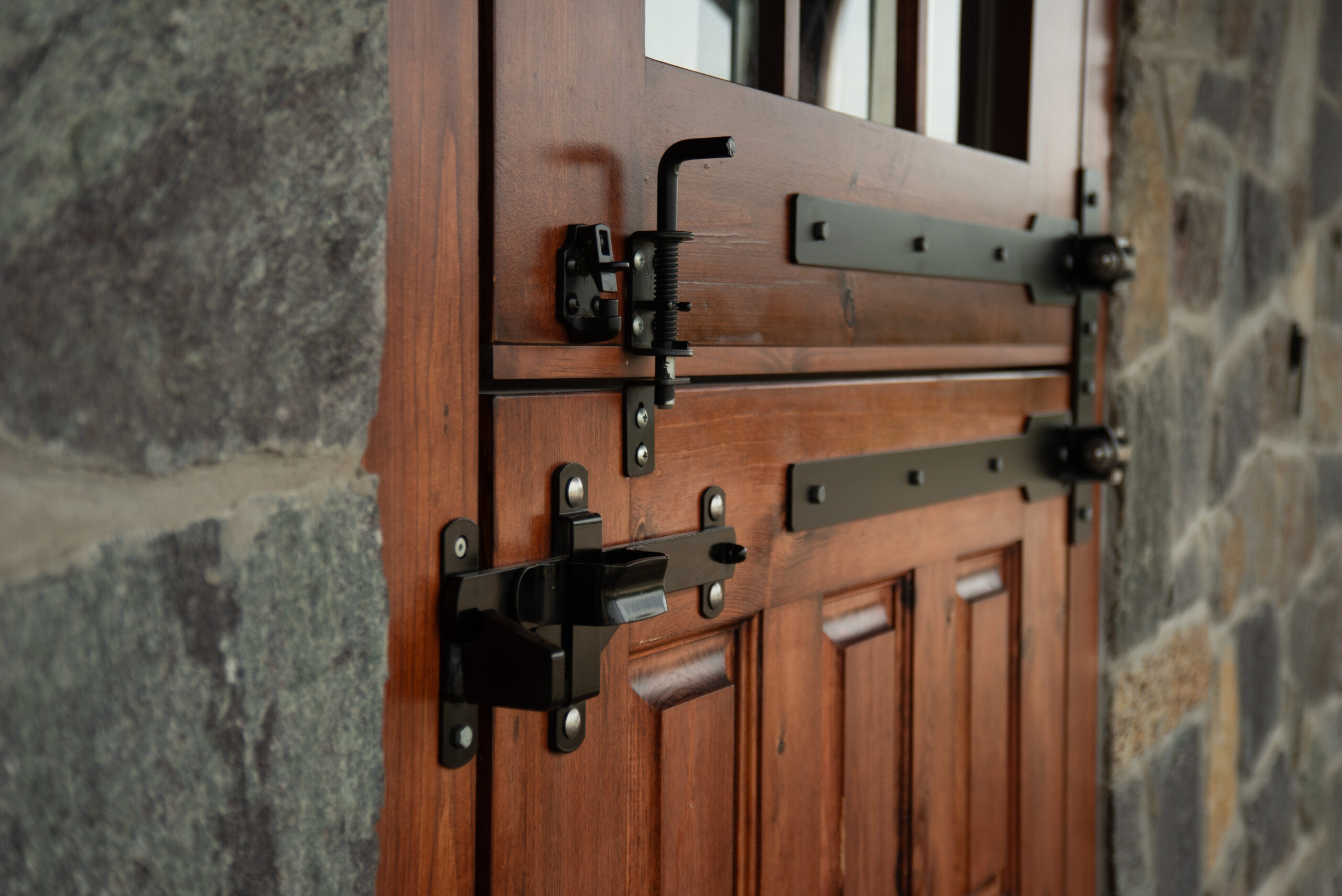
- Dead bolt connecting top and bottom halves – high end doors this is hidden
- Cane bolt (hold open)
- Hook-and-eye holdback – cast alum best
- Deadbolt or keyed latch for security
- Double latch for horse security when kicking
Many barn Dutch doors ship with:
- adjustable hinges
- cane bolt
- holdback latches
- handle set – Iron grip latch
Step-By-Step Installation Guide (Contractor Level)
Step 1 — Verify Rough Opening
- Square and plumb opening
- Allow clearance between door halves
- Supplier should supply you with a detailed sign off sheet with options and RSO measurements
Step 2 — Install Frame
- Installation Steel door jamb into opening
- Shim and fasten frame square and level
- Jamb should have build in stop return to close against
Step 3 — Install Hinges
- Doors should have tabs welded on in the right place, ready for adjustable hinge
- Put doors in place and install bolts
Step 4 — Install Latch System
- Mount latch assembly and strike plate
- Add top barrel bolt or cane bolt
- Install door sweeps and weatherstripping
Step 5 — Install Holdbacks
- Hook-and-eye or latch to hold top open
Step 6 — Adjust and Test
- Confirm independent operation of top and bottom
- Adjust hinge alignment
- Verify gap consistency
Installation is similar to standard door installation but requires extra hinge alignment and hardware setup.
For more information about installing Double Dutch Doors, watch this helpful video!
6. Advanced Options to Consider (High-End Barns)
Design Upgrades
- Tempered glass top with grill protection or shatter resistant glass
- Insulated lower panel
- Powder-coated steel frames
- Tongue-and-groove lumber infill
- Steel Jambs
- Integrated weather seals
- Automatic latching
- Magnetic holdbacks
7. Climate-Specific Design Advice (Important for Your Barns)
If you operate in freeze-thaw Ontario conditions, best practice:
✔ 10 ft overhang over barn Dutch doors (snow protection)
✔ Swing out with protected landing
✔ Adjustable hinges for seasonal movement
✔ Stainless hardware
✔ Chew guard + kick plate
✔ Drainage at threshold
✔ Weather seal at meeting rail
When NOT to Install Dutch doors
- Extreme snow exposure with no overhang
- High-security exterior walls
- Narrow aisles with limited swing clearance
- Facilities with aggressive horses prone to door damage
Horse Barn Door Comparison Table
Choosing the Right Door for Stalls and Paddocks
| Feature | Single Dutch Door | Double Dutch Door | Sliding Paddock Door |
| Typical Opening Width | 36″ – 48″ | 60″ – 96″+ | 72″ – 144″+ |
| Door Operation | Top and bottom halves operate independently | Two split doors, each with independent top and bottom | Single or double panel slides horizontally |
| Best Use Case | Individual stall turnout | Large paddock openings or aisle ends | Equipment access or large paddocks |
| Horse Interaction | Excellent (top open) | Excellent (top open) | Limited unless top grill |
| Ventilation | Excellent | Excellent | Moderate |
| Horse Monitoring | Very good | Very good | Limited |
| Equipment Access | Limited | Moderate | Excellent |
| Interior Space Impact | None if swinging out | None if swinging out | None |
| Exterior Clearance Needed | Yes | Yes | No |
| Snow Management | Can accumulate in front of door | Same as single | Usually easier in snow |
| Wind Exposure | Moderate | Moderate | Lower |
| Hardware Complexity | Moderate | High | Low |
| Installation Difficulty | Moderate | Higher (door alignment critical) | Moderate |
| Maintenance | Moderate | Moderate | Low |
| Horse Safety | Very good if kick plates installed | Very good if properly latched | Good |
| Typical Hardware | Adjustable hinges, latch, cane bolt, holdback | Adjustable hinges, cane bolts, latch system | Track, rollers, guide system |
| Security Options | Deadbolt or keyed latch | Deadbolt or keyed latch | Locking latch |
| Cost Level | $$ | $$$ | $$–$$$ |
| Aesthetic Appeal | Classic barn look | Premium barn look | More utilitarian |
| Recommended Swing Direction | Outward | Outward | N/A |
Key Decision Summary
Choose Single Dutch Doors When:
- Individual stall turnout is required
- Openings are smaller
- Simplicity and cost matter
Choose Double Dutch Doors When:
- You need wide access to paddocks or aisles
- Equipment occasionally moves through the opening
- The barn is high-end or architect-designed
Choose Sliding Paddock Doors When:
- Large openings are required
- Snow buildup is a concern
- Equipment movement is frequent
Expert Tip About Barn Dutch Doors
System Equine Design Tip
In cold climates like Ontario, Dutch doors perform best when:
- Installed with a roof overhang of at least 10 ft
- Designed to swing outward
- Equipped with adjustable stainless hinges
- Built with chew guards and kick plates
This prevents snow issues, door sagging, and horse damage.
For more information about Barn Dutch Doors, or guidance finding the perfect option for your application, contact our experts at System Equine today.