TL;DR:
- Stall mats improve horse welfare and reduce maintenance costs compared to dirt or concrete floors.
- Regular cleaning and proper installation extend the lifespan and effectiveness of stall mats.
- Investing in quality mats and maintenance yields long-term savings and better health for horses.
Many barn owners assume that dirt or concrete floors are simply “good enough” because that’s what has always been used. The reality is more costly. Hidden costs and risks from these surfaces add up through increased bedding use, higher injury rates, and extra labor. Horse stall mats have become a go-to upgrade for facilities that want to protect their horses, reduce daily workload, and lower long-term expenses. This guide breaks down the real impact of your floor choice, the genuine benefits and trade-offs of stall mats, and how to get the most value from your investment.
Table of Contents
- The real impact of barn floor choice on horses and operations
- Why horse stall mats are a smart investment
- Downsides, trade-offs, and maintenance realities
- Getting the most out of your stall mat investment
- Why many barns miss out on the full value of stall mats
- Upgrade your stable: Flooring solutions and beyond
- Frequently asked questions
Key Takeaways
| Point | Details |
|---|---|
| Boost horse safety | Stall mats minimize injury risk and improve comfort compared to dirt or concrete floors. |
| Save on bedding and labor | Quality mats reduce the need for excess bedding and make daily cleaning much easier. |
| Balance cost and maintenance | Initial investment in proper mats pays off long term if paired with routine under-mat cleaning. |
| Choose wisely | Interlocking or premium seamless mattresses may offer better hygiene and value for high-traffic barns. |
The real impact of barn floor choice on horses and operations
With the basics covered, let’s look at how key factors play out with different stall floor options.
Your stall floor is the surface your horse stands on for 16 to 20 hours a day. That single fact should make floor choice a top priority, yet it’s often treated as an afterthought. Dirt, concrete, and rubber mats each produce very different outcomes for horse welfare and daily barn management.
Common floor materials at a glance:
| Floor type | Comfort | Slip risk | Cleaning ease | Bedding cost |
|---|---|---|---|---|
| Dirt | Moderate | Low | Difficult | High |
| Concrete | Poor | High | Easy | Very high |
| Rubber stall mats | Good | Low | Moderate | Lower |
| Interlocking mats | Very good | Very low | Good | Lowest |
Dirt floors compress over time, creating uneven surfaces that stress joints and tendons. Concrete is hard on hooves and legs, increases slip risk, and requires heavy bedding to compensate. Rubber stall mats outperform dirt and concrete in reducing injuries and easing cleaning, though they need proper installation to avoid urine seepage beneath them.
Common misconceptions and the reality:
- “Dirt is natural, so it must be better.” Packed dirt loses its cushioning and harbors bacteria and parasites over time.
- “Concrete is easy to clean, so it saves labor.” Concrete demands more bedding to protect joints, which increases both cost and removal time.
- “Any rubber mat will do.” Gym mats and non-equine rubber products lack the thickness and vulcanization needed for heavy, continuous use.
- “Mats eliminate all maintenance.” Mats reduce work but still require routine cleaning to prevent odor and buildup underneath.
From a welfare standpoint, poor footing contributes to joint strain, hoof wall deterioration, and increased fall risk. Addressing stall flooring issues early prevents veterinary costs that far exceed the price of quality mats. Facilities that have made the switch consistently report fewer slip-related incidents and reduced bedding turnover.
Why horse stall mats are a smart investment
Having compared flooring options, let’s see why stall mats stand out for the modern facility.
Stall mats address the three biggest pain points in barn management: horse health, labor time, and operating costs. When you look at the numbers over a full year, the return on investment becomes clear.
Key investment benefits:
- Reduced injury risk. Rubber cushioning absorbs impact on joints and hooves, lowering the chance of slips and strain-related lameness.
- Lower bedding consumption. Mats provide a base layer of cushion, so you need less straw or shavings to reach a comfortable depth.
- Faster daily cleaning. Manure and soiled bedding sit on a firm, even surface rather than mixing into soft dirt, cutting mucking time significantly.
- Extended stall life. A level, protected floor resists the wear and gouging that dirt and concrete suffer over years of use.
- Better temperature regulation. Rubber insulates against cold concrete and hard ground, which matters in northern climates during winter.
- Improved horse behavior. Horses that are comfortable and pain-free tend to be calmer, which makes handling and training easier.
Expert note: Mats reduce bedding needs and cleaning labor, but superior hygiene comes from pairing them with proper bedding and a consistent cleaning routine. Mats alone are not a complete solution.
For practical guidance on layout, refer to cleaning layouts for stall mats to see how mat placement affects drainage and daily maintenance.
Pro Tip: Pull mats up once a month and sweep or rinse the floor beneath them. This single habit prevents the ammonia buildup and sludge that cause odors and mat degradation, extending the life of your mats by years.
Downsides, trade-offs, and maintenance realities
But even great solutions have realities to consider. Here’s what to weigh before you invest.
Stall mats are not a set-and-forget solution. Understanding the real trade-offs helps you plan properly and avoid the frustration that comes from unmet expectations.
Real trade-offs to consider:
- Upfront cost is significant. Quality 3/4-inch vulcanized rubber mats for a standard 12×12 stall can run $200 to $400 in materials alone.
- Installation requires a level, compacted base. Uneven sub-floors cause mats to shift and create gaps.
- Non-interlocking square-edge mats leave seams where urine can seep underneath, leading to odor and bacterial growth.
- Mats can become slippery when wet if the surface texture is inadequate or if they are worn smooth.
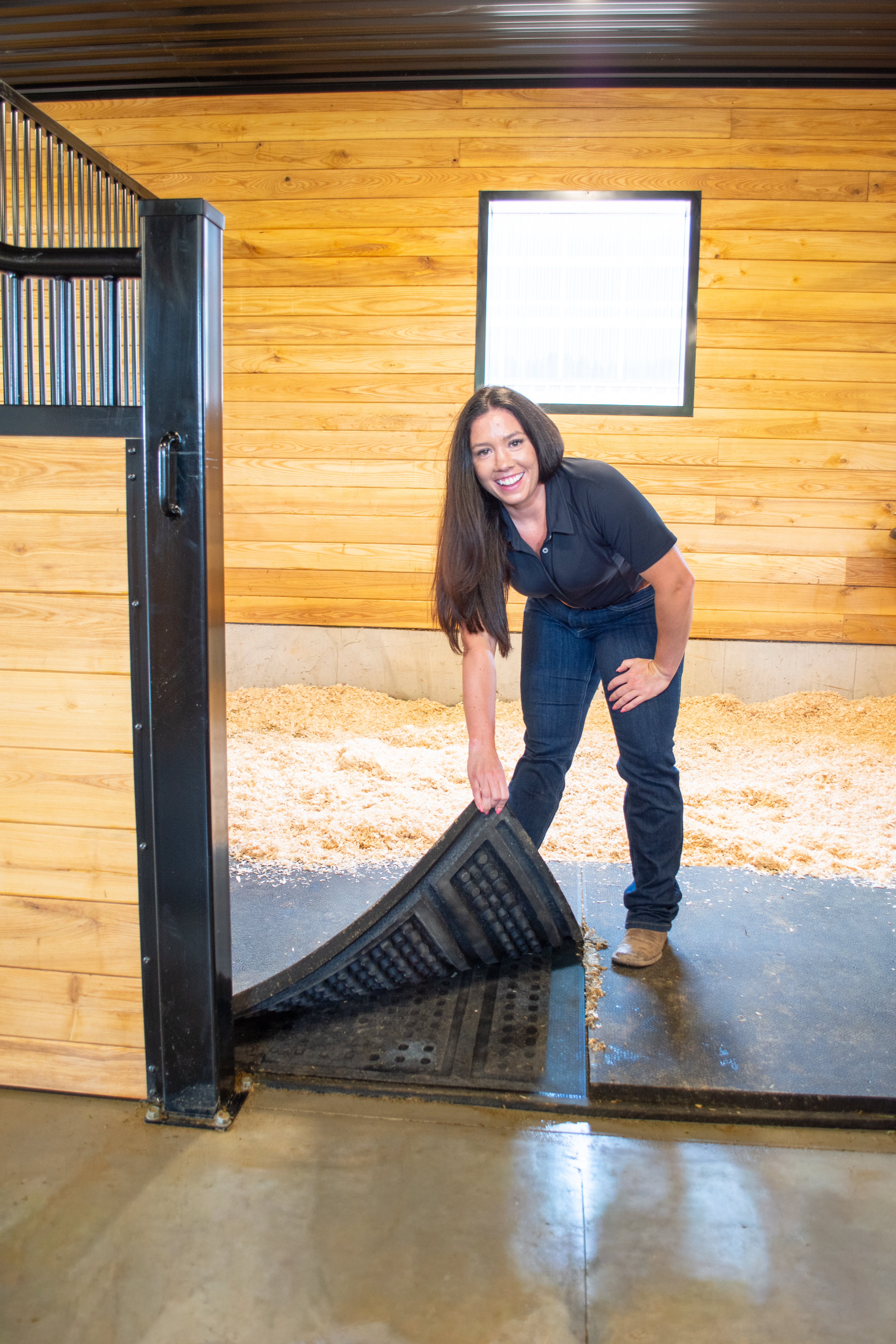
- Heavy mats are difficult to lift alone, making monthly deep cleaning a two-person job in most cases.
High initial cost and installation effort are the main drawbacks; regular cleaning under mats is essential to avoid odors and sludge accumulation.
Cost and maintenance comparison:
| Option | Upfront cost | Maintenance effort | Lifespan |
|---|---|---|---|
| Square-edge mats | Low to moderate | High (gap seepage) | 8 to 12 years |
| Interlocking mats | Moderate to high | Moderate | 10 to 15 years |
| Seamless stall mattress | High | Low | 15 to 20 years |
For a full breakdown of installation requirements, the stall mat installation guide walks you through base preparation and mat placement. If you are weighing mats against premium options, the stall mats vs stall mattresses comparison gives a thorough side-by-side analysis.
Pro Tip: Choose mats with a raised diamond or coin-pattern texture on both sides. The top texture improves grip for your horse, while the bottom texture allows airflow and drainage, reducing the moisture trapped beneath the mat.
Getting the most out of your stall mat investment
Now that you know the trade-offs, here’s how to get maximum value from your stall mats.
The difference between a mat that lasts eight years and one that lasts fifteen often comes down to how consistently it is maintained. These steps make a measurable difference.
Routine deep cleaning process:
- Remove all bedding from the stall completely.
- Lift each mat and lean it against the stall wall.
- Sweep or scrape the sub-floor to remove any accumulated waste or debris.
- Rinse the sub-floor with water and allow it to dry fully before replacing mats.
- Scrub the underside of each mat with a stiff brush and diluted disinfectant.
- Let mats air-dry before laying them back down.
- Replace bedding at the correct depth before returning your horse.
For high-traffic barns, mats paired with 3 to 4 inches of absorbent bedding work well, but a monthly lift and clean is essential for longevity and hygiene.
Signs your mats need replacement:
- Persistent odor even after thorough cleaning
- Visible cracking, crumbling edges, or surface breakdown
- Excessive warping that creates uneven footing
- Mats that no longer lie flat after repositioning
- Surface texture worn smooth, reducing grip
Use the stall mat calculator to determine exactly how many mats you need per stall, which prevents both waste and coverage gaps. If your horses are older, recovering from injury, or in intensive training, it may be worth evaluating whether a seamless stall mattress offers better support than standard mats. Use the fix stall mat problems resource to troubleshoot issues before they require full replacement.
Why many barns miss out on the full value of stall mats
Stepping back, here’s what most barns overlook when it comes to getting true value from stall flooring.
We have worked with facilities of all sizes since 1987, and the pattern we see most often is this: barn owners invest in quality mats, skip the maintenance routine, and then blame the product when odors or degradation appear within a few years. The mats did not fail. The process did.
The full value of stall mats is only realized when they are treated as part of a system, not a one-time fix. That means consistent monthly cleaning, the right bedding depth, and periodic re-evaluation of whether your current flooring still matches your horses’ needs.
Barns focused only on upfront cost also tend to overlook the long-term savings in bedding, veterinary bills, and labor. A seamless stall mattress costs more initially, but for a high-intensity facility with performance horses, the reduced maintenance and superior joint support can justify every dollar. We encourage you to revisit the stall mats vs mattresses comparison annually as your operation evolves. Flooring is not a decision you make once. It is one you manage over the life of your barn.
Upgrade your stable: Flooring solutions and beyond
Ready to take action? Here are resources to plan or upgrade your stall flooring and stall systems.
At System Equine, we have been helping barn owners make smart flooring decisions since 1987. Whether you are outfitting a single stall or planning a full facility upgrade, we offer the products and guidance to get it right the first time.
Explore our full range of custom horse stall options to find configurations that pair perfectly with your flooring choice. For hands-on help, our stall mat installation instructions give you a clear, step-by-step path from sub-floor prep to finished stall. Every upgrade you make to your flooring system directly improves horse welfare and reduces your daily workload. We are here to support that goal at every step.
Frequently asked questions
How often should horse stall mats be deep cleaned?
Lift and deep clean mats at least once monthly to prevent sludge, ammonia buildup, and persistent odors beneath the surface.
Do rubber horse stall mats eliminate the need for bedding?
No. Experts recommend 3 to 4 inches of absorbent bedding over mats to provide adequate comfort and maintain proper hygiene.
Which is better: interlocking or square-edge stall mats?
Interlocking mats cost more upfront but prevent the gaps and urine seepage that are common with square-edge designs, making them the better long-term choice.
What are signs that horse stall mats need replacement?
Excessive warping, persistent odors after cleaning, or visible surface cracks and crumbling edges are clear indicators that your mats have reached the end of their service life.
Do gym rubber mats work as horse stall mats?
Gym mats lack the thickness and vulcanization of equine-grade rubber, making them prone to faster wear, odor retention, and inadequate support under heavy horse traffic.
Recommended
- Stall Mats vs Stall Mattress: Your Ultimate 10-Year Guide
- How to Install Rubber Stall Mats: Step-by-Step Guide
- Horse Stall Mat Installation & Cleaning Layout Patterns
- Calculating Stall Mat Requirements: Interactive Calculator Guide
System Equine — Your Equine Solutions Partner
Don’t forget to follow us on social media to see more of our work!