
TL;DR:
- Properly chosen horse barn doors enhance safety, containment, and ventilation for horses.
- Different door styles suit specific needs, with sliding doors ideal for high traffic and Dutch doors for welfare.
- Regular maintenance and adherence to safety standards prevent costly repairs and ensure long-term durability.
Choosing the wrong barn door can result in a horse injury, a costly repair bill, or weeks of disrupted stable operations. Many horse owners assume that any heavy-duty door will do the job, but equine facilities have demands that standard construction simply cannot meet. The right barn door protects your horses, supports daily workflow, and holds up against years of kicks, weather, and heavy use. In this guide, we cover what horse barn doors actually are, the main types available, the safety standards you should never compromise on, material and maintenance decisions, and a practical framework for choosing the best door for your specific operation.
Table of Contents
- What is a horse barn door?
- Types of horse barn doors and where they excel
- Key safety features and standards to demand
- Choosing materials and maintaining your barn doors
- How to select the right barn door for your operation
- Expert perspective: What most barn door guides miss
- Upgrade your barn with expert-approved doors
- Frequently asked questions
Key Takeaways
| Point | Details |
|---|---|
| Barn door types matter | Choosing the right horse barn door style impacts both safety and daily barn operations. |
| Prioritize safety features | Kick-proof panels, proper latches, and sizing are non-negotiable for every barn door. |
| Material choice affects cost | Low-maintenance steel doors often save money long-term compared to traditional wood. |
| Match door to barn use | Sliding doors work best for high-traffic barns, while Dutch doors offer ventilation for private barns. |
| Routine maintenance extends life | Regular upkeep can add years to your barn door’s functional lifespan and reduce replacement costs. |
What is a horse barn door?
A horse barn door is not just a larger version of a regular door. As defined by equine specialists, it is a specialized door for horse stalls in barns, designed for safety, ventilation, space efficiency, and durability. That distinction matters more than most people realize.
Standard doors are built around human use: moderate weight, predictable force, and controlled access. Horse barn doors face a completely different set of conditions. A 1,200-pound horse can kick, lean, bite, or push against a door repeatedly throughout the day. The hardware, panels, and latch mechanisms must withstand that abuse without failure.
A barn door that fails is not just an inconvenience. It is a safety event. A loose latch, a sharp edge, or a door that swings into a horse’s path can cause serious injury in seconds.
You will find horse barn doors in several locations across an equine facility:
- Stall fronts: The primary entry and exit point for each horse, requiring maximum security and ease of daily use
- Exterior barn entries: Large sliding or hinged doors that manage airflow and protect the interior from weather
- Wash stalls and grooming areas: Doors that allow quick access while keeping horses contained
- Feed and tack rooms: Doors that prevent horse access to stored supplies
The core functions of a horse barn door are to keep horses safely contained, allow controlled ventilation, and support efficient daily management. Knowing when to upgrade your stall doors is just as important as selecting the right door in the first place.
Types of horse barn doors and where they excel
Not every barn door style works in every situation. The three primary types are sliding doors, hinged or swinging doors, and Dutch doors, each with distinct operating mechanisms and ideal applications.
Sliding doors run along an overhead track and move parallel to the wall. They save aisle space because they require no swing clearance, making them the preferred choice in high-traffic commercial barns where handlers and horses are constantly moving through tight corridors. The track must be kept clean and properly aligned to prevent jamming.
Hinged doors swing open on fixed hinges, much like a standard interior door. They are simpler to install and maintain, and they work well in lower-traffic private barns where aisle width is not a constraint. The risk is that a swinging door can startle or strike a horse if opened too quickly.
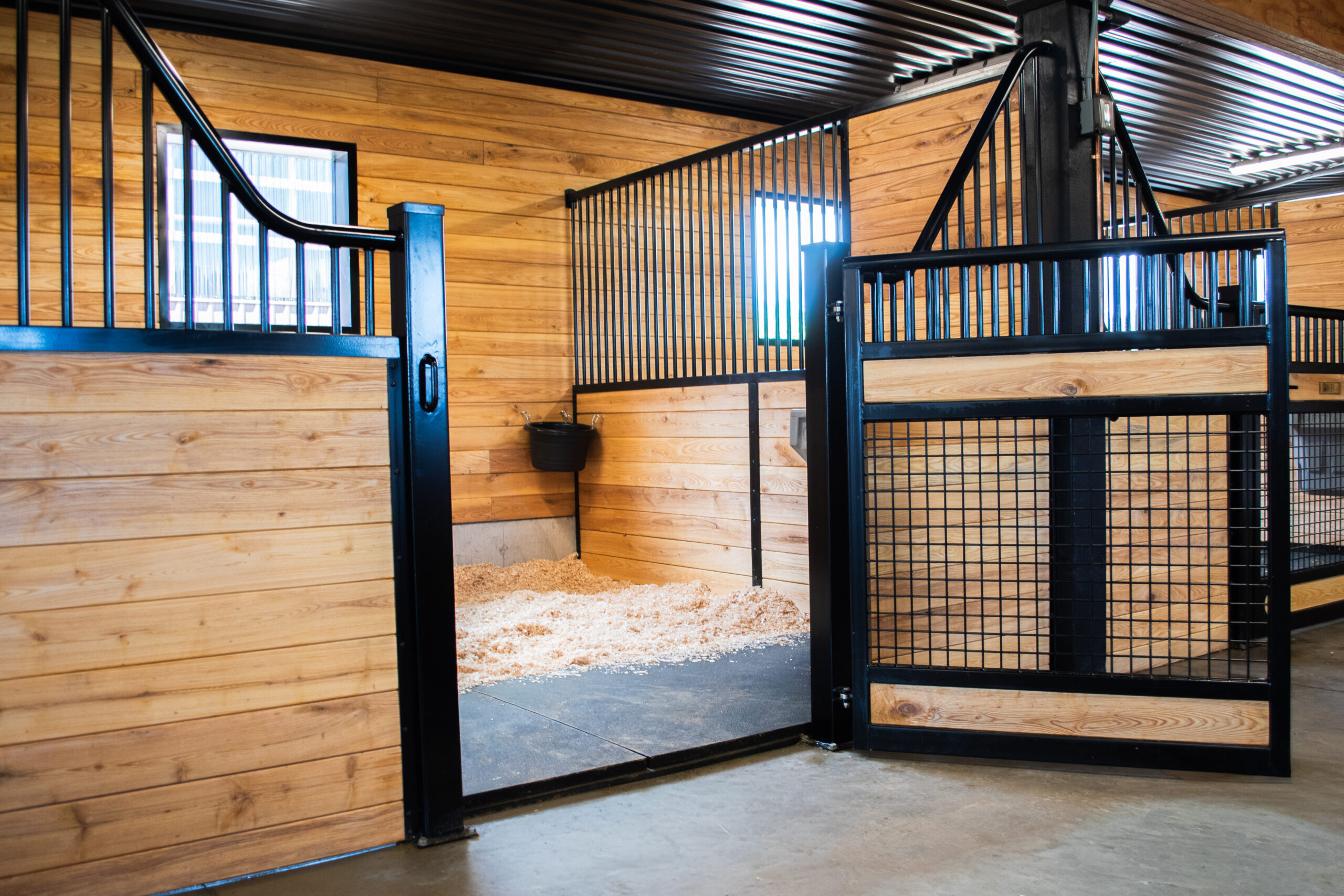
Dutch doors are split horizontally into two independent halves. The lower half keeps the horse contained while the upper half can be opened for ventilation and social interaction. Explore Dutch door versatility and Dutch door benefits to understand why many private barn owners consider this style their top choice for equine welfare.

For a quick side-by-side view, see the comparison below:
| Door type | Space needed | Airflow control | Safety rating | Relative cost |
|---|---|---|---|---|
| Sliding | Minimal | Moderate | High | Moderate |
| Hinged | Moderate swing | Low | Moderate | Low |
| Dutch | Minimal | High | High | Moderate-High |
Pro Tip: In high-traffic commercial operations, sliding doors reduce the risk of accidental contact between handlers and horses. In private barns with fewer daily movements, Dutch doors provide superior ventilation without sacrificing containment. Review sliding vs hinged barn doors before finalizing your choice.
- Sliding doors suit busy aisles and commercial stabling
- Hinged doors work for low-traffic private barns with wide aisles
- Dutch doors are ideal for operations prioritizing welfare and natural ventilation
Key safety features and standards to demand
Safety is not optional in barn door design. Every door you install should meet a clear set of structural and operational standards, and cutting corners here is where most costly incidents originate.
According to equine stall safety benchmarks, essential safety features include kick-proof lower panels (minimum 48 inches high), one-hand operation for emergency exits, horse-proof latches that cannot be manipulated by the horse, bar spacing that prevents a hoof from catching, and a minimum opening size of 4 feet by 7 feet. These are not suggestions. They are the baseline.
Here are the non-negotiable safety requirements we recommend for every horse barn door installation:
- Kick-proof lower panels: The bottom 48 inches must resist repeated impact without cracking, splintering, or deforming
- Horse-proof latches: Horses are surprisingly capable of opening simple latches. Use two-stage mechanisms that require a deliberate human action
- Smooth edges and no protrusions: Any sharp corner, exposed bolt, or rough weld is a laceration risk
- Correct bar spacing: Bars must be spaced so a hoof cannot slip through and become trapped
- Minimum 4x7ft opening: Anything smaller creates a collision risk when leading horses in and out
Common mistakes include installing doors that horses can unlock, using wood that splinters under repeated kicking, and neglecting airflow in favor of solid panels. Poor ventilation leads to respiratory issues over time, which is a welfare and cost problem.
For guidance on integrating these standards into your overall facility planning, the stall design safety resource covers layout decisions that directly affect how well your doors perform.
Pro Tip: Inspect every track, latch, and panel surface monthly. Corrosion on steel tracks and worn latch pins are the two most common failure points, and both are easy to catch early with a quick visual check.
Choosing materials and maintaining your barn doors
The material you choose for your barn doors determines upfront cost, long-term maintenance demands, and how well the door holds up to your specific climate and horse behavior.
Wood is traditional and aesthetically appealing, but it requires the most maintenance. It is vulnerable to moisture, rot, and horse chewing. In humid climates, untreated wood can warp within a single season.
Steel is the most durable option for high-use facilities. It resists kicks, weather, and chewing. Lifecycle costs favor low-maintenance steel over wood, though the right match still depends on your horse’s behavior, your local climate, and your aisle width.
Composite materials combine the appearance of wood with improved moisture resistance. They sit between wood and steel in both cost and durability.
| Material | Avg. upfront cost | Maintenance level | Avg. lifespan |
|---|---|---|---|
| Wood | Low | High | 8-12 years |
| Steel | Moderate-High | Low | 20+ years |
| Composite | Moderate | Moderate | 12-18 years |
Field data shows the average cost for a 4x7ft hinged door is around $780, and with proper maintenance, a well-built door can last 18 years versus the 12-year average for neglected doors. That gap represents real money saved.
A practical annual maintenance schedule looks like this:
- Monthly: Inspect latches, tracks, and hinges for corrosion or wear
- Quarterly: Lubricate all moving hardware with a barn-safe product
- Annually: Sand and reseal wood surfaces, check panel integrity, replace worn rollers on sliding doors
- As needed: Address any splintering, rust spots, or latch failures immediately
For a deeper look at how material choice affects your entire stall system, the horse stall material guide and our resource on replacing barn doors are both worth reviewing before you commit to a purchase.
How to select the right barn door for your operation
With all the technical details in place, the final step is applying them to your specific situation. No single door type is universally correct. Your selection should be driven by your operation’s unique combination of traffic volume, horse temperament, aisle dimensions, and climate.
Work through these questions before you shop:
- How many horses move through each door per day, and how many handlers are involved?
- What is the aisle width? Sliding doors need clear wall space; hinged doors need swing clearance
- How active or reactive are your horses? High-energy horses need more robust latches and kick-proof panels
- What is your local climate? Moisture-heavy regions favor steel or composite over wood
- What is your budget for both upfront purchase and ongoing maintenance?
- Do you need ventilation control at the stall level, or is your barn’s airflow managed centrally?
For high-traffic commercial operations, sliding doors are the strongest choice for safety and space efficiency. For private barns focused on equine welfare, Dutch doors with corrosion-resistant hardware deliver the best combination of containment and ventilation. Always use corrosion-resistant materials and commit to routine track and latch maintenance regardless of which style you choose.
Avoid these common pitfalls:
- Choosing a door based on appearance alone without checking safety specifications
- Underestimating the aisle space required for hinged doors in busy barns
- Skipping corrosion-resistant hardware to save upfront costs
- Ignoring horse behavior patterns when selecting latch complexity
The horse stall buying steps resource walks you through the full purchase process, and barn organization tips can help you plan the surrounding layout for maximum efficiency.
Expert perspective: What most barn door guides miss
Most guides focus on product specs and miss the bigger picture. After working with equine facilities since 1987, we have seen a consistent pattern: the barns that experience the fewest door-related incidents are not the ones with the most expensive doors. They are the ones where door selection was matched deliberately to horse behavior and facility layout.
A premium sliding door installed in a barn with an undersized aisle creates daily friction and risk. A Dutch door on a stall housing an aggressive cribber may need additional reinforcement that the standard product does not include. These details rarely appear in generic buying guides, but they determine real-world performance.
We also see owners underestimate the true cost of deferred maintenance. A $30 latch replacement ignored for six months can become a $500 repair and a veterinary bill. The math is straightforward. Consistent monthly inspections, as outlined in the stall layout insights resource, cost almost nothing and prevent the majority of failures we see in the field. Routine maintenance pays off more reliably than any single product upgrade.
Upgrade your barn with expert-approved doors
You now have a clear picture of what separates a functional horse barn door from one that creates risk and added cost. The next step is finding solutions built to the standards covered in this guide.
At System Equine, we have been manufacturing and sourcing high-quality equine barn equipment since 1987, serving both private horse owners and large commercial operations across North America. Our custom barn door solutions are designed with horse safety, handler efficiency, and long-term durability as the core priorities. Whether you are outfitting a single stall or planning a full facility, the complete stall guide and our buyer’s guide give you the information and product options to make a confident, informed decision.
Frequently asked questions
What makes a horse barn door different from a regular barn door?
A horse barn door is specifically engineered for equine safety and ventilation, featuring stronger materials, horse-proof latches, and specialized bar spacing to prevent injuries that standard doors are not built to address.
Are sliding or Dutch barn doors better for horse stalls?
Sliding doors are safest for busy commercial barns due to space efficiency and reduced handler contact risk, while Dutch doors are the better choice for private barns where ventilation and equine welfare are the top priorities.
How much does a horse barn door cost?
The average cost for a 4x7ft hinged barn door is approximately $780, and with consistent maintenance, a quality door can reach an 18-year lifespan compared to the 12-year average for doors that receive minimal upkeep.
What safety standards should all barn doors meet?
Every barn door should include kick-proof lower panels, horse-proof latches, bar spacing that prevents hoof entrapment, and a minimum opening size of 4 feet by 7 feet to ensure safe horse movement and handler access.
Recommended
- Dutch Doors vs Dutch Windows: Your Complete 2026 Guide
- Choosing Between Sliding Barn Doors and Hinged Doors
- Why Dutch Doors Are Worth the Investment [2026 Guide]
- Stall Doors for Horses: Signs It’s Time to Replace & Upgrade – System Equine
System Equine — Your Equine Solutions Partner
Don’t forget to follow us on social media to see more of our work!