Installing an automated driveway gate is an investment in the security, convenience and appearance of your property. However, determining the cost is not as simple as choosing a gate from a catalogue and adding an operator.
A complete gate system can involve the gate itself, structural posts, concrete footings, automation equipment, electrical work, safety devices, access-control accessories and site preparation. The choices made in each of these areas can have a significant impact on the final price.
A professionally installed automated gate system can generally range from approximately $10,000 to more than $50,000. A basic system may fall near the lower end of that range, while a custom double entrance with decorative posts, commercial operators, intercoms and extensive electrical work can exceed $50,000.
For general planning purposes, a single automated gate system may range from approximately $6,000 to $25,000, while a double gate system may range from approximately $15,000 to more than $50,000.
All prices discussed in this article are approximate and may vary depending on the property, supplier, equipment selection and installation requirements.
Table of Contents
Understanding Automated Gate Costs
Why Do Automated Gate Prices Vary So Much?
Two properties with the same driveway width can have completely different project costs.
The final price depends on much more than the size of the entrance. Gate style, gate material, post selection, automation equipment, access-control features and site conditions all play a role.
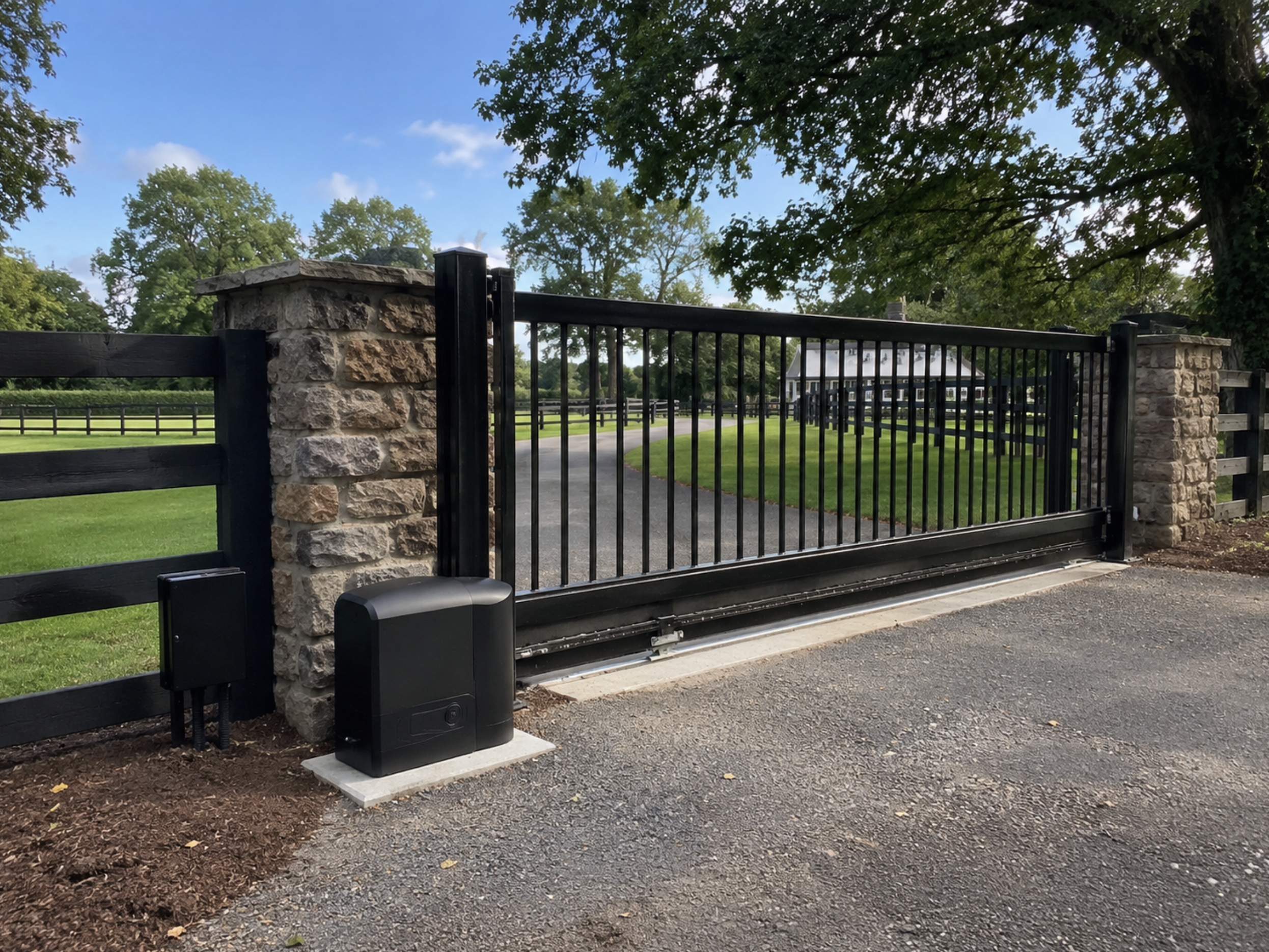
For example, one property owner may choose a basic straight-top gate with standard steel posts, a residential operator and remote access. Another customer with the same driveway width may choose an arched aluminum gate, decorative post skins, custom address numbers, lighting, a video intercom and a commercial-grade operator.
Although both systems cover the same opening, they are very different projects.
What Is Normally Included in an Automated Gate Package?
A standard System Equine automated gate package typically includes a single gate or two gate leaves, two structural posts, an operator and control panel, one safety photo eye and two remote controls.
A double swing gate requires two operators because each gate leaf needs its own automation equipment. This increases the equipment, wiring, programming and installation costs compared with a single gate.
Electrical work is not included in System Equine gate quotes. Any high-voltage electrical work must be completed by a certified electrician.
Data lines are also priced separately. These may include Cat6 cable, fibre-optic cable and any network equipment required for an intercom, camera or connected access-control system.
Gate Design and Structural Requirements
How Gate Size and Style Affect the Price
The larger the gate, the more material is required to manufacture it. A larger gate may also require heavier posts, stronger hardware and a more powerful operator. You may also need to factor wind into the operator sizing.
Gate design also plays a major role in pricing.
Straight-top gates are generally the most affordable because they are simpler to fabricate. Arched gates, especially arched aluminum gates, require considerably more labour and are therefore more expensive.
Basic mesh farm gates can start at approximately $250, making them one of the most affordable options. However, the mounting hardware required to install the gate may add another $300 to $500.
Custom entrance gates made from steel or aluminum will cost more, particularly when they include decorative pickets, rails, curves, logos or other architectural elements.
Choosing the Right Gate Posts
The posts supporting the gate are an important part of both the appearance and the structural integrity of the system.
A 6-inch-by-6-inch steel post is the most affordable and most common option. It provides a clean, practical installation and works well for many residential and farm entrances.
Customers who want a more substantial entrance may choose an 18-inch-by-18-inch decorative steel post skin. These posts create a larger architectural feature and allow custom details to be incorporated into the entrance.
Decorative post skins start at approximately $3,900. Optional features may include an electrical box for approximately $200, a provision for a light fixture for approximately $200, a simple custom logo starting around $250, or address numbers ranging from approximately $200 to $300.
System Equine also offers internal masonry post systems starting at slightly over $1,500. These provide the structural support for the gate while allowing a mason to finish the outside with stone, brick or another masonry material.
Decorative post skins and masonry pillars are not necessary for every project. They are typically selected by customers who want the gate entrance to have a more premium or customized appearance.
Concrete Footings and Structural Support
A gate is only as reliable as the foundation supporting it.
System Equine typically installs gate post footings measuring approximately 18 inches by 18 inches and five feet deep. This depth allows the footing to extend below the frost line, which is especially important in Canada.
As the ground freezes and thaws, shallow footings can move, causing posts to shift and gates to become misaligned. Properly sized footings help protect the long-term operation of the system.
Concrete footings are typically included when System Equine completes the installation. In the broader marketplace, customers may expect footing and concrete work to cost approximately $3,500 to $5,000, depending on the amount of concrete required and the difficulty of the excavation.
Rocky soil, underground infrastructure and difficult ground conditions can increase the cost. If the footing locations contain hydro lines, gas lines or other major underground services, standard excavation equipment may not be suitable.
In some cases, a vacuum excavation truck may be required to expose the area safely. This is significantly more expensive than excavating with a standard Bobcat or auger.
Power and Site Preparation
Electrical Requirements and Trenching
Most automated gate systems require a 110-volt power supply connected back to the property’s breaker panel.
The operator itself typically has a relatively low power draw of approximately three amps, but it still needs a properly installed and reliable power source.
A certified electrician is responsible for bringing the power from the breaker panel to the gate. Electrical work is kept separate from the gate installation to ensure that all high-voltage wiring is completed safely and correctly.
The farther the entrance is from the house or electrical panel, the more expensive the electrical work will generally be. Longer distances require additional wire, conduit, trenching and labour.
Trenching may also be required for low-voltage wiring, intercom data lines, safety devices and free-exit equipment.
A free-exit device may require approximately 50 to 80 feet of trenching along the side of the driveway, depending on where the sensor is positioned.
How the Driveway Surface Affects Cost
The type of driveway can make a major difference to the installation cost.
Gravel and dirt driveways are generally the most affordable to work with because they can be opened, trenched and restored more easily.
Paved, concrete or interlock driveways are more complicated. On a double gate system, wiring often needs to cross from one side of the driveway to the other so the two operators can communicate and receive power.
Rather than cutting through the driveway, a directional bore is usually recommended. This allows conduit to be installed underneath the driveway while leaving the surface intact.
Directional boring adds cost to the project, but it avoids visible damage and the expense of repairing the driveway afterward.
Whenever possible, System Equine aims to complete the installation without disturbing the pavement.
Is Solar More Affordable Than Running Power?
Solar can be a practical option when the gate is located a considerable distance from the nearest electrical supply.
As a general guideline, solar may become more cost-effective when the entrance is approximately 300 to 400 feet or more from the available power source. At this distance, the cost of trenching and installing electrical service can become substantial.
However, solar is not the ideal solution for every property.
Solar systems have limitations when it comes to daily gate cycles, winter sunlight and accessory power consumption. Certain intercoms, lighting systems and connected access-control devices may draw more power than a solar system can reliably support.
Canadian winters can also affect battery performance and charging capacity. A solar system should always be designed around the gate’s expected usage and the accessories being installed.
Can Existing Posts and Conduit Be Reused?
Existing posts, masonry pillars and conduit can often be reused, provided they are in good condition and suitable for the new system.
Posts and pillars must be structurally sound, properly positioned and capable of supporting the weight and movement of the new gate.
Underground conduit must be open, undamaged and large enough for the required wiring.
System Equine generally recommends installing at least one-inch conduit underneath the driveway. This provides enough space to pull wires during the original installation and makes future repairs or replacements considerably easier.
Half-inch conduit, and sometimes three-quarter-inch conduit, can be too restrictive. Small conduit can make it difficult to pull new wires and may increase future labour costs.
If existing conduit is blocked, damaged or incorrectly installed, the gate installation may need to stop until the conduit is repaired or replaced. The conduit creates the foundation for the electrical, communication and safety wiring, so it must be completed correctly before the system can operate.
Operators, Safety and Access Control
Residential and Commercial Gate Operators
The operator is the equipment responsible for opening and closing the gate.
Residential gate operators generally range from approximately $2,500 to $8,000. Commercial operators may range from approximately $6,000 to $12,000.
The correct operator depends on the weight and width of the gate, how often it will open each day, the accessories connected to it and the warranty offered by the manufacturer.
One complete opening and closing of the gate is considered one cycle. A residential property with only a few cycles per day will have different requirements from a business, boarding facility or shared entrance with regular traffic.
Some homeowners choose a commercial-grade operator even for a residential property. Commercial equipment may offer a longer expected lifespan, an increased warranty and better performance for heavier gates or more frequent use.
A double swing gate requires an operator on each side. As a result, double gate systems have higher equipment and installation costs.
Safety Equipment
Safety equipment is an essential part of any automated gate system.
A safety photo eye is included with every standard System Equine gate kit. The photo eye creates a monitored area near the gate and helps prevent it from closing when an obstruction is detected.
A safety photo eye generally ranges from approximately $400 to $600.
Additional photo eyes may be required depending on the gate layout and potential entrapment areas.
Safety edges are not typically included in a standard package. These are pressure-sensitive devices installed along specific areas of the gate. If the edge contacts an obstruction, the system can stop or reverse the gate.
Safety edges generally range from approximately $400 to $600, depending on the required length and style.
The exact safety requirements should be reviewed for each installation rather than treated as optional decorative upgrades.
Keypads, Remotes and Entry Options
The way visitors and property owners enter the gate also affects the cost.
The most affordable option is usually a remote or vehicle fob, similar to a garage door opener. Remotes are simple, reliable and well suited to regular users of the property.
A wireless keypad is generally considered a mid-range access option. It allows visitors, employees or service providers to enter a code without needing a physical remote.
A basic Nice wireless keypad is approximately $185. Entry-level LiftMaster keypads begin around $260, while more advanced models can cost up to approximately $600.
The price depends on the number of codes the keypad can store, its programming features and the level of access control it provides.
System Equine’s standard access-control pedestals start at approximately $295. Because the pedestals are manufactured in-house, custom sizes and designs can also be produced when required.
Free-Exit Devices
A free-exit device automatically opens the gate when a vehicle approaches from inside the property. This allows vehicles to leave without using a keypad, remote or intercom.
The CP4 free-exit puck is an underground vehicle sensor. It starts at approximately $450 before installation. The installation cost will depend on the required trenching, wiring and distance from the gate.
An alternative is the OPTX virtual loop, which is installed above ground. It generally ranges from approximately $700 to $1,000 before installation.
Above-ground sensors can be useful where underground trenching is difficult or where the driveway layout does not suit an in-ground probe.
Intercom System Pricing
Intercoms are generally the most expensive entry-control option, but they provide the greatest level of communication and control.
The Cellcom Prime 7 starts at approximately $1,800 to $1,900. It is an audio-based intercom system.
The AES OPYN starts at approximately $1,950 and includes both audio and video capabilities.
The AES Praetorian Guard is a more advanced system and starts at approximately $3,100.
Wired systems are generally more affordable than cellular systems. Moving to a cellular intercom may add approximately $800 to $1,200, depending on the model and its features.
Cellular and connected systems may also have ongoing service costs. LiftMaster CAPXS subscriptions can range from approximately $20 to $50 per month, depending on the portal options selected.
System Equine commonly recommends AES products such as the Cellcom Prime 7, OPYN or Praetorian Guard for customers who want advanced functionality without the same type of ongoing monthly subscription.
Installation and Ongoing Costs
What Installation Labour Includes
When System Equine completes the installation, the labour generally includes excavating and installing the concrete footings, setting and levelling the posts, hanging and aligning the gate, installing the operator and control panel, completing the low-voltage wiring, programming the system and testing the gate and its safety devices.
High-voltage electrical work is not included. This must be completed separately by a certified electrician.
Unexpected site conditions can result in additional labour or equipment charges. Examples include rocky ground, underground utilities, damaged existing systems, blocked conduit or conduit that has been installed in the wrong location.
When replacing an existing gate system, it is important not to assume that the existing underground infrastructure can automatically be reused.
Ongoing Maintenance Costs
Automated gates generally do not require extensive routine maintenance when they are installed properly.
One of the most important maintenance tasks is regularly greasing the gate bearings. Owners should also keep the gate path clear and watch for changes in alignment or movement.
Snow, ice and debris should be removed from around the operator and the gate’s path during the winter.
Batteries will eventually need to be replaced. Battery life depends on the operator, daily usage, charging conditions and winter temperatures. Customers should generally expect at least approximately two years of battery life, although many batteries may last longer.
Customers should also consider any ongoing cellular, software or access-control subscription fees when choosing an intercom system.
Planning and Quoting Your Automated Gate
What Information Is Needed for an Accurate Quote?
The more information provided at the beginning of the project, the more accurate the gate quote can be.
System Equine will typically need to know the preferred gate style, the width of the driveway, whether the entrance will use a single or double gate, and which post option is preferred.
It is also important to understand how many times the gate will open and close each day, whether power is available nearby and how far the entrance is from the breaker panel.
The driveway surface should also be identified, whether it is gravel, dirt, asphalt, concrete or interlock.
Finally, the customer should consider how users will enter and exit the property.
For entry, the three main options are a remote or vehicle fob, a wireless keypad or an intercom system. A remote is generally the most affordable option, a keypad is a mid-range choice and an intercom is the most advanced and expensive.
For exiting, customers may use another keypad, a remote or an automatic free-exit device.
Planning the Right Gate for Your Property
The cost of an automated driveway gate comes from more than the gate itself.
Posts, concrete footings, operators, electrical work, access-control equipment, safety devices and site conditions all contribute to the total investment.
The best approach is to begin by identifying which features are essential and which are optional. A straightforward gate with standard steel posts and remote access can provide reliable automation without unnecessary upgrades. A custom entrance with decorative pillars, video access and commercial equipment will create a much more premium result, but it will also require a larger budget.
By reviewing the property carefully and planning the electrical, structural and access-control requirements in advance, customers can avoid unexpected expenses and select a system that will operate reliably for years to come.
To receive an accurate quote, contact System Equine with your driveway width, preferred gate style, post selection, driveway surface, expected daily usage and desired entry and exit options.
System Equine — Your Equine Solutions Partner
Don’t forget to follow us on social media to see more of our work!