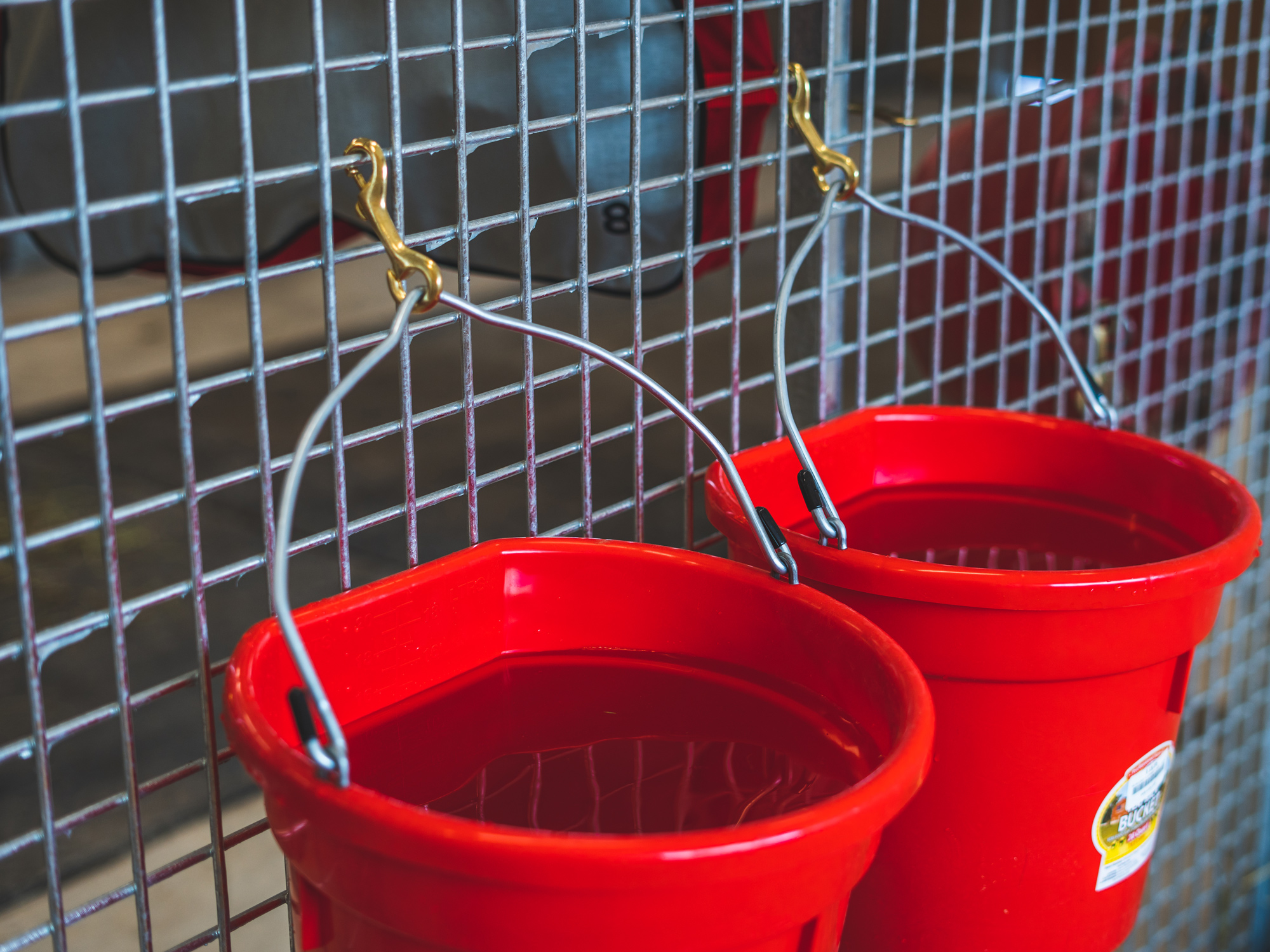
Designing water in a horse barn is not like designing a house. You are planning for:
- High daily water demand
- Constant wash-down and moisture
- Freeze risk (in most of Canada and the northern U.S.)
- Durability and horse safety
- Simple, efficient daily workflow for staff
A good barn water design starts with how the barn will be used, then translates that into a clear plumbing strategy:
where the water enters, how it is distributed, how each stall is supplied, how water can be shut off, how freezing is prevented, and how the system is serviced over time.
Below is a specifier’s playbook so a non-horse professional can design this confidently.
1) Questions to Ask the Customer First (So You Don’t Design the Wrong System)
- A) Barn Use & Operations
- How many horses now — and how many in the future? (Always design for expansion.)
- Who does daily chores? Owner, staff, or boarders? (Labour availability changes everything.)
- Is the barn private, boarding, training, breeding, or a show facility?
- What is the stall count and stall size? Any foaling, quarantine, or rehab stalls?
- Will horses be stalled full-time, part-time, or primarily turned out?
- What is the cleaning routine? Daily wash-down, occasional wash, or minimal water use?
- B) Climate & Freeze Reality
- What are winter conditions like? How cold and for how long?
- Do you want water systems that work with minimal winter babysitting?
- Is the barn heated — fully, partially, or unheated?
- C) Water Source & Quality
- Municipal water or well? If well: yield (GPM), pressure tank size, and treatment system.
- Any water quality concerns (iron, sulphur smell, hardness, sediment)?
- Is monitoring water intake important? (Common in performance and rehab barns.)
- D) Stall Watering Preferences (Where Mistakes Often Happen)
- Buckets or automatic waterers — and why?
- Are you comfortable with horses using push or paddle-style waterers?
- Do you want to measure how much each horse drinks?
- Do you want redundancy (automatic waterer plus bucket hook)?
- E) Wash & Utility Needs
- Do you need hot water in the barn (wash stalls, tack cleaning, clipping)?
- How many wash stalls, and do you want hose bibs along aisles?
- Do you need water outside (paddocks, run-ins, arena watering, landscaping)?
- Where should the service core / utility room be located?
Cold-climate best practice:
Where possible, position utility rooms or tack rooms with water adjacent to wash stalls so plumbing remains in a conditioned zone and freezing risk is minimized.
- F) Risk & Maintenance Preferences
- How hands-on will you be with maintenance?
- Do you want all shutoffs accessible without opening walls?
- Do you want individual shutoffs per stall? (Strongly recommended.)
If these questions are answered early, the water design almost builds itself.
2) Ways to Water a Horse in a Stall (Plain Language)
Horses need constant access to clean water. In stalls, there are three primary approaches.
Option 1: Buckets (Manual Fill or Valve-Filled Buckets)

What It Is
A water bucket is mounted on the stall wall or placed in a corner and filled manually, typically once or twice per day. This remains common in private barns, smaller facilities, and flexible or temporary stall layouts.
Why Some Barns Still Choose Buckets
Pros
- Low upfront cost
- Easy visual monitoring of water consumption
- Easy to medicate or supplement water
- No learning curve for horses
Operational Downsides Architects Should Understand
Cons
- Daily labour for filling and cleaning
- Spills and wet bedding from tipping or pawing
- Freezing in winter unless heated buckets are used
- Higher contamination risk if not cleaned regularly
Electrical note:
Heated buckets typically draw ~130 watts each. If used, GFCI outlets must be provided at each stall with protected cord routing.
Key Spec Implication
Buckets shift complexity from plumbing to daily operations. Poor water access turns bucket watering into a major labour burden.
Workflow matters more than the bucket itself.
Two Practical Ways to Fill Buckets
1) Hose Bibs Near Stalls
Best for: Heated barns or moderate climates.
- Hose bibs within 25 ft of each stall
- Avoid crossing aisles or door swings
- Durable mounting height and impact protection
Benefits
- Faster filling
- Less staff fatigue
- More consistent cleaning routines
Not suitable for unheated barns unless winterized.
2) Frost-Free Hydrants
Best for: Cold or unheated barns.
- Drain below frost line after each use
- Paired with drain-back hoses
- Installed vertically per manufacturer specs
Water Line Depth — Simple Rules
- Full foundation, heated barn:
Water lines may typically be installed ~24″ below grade. - Pole barn or unheated structure:
Water lines must be below local frost depth.
Confirm this early — it affects everything downstream.
Buckets with Shut-Off Valves on the Outside Stall Wall


What It Is
In non-freezing climates, water lines can be run directly to each stall with a manual shut-off valve located on the aisle side. Opening the valve fills the bucket inside the stall; closing it shuts water off completely.
Water lines entering the stall should be protected with a steel guard to prevent chewing or impact damage. (show pictures of the various styles
Typical Setup
- One or two water lines per stall
- Shut-off valves accessible from the aisle
- Discharge above bucket location
- Two buckets per stall, each with its own valve
This allows continuous access while one bucket is cleaned.
Why This Is a Great Option
- Extremely fast filling — no hoses
- Excellent visibility of intake
- No hoses in aisles
- Lower cost than automatic waterers
- Simple, durable plumbing
- Built-in redundancy
This option sits between:
- fully manual bucket systems, and
- fully automatic waterers
When climate allows, it is often the sweet spot.
Important Climate Limitation
This system must not be used where freezing occurs.
Water remains in the line up to the valve.
For cold climates, use:
- frost-free hydrants, or
- automatic waterers with freeze protection.
Option 2: Automatic Waterers (Direct-Plumbed)

What It Is
A wall-mounted fixture supplied directly by a water line.
Common styles
- Float-bowl
- Push / paddle
- Balance-beam (e.g., Nelson)
Pros
- Major labour savings
- Less stall clutter
- Constant water access
Cons
- Requires careful plumbing design
- Intake not visually obvious (can be managed)
- Requires routine cleaning
Option 3: Hybrid / Redundancy Approach
Automatic waterer plus bucket hook or fill option.
Best practice in many barns.
3) Design Water Like a Commercial Building
The Service Core (Utility / Mechanical Room)
This is the heart of the system.
It should be:
- Accessible year-round
- Protected from freezing
- Able to handle minor leaks
- Large enough for labeled valves
Include
- Main shutoff
- Pressure regulation
- Filtration / softener (if required)
- Backflow prevention
- Distribution manifolds
- Drain-down capability
- Optional hot water + mixing valve
If you do only one thing right — make this room a true control center.
4) Plumbing Layouts
- A) Trunk-and-Branch
Lower cost, harder to isolate issues.
- B) Home-Run / Manifold (Recommended)
- Individual stall shutoffs
- Easy maintenance
- Cleaner long-term performance
5) Water Line Routing Principles
- Avoid exterior walls and slab edges
- Use conditioned chases or service corridors
- Bring lines up inside protected stall zones
6) Stall-Level Specs
Automatic Waterers
- Rough-in at correct location
- Typical mounting height: 24–28″ to top of bowl for horses 16 hands and over
- Through-bolted mounting (horses are hard on equipment) consider a galv mounting plate on the front of the wall with square holes of carriage bolts
- Accessible shutoffs and service access
Buckets
- Consistent bucket hook height
- Defined fill strategy
- Spill-tolerant finishes
- GFCI outlets if heated buckets allowed
7) Sizing & Performance Notes
Communicate intent clearly:
- Support simultaneous wash stall and stall use
- Dedicated shutoff per stall
- Zone isolation per barn wing
- Filtration where water quality affects valves
8) Drains, Hose Bibs & Wash-Down
- Hose bib every 4–6 stalls
- Wash stall trench drains at the back of the wash stalls with cleanouts
- Slope aisles away from tack and feed rooms
9) Architect Spec Checklist
- Utility room layout
- Main entry and shutoffs
- Distribution strategy
- Stall rough-ins and heights
- Shutoff access
- Hose bib locations
- Wash stall plumbing and drains
- Freeze protection strategy
- Electrical needs
- Label everything
Labeling valves to stall numbers saves years of frustration.
Don’t forget to follow us on social media to see more of our work!