PART 3 OF 3 — BARN PLANNING 101
Fencing & Turnout Systems: Designing Safe, Durable Turnout That Actually Works
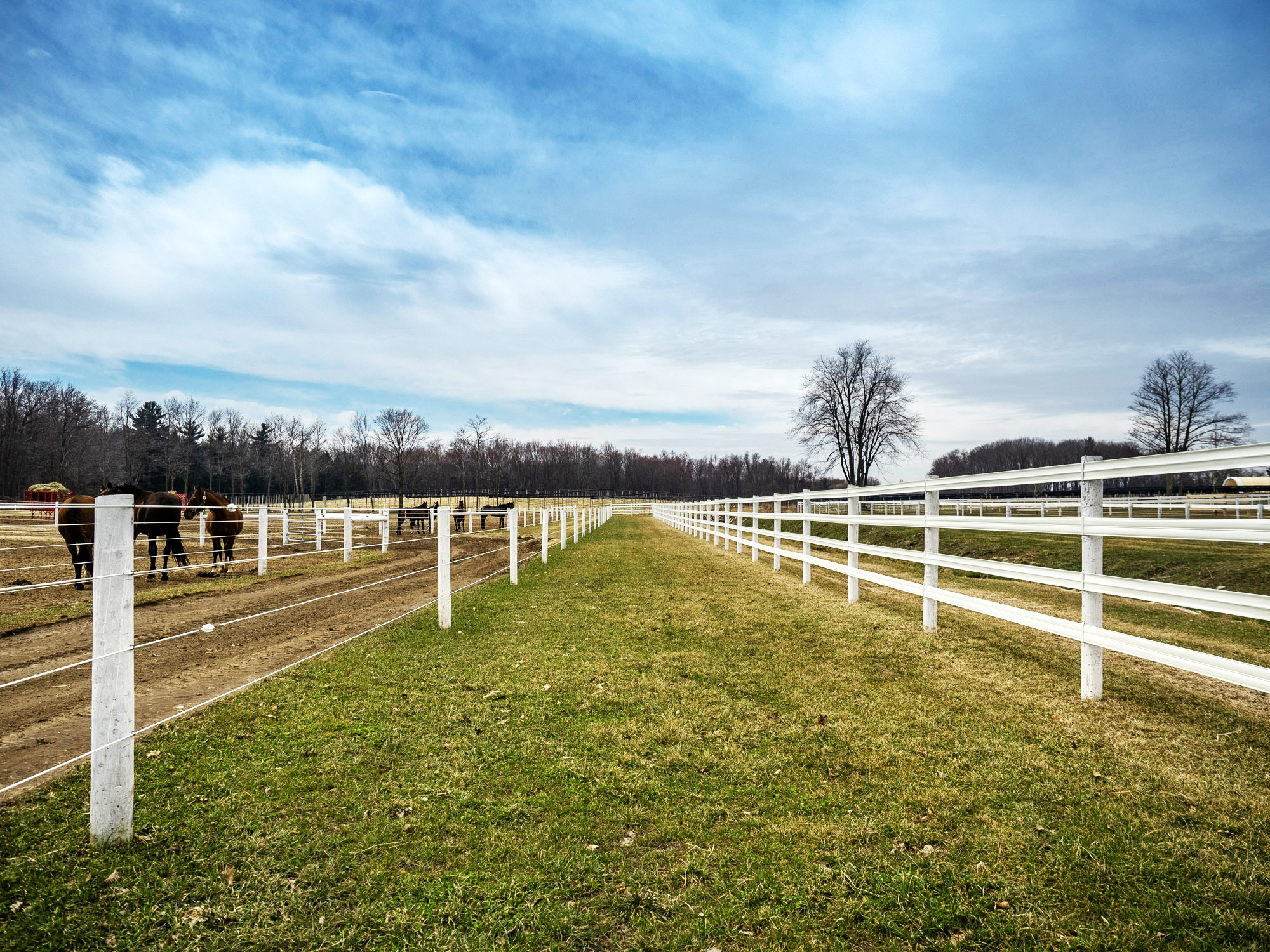
Parts 1 and 2 of this series covered barn planning and stall design. Part 3 addresses the half of the operation that is most visible from the road, most used by the horses, and most often under-planned: the fencing and turnout system.
Horses are not barn animals by nature. They are grazing animals designed to move for most of their waking hours across large areas. Time outside — whether in a small paddock, a rotational pasture system, or a large field — is fundamental to their physical and mental health. A well-designed turnout system is not a secondary consideration after the barn is built. It is the other half of a complete equine facility.
This article covers fencing materials and their real-world trade-offs, paddock and pasture design, gate placement, footing in high-traffic areas, and the common mistakes that make turnout systems harder to manage and more dangerous than they need to be.
1. What Makes a Horse Fence Different
Fencing for horses is categorically different from fencing for other livestock, and understanding why matters before any material decision is made.
Horses are flight animals. Their primary response to a perceived threat — a sudden noise, a dog, a piece of blowing plastic — is to run first and assess later. A horse at speed encountering a fence it cannot see clearly, or a fence that traps a leg rather than deflecting contact, can be injured severely in seconds. Because of this instinct, horse fencing must meet a set of requirements that livestock fencing in general does not.
High visibility is the first requirement. A horse needs to be able to see the fence clearly in order to respect it and avoid collisions. This is why board fencing — wide horizontal rails, high contrast against a field — has been the traditional standard. It registers as a solid visual barrier. Wire fencing that is not supplemented with a visible top rail or tape creates a low-visibility boundary that horses can fail to register at speed, particularly in low light.
Strength with some capacity for deflection is the second requirement. A fence that is so rigid it cannot absorb any impact transfers the full force of a collision back to the horse. A fence that gives too much under pressure provides no containment. The ideal is a system that is strong enough to hold under normal horse pressure and contact but has enough give to reduce injury severity if a horse hits it at speed.
No entrapment is the third and most critical requirement. Horses are claustrophobic by instinct. A horse that gets a leg, hoof, or head caught in a fence will panic immediately, and the injuries that result from that panic — to the horse and to anyone trying to help — are serious. Any fencing system with openings large enough to trap a hoof or leg is genuinely dangerous for horses. This eliminates field wire with large rectangular openings, chain link, and any design where the spacing between horizontal or vertical members exceeds what is necessary for air movement and visibility.
The single most important question to ask when evaluating any fencing option for horses: what happens when a horse hits this fence at speed, or gets caught in it? If the answer involves sharp edges, rigid impact, or entrapment, that fence is not appropriate for horse containment regardless of its other qualities.
2. Fencing Materials: The Real-World Trade-Offs
There is no single correct fencing material for every horse facility. The right choice depends on the horses being contained, the specific application (perimeter pasture, internal division, exercise paddock, stallion enclosure), the climate, the maintenance resources available, and the long-term budget. What follows is an honest assessment of each major option.
Wood Board Fencing
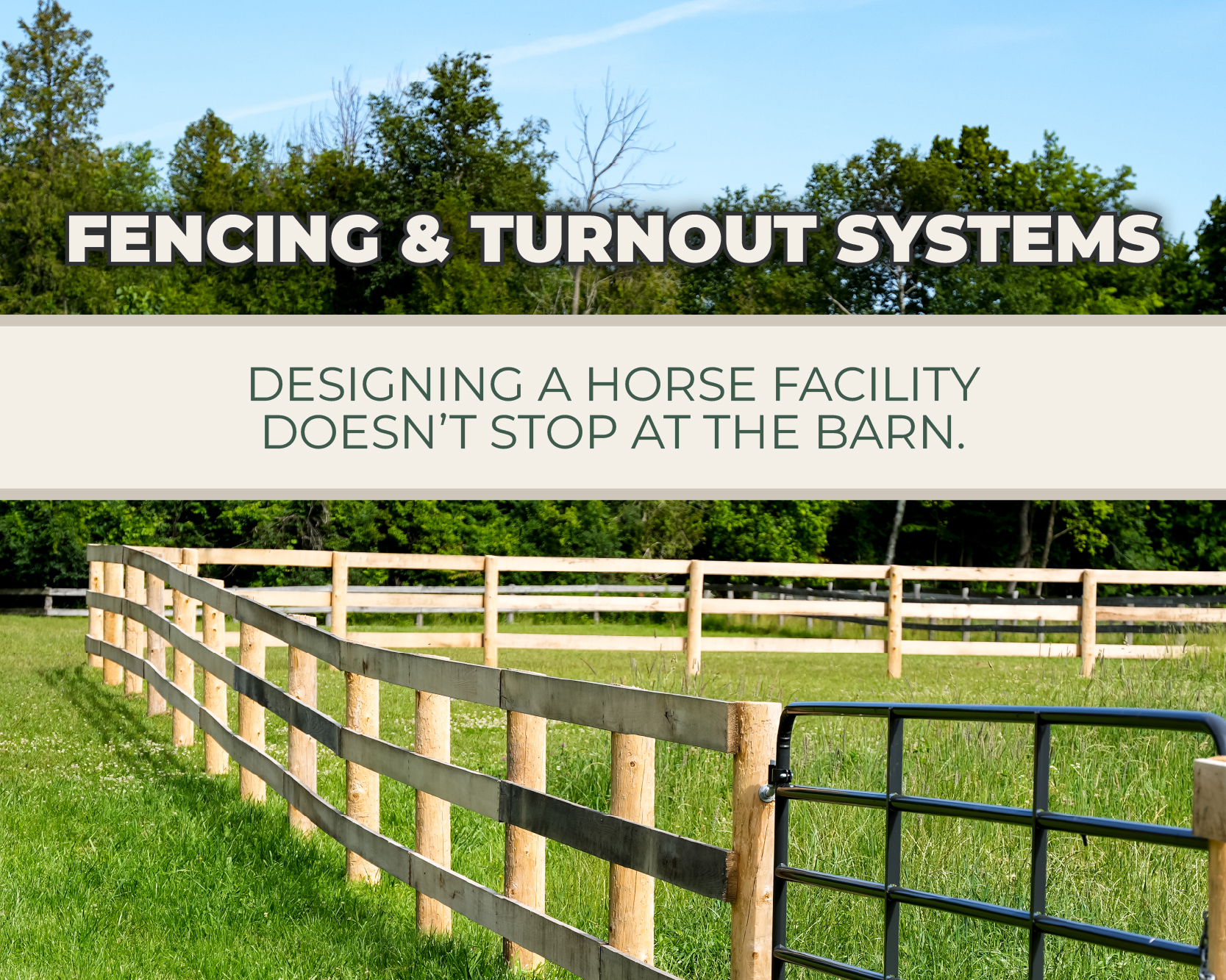
Wood board fencing — typically three or four horizontal planks on treated posts — is the traditional standard for horse farms, and for good reason. It is highly visible, it reads as a solid barrier to horses and is therefore respected, and when a horse makes contact with a board, it is less likely to get a leg trapped than with wire options. The aesthetic is the most established in equine facilities and has clear property value implications.
The trade-offs are real. Wood requires ongoing maintenance — painting or staining, inspection for rot, and replacement of boards that have weathered, splintered, or been chewed. Pressure-treated lumber resists rot but should never be used for rails where horses have contact, as the preservative compounds are toxic if ingested through cribbing. Wood fencing in a wet climate with horses that crib or chew will degrade faster than any other material. Adding a strand of electric fence along the inside of a wood board fence significantly extends its lifespan by deterring leaning and chewing.
Steel Board and Rail Fencing
Steel board fencing is the closest modern equivalent to wood board in appearance and function, with significantly better durability and lower lifetime maintenance. Galvanized steel rails with powder-coated finishes resist moisture, UV degradation, insects, and cribbing. They maintain consistent appearance across decades without painting. When a horse makes impact, quality steel rail systems are engineered with enough flex to reduce injury risk while maintaining structural integrity.
The upfront cost is higher than wood. The lifetime cost — accounting for the absence of painting, board replacement, and ongoing maintenance — is substantially lower for most facilities. For high-value horses, professional operations, and properties where fence appearance matters long-term, steel board fencing represents the best combination of safety, durability, and aesthetics available. It is the system we design and specify most frequently in professional equine facilities.
High-Tensile Wire and Coated Wire
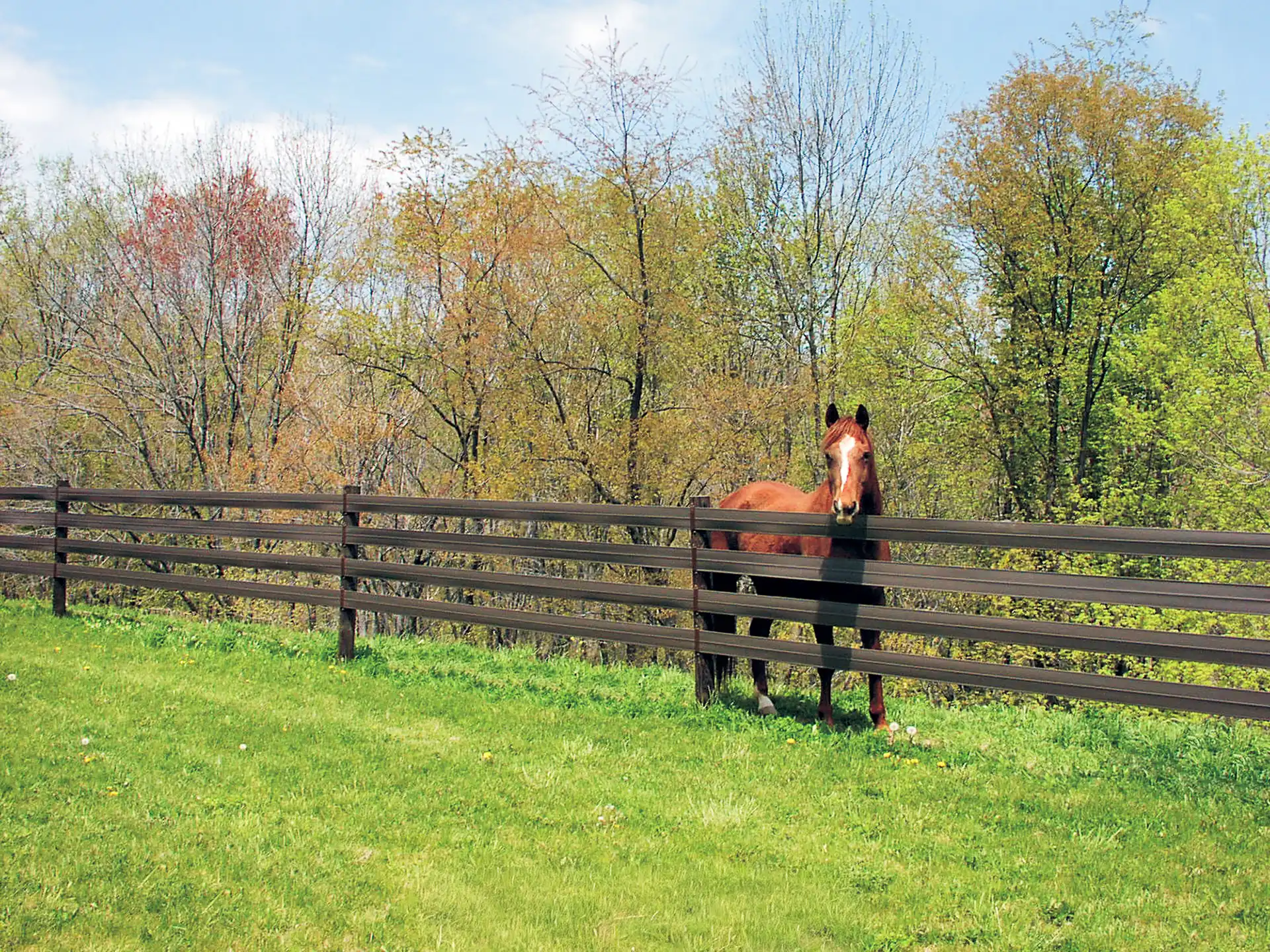
High-tensile wire is cost-effective for large perimeter runs and low-pressure areas of a property. It requires correct installation — appropriate tension, proper post depth and spacing, and corner bracing — and periodic maintenance to retain that tension over time. The significant limitation for horses is visibility: bare high-tensile wire is difficult for horses to see clearly, which creates collision risk. Adding a coated polymer rail or tape at the top of a high-tensile fence substantially addresses this and is recommended as standard practice.
Wire mesh designed specifically for horse containment — with openings of 2 inches by 4 inches or smaller — is considered one of the safer wire options because hooves cannot pass through the mesh. The mesh must be kept taut; sagging mesh creates larger openings and entrapment risk. A board or rail at the top improves visibility and prevents horses from pressing down on the top of the mesh. Standard agricultural field fence with large rectangular openings is not appropriate for horses under any circumstances.
Vinyl (PVC) Fencing
Vinyl fencing is popular for its appearance and its resistance to rot, insects, and the need for painting. In low-pressure applications — arena boundaries, decorative paddock perimeters, areas where horses are not regularly in contact with the fence — it performs adequately. In primary containment applications, particularly in cold climates, it has a critical safety limitation: vinyl becomes brittle at low temperatures and can shatter on impact, creating sharp edges at horse-contact height. A fence that fails by shattering into jagged pieces is not acceptable for horse containment. Vinyl fencing used as a primary perimeter fence should be fitted with an interior electric strand to prevent horse contact with the rails.
Electric Fencing
Electric fencing works through learned behaviour: a horse that touches the fence receives a sharp but safe shock and learns to avoid the boundary. It is lightweight, relatively inexpensive, easy to install and reconfigure, and highly effective for rotational grazing systems and internal pasture division. It is not appropriate as the sole perimeter fence for any horse operation. A horse that is spooked and at a full run will go through an electric fence without hesitation. Electric fencing is most valuable as a supplement to a primary fence system — an interior strand that discourages leaning and contact on a wood or steel board perimeter, or as the cross-fencing material within a pasture rotation system bounded by a permanent fence.
Never use barbed wire for horse fencing. It creates severe laceration risk, it is not appropriate for the flight response patterns of horses, and there is no legitimate application for it in an equine facility.
3. Fence Height and Post Spacing: The Specifications That Matter
Two of the most commonly under-specified aspects of horse fencing are height and post spacing. Both have direct safety consequences.
Perimeter fence height for horses should be a minimum of 5 feet (60 inches). This height deters most horses from attempting to jump the boundary and provides a visual barrier substantial enough to be respected. For paddocks, small exercise areas, and turnout lots where horses face more social pressure from adjacent horses or are managed at higher energy levels, 5 feet is the appropriate standard. For stallions, horses with a history of jumping, or competition horses that are regularly jumping in training, 5.5 to 6 feet provides the additional containment margin those animals require.
Cross-fencing that divides compatible horse groups within a larger property can be somewhat lower — 4.5 feet is a common standard for internal division fencing between compatible groups — but only when the perimeter fence will ultimately contain any horse that goes through or over the internal division. The 4.5-foot internal fence does not function as containment on its own.
The bottom rail or bottom wire height also matters. A clearance of 6 to 8 inches between the lowest fence element and the ground is the practical standard. This reduces the risk of a horse pawing under the fence and getting a foot caught, makes vegetation management along the fence line more manageable, and effectively adds that clearance to the functional fence height.
Post spacing should be matched to the fence type and the pressure expected in that area. For standard board or rail fencing, posts set at 8 to 10 feet are the appropriate range for most applications, with 8-foot spacing used in high-pressure areas near gates, water sources, and feeding stations where horses congregate. Wider spacing — up to 12 feet — is acceptable in lower-pressure areas of a large perimeter pasture. For lightweight electric fencing used in rotational grazing systems, posts can be spaced further apart, but the fence line must remain taut. A fence that sags between posts at any spacing creates both a visual and a physical hazard.
Rail spacing on a board or steel fence should be designed to prevent entrapment. Horizontal rails spaced 7 to 11 inches apart discourage horses from reaching through the fence and reduce the risk of a leg or head becoming trapped. Three rails are standard for most pasture fencing; four rails provide better coverage for foals, smaller horses, or higher-containment applications.
4. Paddock and Pasture Design: Size, Shape, and Layout
How you lay out your turnout system has as much impact on the daily management of your operation as any individual fencing decision. A well-designed paddock and pasture layout makes horse movement, manure management, equipment access, and rotational grazing efficient. A poorly designed one creates daily friction and increases the risk of horse injury.
Sizing for the Application
Paddock sizing should match the intended use. A day turnout paddock for a single horse — an exercise area, not a grazing area — has a practical minimum of approximately 50 feet by 50 feet. This provides room for movement without being large enough that a horse can build significant speed before reaching a fence. For grazing pastures, one acre per horse is the commonly cited starting point, though this assumes adequate rainfall and pasture management to support that stocking rate through the season. In dry climates, or on land that does not carry dense forage, two acres per horse is a more realistic minimum for a grazing-based management approach.
Small paddocks create higher fence pressure. When horses have limited space, they spend more time at the fence, more time in contact with it, and more time testing it. Fencing in high-density paddocks should be specified accordingly — stronger material, closer post spacing, and supplemental electric where warranted.
Shape and Corner Design
Rectangular paddocks with 90-degree corners are the standard design. Long, narrow configurations should be avoided: a paddock that is significantly longer than it is wide creates a channelling effect where horses can build speed along the length, which increases the risk of fence collision at the ends. The ratio of length to width should generally stay within 2:1 for exercise and turnout paddocks.
For paddocks housing more than one horse, rounding the corners is worth serious consideration. A dominant horse can trap a subordinate in a 90-degree corner with no escape route, and the injuries that result from those confrontations can be severe. Rounded or angled corners eliminate the dead-end dynamic and give the lower-ranked horse a line of retreat.
For large pastures used in rotational grazing, a lane system connecting the barn to each paddock section — rather than requiring horses to pass through one paddock to reach another — makes rotation significantly more manageable. Lanes wide enough for farm equipment (at minimum 12 to 16 feet for tractor and mower access) allow pasture maintenance without dismantling fence sections.
Rotational Grazing: The Case for Planning It In
Rotational grazing is the single most effective pasture management practice available to horse owners, and it is also the one most often skipped because it requires more infrastructure at the outset. The principle is straightforward: rather than giving horses continuous access to the entire pasture, the land is divided into sections and horses are moved through them on a rotation, allowing each section to rest and recover before the next grazing period.
The benefits are significant. Pasture carrying capacity — the amount of horse-days the land can sustain per year — is substantially higher under rotational management than continuous grazing. Weed pressure is reduced. Parasite management improves because the rest periods between grazing cycles interrupt the lifecycle of pasture parasites. Soil compaction and erosion are lower because high-traffic areas are regularly rested.
The practical requirement is a minimum of three to four paddock sections, each resting for two to six weeks depending on the season and growth rate. In spring and early summer with good moisture, two weeks of rest per section may be sufficient. In dry midsummer conditions, six weeks or more may be needed for adequate regrowth. Planning the infrastructure for rotational grazing at the time of initial fencing installation — the internal cross-fencing, the lane connections, the gate placements — costs a fraction of retrofitting it later.
5. Gates: The Most Used and Most Overlooked Element
Gates are touched every day. They are opened and closed under every condition — leading an excited horse, carrying feed, operating in mud, snow, and darkness. They are also the point where horses most frequently congregate, which means they are under the highest consistent physical pressure of any element in the fence line.
Gate sizing should be determined by what needs to pass through, not by the minimum required to move horses. For a horse turnout paddock, a gate of 6 to 8 feet accommodates horses and handlers safely with room for the horse to move through without being crowded by the gate frame. If a tractor or small equipment will need to enter for manure removal or maintenance, a 10-foot gate minimum is needed. Feed trucks and trailers require 12 feet or more. The decision about what equipment needs to enter each paddock should be made at the design stage and the gate specified accordingly. A gate that is too narrow for the equipment that needs to use the space creates a permanent operational constraint.
Gate placement should be positioned as close to the barn exit point as practical, which minimizes the distance horses are led in and out each day. Placing gates at the corners of paddocks rather than mid-fence-run is generally more efficient for daily horse movement. When paddocks are positioned adjacent to one another, placing gates across from each other on a shared fence line creates a natural alley that allows horses to be funnelled between paddocks without a long trip around the outside.
Gate hardware must match the standard of the fence itself. Gates are the highest-stress point in any fence system. They are where horses push, pace, crowd, and lean when they are waiting to come in. A gate hung on inadequate hinges or closed with an insufficient latch will fail faster than any other element in the system. Hinges should be heavy-duty and rated for the weight of the gate. Latches must be horse-proof — a horse that can open a gate will open it — and operable with one hand so the handler’s other hand remains free to manage the horse.
The area in front of every gate becomes a high-traffic zone. Horses congregate there, paw the ground, and churn the footing with every entry and exit. Without intervention, this area degrades into a mud pit that creates a slipping hazard and an ongoing maintenance problem. Installing a geotextile base with 3 to 4 inches of crushed stone or coarse gravel in front of each gate — extending the surface beyond the fence line by 1 to 2 feet in each direction — prevents this degradation and maintains safe footing at the highest-traffic point in the turnout system.
Gates are not a place to reduce cost at the specification stage. Every dollar saved on an undersized gate or inadequate gate hardware costs multiples in daily inconvenience, maintenance, and eventual replacement.
6. Footing and Drainage in Turnout Areas
Mud is the enemy of horse welfare and sound management in equal measure. Horses standing in mud develop a range of hoof and skin conditions that are expensive to treat and preventable with proper design. Handlers managing horses in muddy turnout areas face daily safety risk. Equipment operates poorly in mud, and manure management becomes significantly more difficult.
The problem is most acute in specific areas: in front of gates (the highest-traffic point), around water troughs and feeders, and in any area where horses congregate regularly. These areas receive concentrated hoof traffic that destroys natural ground cover and compacts the underlying soil into an impermeable layer that holds moisture. Once that cycle begins, it is self-reinforcing.
The solution is an all-weather pad in these high-traffic areas. The construction sequence is:
- Grade the area to slope away from the barn and the centre of the paddock
- Install a geotextile fabric layer to prevent fines from migrating upward through the stone
- Place a compacted crushed stone base of 4 to 6 inches — clean stone that drains freely, not stone dust or gravel that packs solid
- Top with coarse-washed sand or a finer drainage material for surface comfort
This base system should extend beyond the fence line by 1 to 2 feet on the outside, which distributes the hoof impact and pawing pressure that is highest along the fence at the gate. An all-weather pad that ends exactly at the fence line will degrade at its edges faster than one with that shoulder extension.
For larger sacrifice paddocks or dry lots — turnout areas intentionally kept without grass to preserve pasture during wet periods or to manage horses on restricted grazing — the same base construction principles apply across the full paddock surface. Rubber mat systems are used in some all-weather paddock applications, though they require correct installation over a solid, well-drained base to function properly.
Drainage planning for the turnout system should account for both the paddock surface and the run-off from the paddock perimeter. Horse manure and urine concentrated in a sacrifice paddock or high-traffic area represent a nutrient and pathogen load that should not be allowed to run directly into waterways. Vegetated buffer strips around the paddock perimeter or a designated collection and composting area for paddock manure are both practical approaches. In many Canadian jurisdictions, environmental regulations governing agricultural runoff apply to horse operations, and compliance is easier to build into the design than to retrofit after the fact.
7. Shelter in Turnout: What Horses Actually Need
Horses are well adapted to outdoor conditions. They tolerate cold, wind, and rain far better than many owners expect, particularly when they have access to appropriate shelter when they choose it. The key word is access: horses need shelter available to them, not shelter imposed on them.
The primary shelter requirement in a turnout setting is protection from wind and driving rain. A three-sided run-in shelter — open on the south or east side in most of Canada, away from the prevailing weather direction — provides adequate protection for most horses in most weather conditions when sized correctly. The shelter should be large enough for all horses in the paddock to use simultaneously: a minimum of 12 feet by 24 feet for two horses is a reasonable starting point, with more space recommended for groups with any social tension.
Shelter placement matters. Position the open side away from the prevailing wind direction for your location. Ensure the footing inside and immediately outside the shelter entrance is managed for drainage — the area directly in front of a run-in shelter is another high-traffic concentration point that will degrade to mud without intervention.
For horses in climates with significant fly pressure during summer months, shade is as important as wind shelter. A run-in shed positioned to cast shade during the hottest part of the day, or natural tree shade within the paddock, allows horses to reduce heat stress and fly exposure during peak conditions. Horses without shade access in hot, high-fly-pressure environments will pace, lose weight, and show stress behaviours that a simple design decision can prevent.
8. Designing Turnout to Work With the Barn — Not Separately From It
The most common planning failure in turnout system design is treating the fencing and paddock system as a separate project from the barn rather than as a continuation of it. The two systems share daily workflows, share safety requirements, and share the horses. A barn built without reference to how turnout will be arranged — or turnout installed without reference to how the barn operates — creates friction at every transition point between the two.
The connection between the barn and the turnout area should be direct, safe, and operational in all weather conditions. An all-weather lane connecting the barn exit to the paddock gate — surfaced with gravel, stone dust, or rubber mats over a compacted base — prevents the transition zone from becoming a mud problem that is managed daily. The width of this lane should accommodate the horses being moved and the equipment that will use it.
Gate placement relative to the barn exit point should minimize the distance between where horses come out of the barn and where they enter the paddock. A long walk along a fence line to reach a distant gate adds up across hundreds of daily turnout movements. If the gate requires the handler to pass through a bottleneck, cross another horse’s path, or navigate a tight corner while managing an eager horse, that is a design problem worth solving at the planning stage.
Visibility from the barn into the paddock — being able to see horses from the aisle, the feed room window, or the main entrance — supports daily welfare monitoring. A paddock positioned out of sight from the barn requires a dedicated trip to check on horses. Positioning paddocks in the sight lines of the barn’s primary working areas costs nothing at the design stage and adds meaningful value to daily horse management.
Water access in turnout areas should be planned as part of the overall facility water system. Automatic waterers installed at the design stage are significantly less expensive than trenching water lines after paddocks are established and fencing is in place. The waterer location should be positioned away from the gate — having horses congregate at both the gate and the water source at the same point creates crowding and aggression risk.
A turnout system that complements the barn’s daily workflow makes every transition easier. One that was designed without reference to the barn creates small frictions that add up to meaningful time, safety risk, and operational cost every single day.
9. Common Fencing and Turnout Mistakes — What We See on Real Projects
Fencing specified by perimeter cost per foot rather than by application. Perimeter pasture, high-pressure paddocks, stallion enclosures, and internal rotation divisions all have different requirements. Using the same material and specification across an entire property is rarely the right answer.
Undersized gates that do not accommodate the equipment that needs to use them. A gate that fits horses but not a tractor is a permanent constraint that is expensive to correct once a fence line is established.
No provision for footing management at high-traffic points. Gate areas, water sources, and feeding stations that are not surfaced with an all-weather material become mud problems within the first season. The base installation is not expensive; the ongoing mud management is.
Paddock corners that trap subordinate horses. In multi-horse paddocks with 90-degree corners, an aggressive dominant horse can injure a subordinate that has no escape route. Rounding or angling corners in multi-horse paddocks is a low-cost change at construction that prevents a recurring welfare and veterinary cost.
No planning for rotational grazing infrastructure. A property that had room for four paddock sections but was fenced as one large pasture will overgraze within a few seasons. Retrofitting the internal division fencing and gate system is more expensive and disruptive than installing it from the beginning.
Barbed wire used anywhere on a horse property. There is no appropriate application for barbed wire on a horse farm. It should be removed from any existing fencing before horses use that area, and it should not be specified for any new installation.
Turnout designed separately from the barn. Paddocks positioned without reference to the barn’s operational flow, lanes that become impassable in wet weather, gates located at inconvenient distances from the barn exit — all create operational friction that compounds over years of daily use.
Most of these mistakes are straightforward to avoid when the planning process addresses the turnout system as an integrated part of the facility — not as an afterthought once the barn is complete.
Closing: The Complete Picture
Over three parts, this series has covered the planning decisions that determine whether a horse facility functions well for decades or generates ongoing problems, cost, and risk.
Part 1 established that great barns are planned before they are built — that site selection, workflow design, ventilation, and budget discipline are decisions made before a single post goes in the ground. Part 2 went deep on the stall system — the partition heights, door systems, hardware, flooring, and material choices that separate a stall environment that supports horse health from one that creates it as a daily risk. Part 3 has covered the turnout system — the fencing, paddock design, gates, footing, and integration with the barn that give horses what they actually need: safe, managed time outside.
These three systems — site and barn, stall environment, and turnout — are not independent. A barn with excellent stalls and poor turnout infrastructure serves horses incompletely. A great pasture system connected to a barn with poor workflow design creates daily operational friction. The facilities that work best over time are the ones designed as integrated systems, where each component was planned with reference to the others.
That level of integration is the difference between a horse facility that was built and a horse facility that was designed. It is worth the investment in planning to get it right.
This completes the Barn Planning 101 three-part series.
- Part 1: How to Design a Horse Barn That Actually Works
- Part 2: Horse Stall Design & Safety — What Actually Matters
- Part 3: Fencing & Turnout Systems — Designing Safe, Durable Turnout That Actually Works
Planning your fencing or turnout system?
We work with horse owners and facility managers on fencing design, gate specification, and turnout layout across a wide range of property types and operations. If you are planning a new system or upgrading an existing one, we are happy to walk through your specific situation — no pressure, just practical input from 39 years of real-world equine facility projects.
System Equine — Your Equine Solutions Partner
Don’t forget to follow us on social media to see more of our work!