TL;DR:
- Proper fencing design is crucial for horse safety, containment, and pasture management.
- Visible, flexible fences like wood or polymer reduce impact injuries compared to rigid options.
- Regular inspection and maintenance are essential to ensure fencing remains safe and effective.
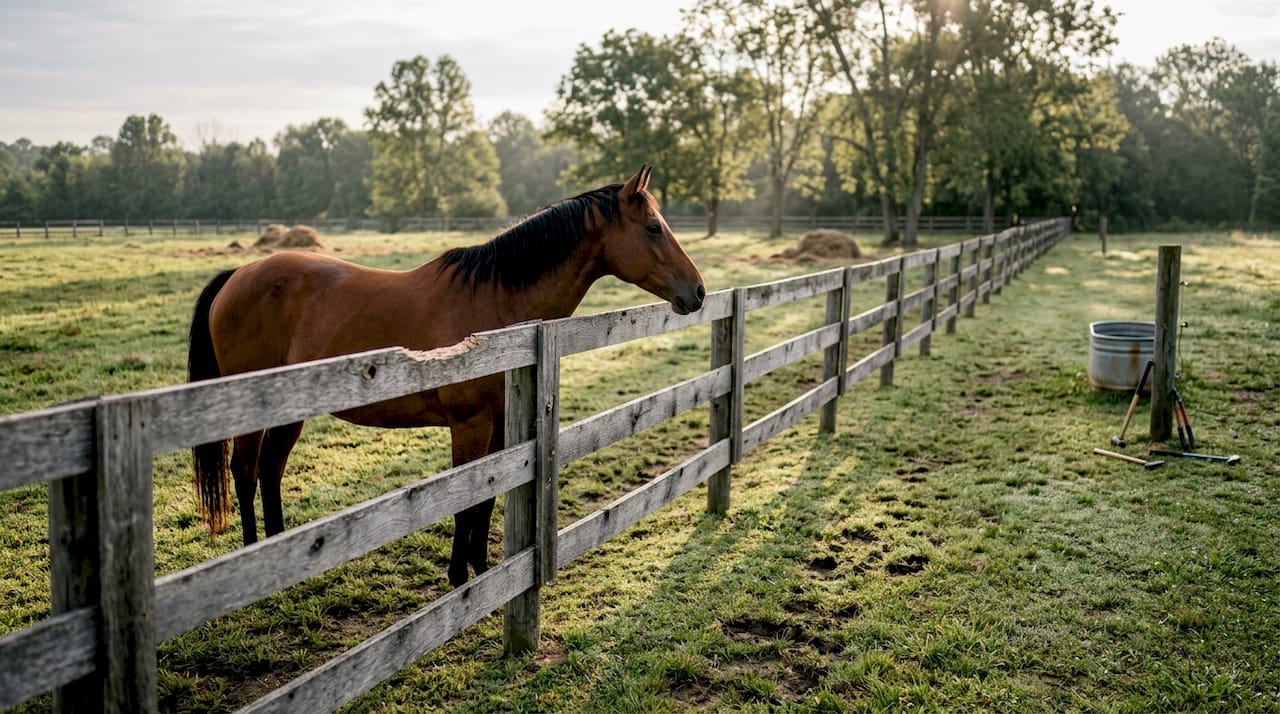
Most horse farm injuries don’t happen in open pastures. They happen at the fence line. A broken board, a strand of wire at chest height, or a fence your horse can’t see until it’s too late — these are the real culprits behind a shocking number of equine injuries every year. Choosing the right fencing isn’t just about keeping horses in. It’s about designing a safe environment that works with how horses think, move, and react. This guide walks you through the science, the options, and the maintenance practices that make the biggest difference.
Table of Contents
- Why fencing matters: From flight response to farm management
- Comparing common horse fencing types: What keeps horses safe?
- Best practices for fence installation and maintenance
- Designing for real-world challenges: Wildlife and temporary needs
- Why flexibility and visibility matter more than sheer strength
- Enhance your horse’s safety with proven fencing solutions
- Frequently asked questions
Key Takeaways
| Point | Details |
|---|---|
| Visibility and flexibility matter | Fences that horses can easily see and that flex on impact are safest for preventing injury. |
| Routine inspection is critical | Monthly checks and timely repairs prevent small problems from escalating into major safety hazards. |
| Match fence to need | Selecting the right style and height for each area and horse type manages risks and supports good health. |
| Consider real-world challenges | Wildlife movement and rotational grazing require thoughtful fence design for safety and stewardship. |
Why fencing matters: From flight response to farm management
Horses are prey animals. When something startles them, their instinct is to run first and think later. That single biological fact changes everything about how you should approach fencing. A horse in full flight doesn’t slow down to check whether the fence ahead is solid. It hits first. That’s why the UGA fencing guide makes clear that fencing safely confines horses, prevents injuries from their flight response, enables pasture management, and provides aesthetic value while deterring escapes and unwanted human interaction. In practical use we build all fencing to a height of 54″ using a standard 8′ post keeps the fence post below the frost line.
The stakes go beyond containment. A fence that fails at the wrong moment can mean a horse on a highway, a spooked herd, or a serious injury that sidelines an animal for months. Fencing also shapes how you manage your property day to day. It determines how you rotate pastures, separate horses by age or temperament, and control grazing patterns.
Here’s what fencing actually does for your operation:
- Containment and safety: Keeps horses from escaping into roads or neighboring properties
- Herd management: Lets you separate mares, foals, stallions, or horses recovering from injury
- Pasture rotation: Divides land so grass recovers between grazing cycles
- Predator deterrence: Reduces risk from coyotes, dogs, or other threats
- Aesthetic value: Defines your property and signals a well-managed facility
“The wrong fence doesn’t just fail to protect — it can actively create the hazard. Visibility and material choice matter as much as height and strength.”
If you’re introducing horses to electric fences for the first time, or setting up fencing for young horses, the design decisions you make upfront will shape how safe and manageable your facility is for years. Even layout choices like a Paddock Paradise fencing setup can influence horse movement and wellbeing in ways most owners don’t anticipate.
Now that the importance of fencing is clear, let’s look at which fence types actually serve horse safety best.
Comparing common horse fencing types: What keeps horses safe?
Not all fences are created equal, and not all strong fences are safe. A solid concrete wall would contain a horse perfectly — and cause catastrophic injury on impact. The goal is to find the balance between containment, visibility, and impact safety.
According to fence safety benchmarks, perimeter fences need a minimum height of 54″ – 56″, while paddock fences should sit at horse eye level plus several inches. That spec alone rules out a lot of common farm fencing that gets repurposed for horses.
Here’s how the major fencing types stack up:
| Fence type | Visibility | Impact safety | Maintenance | Relative cost |
|---|---|---|---|---|
| Board (wood) | High | Good | Moderate | Medium |
| Flex/polymer | High | Excellent | Low | Medium-high |
| Wire (barbed) | Low | Poor | Low | Low |
| High-tensile wire | Low | Low | Low | Low-medium |
| Woven wire mesh | Moderate | Moderate | Moderate | Medium |
| Electric tape/rope | Moderate | Good | Moderate | Low-medium |
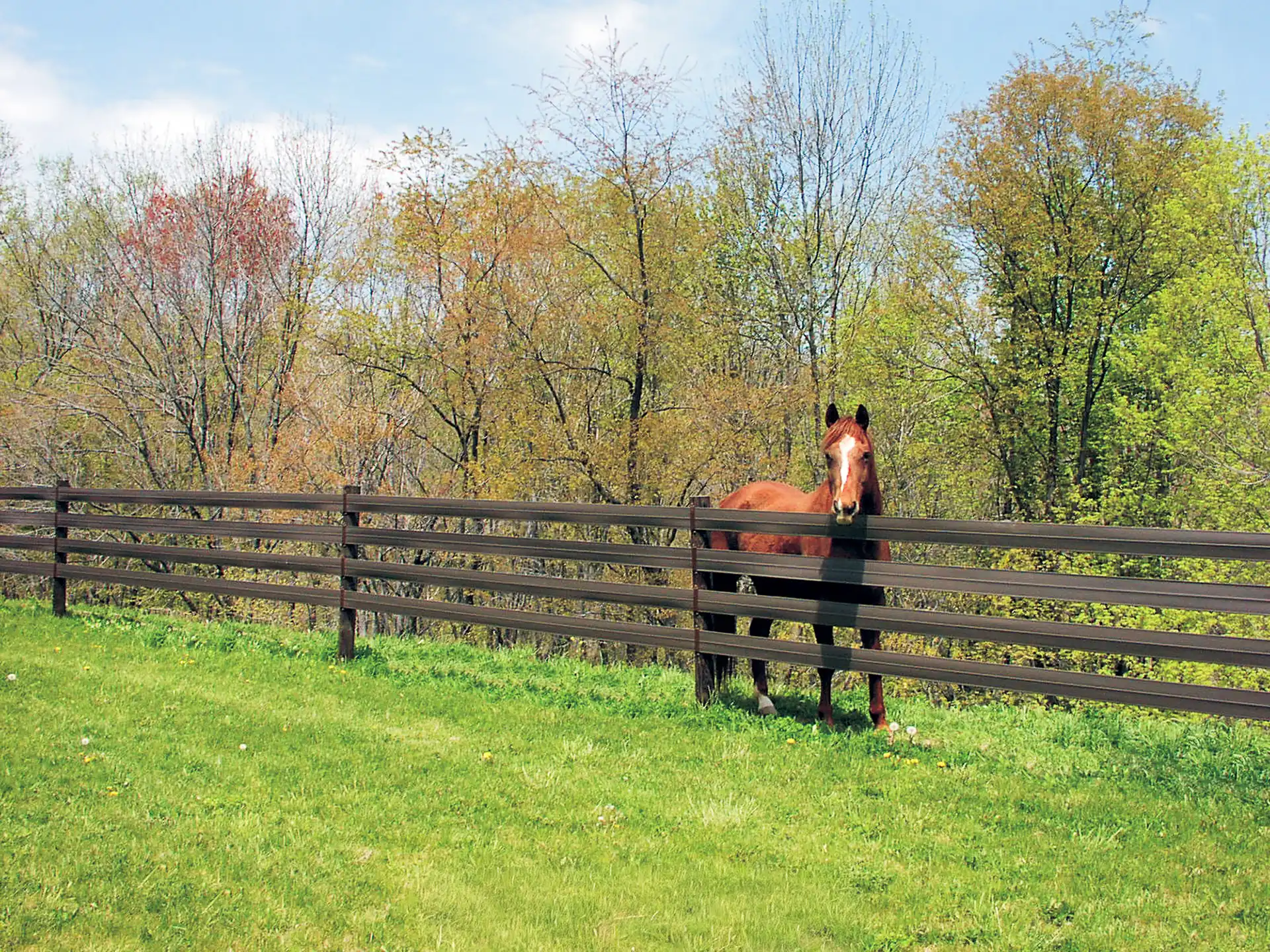
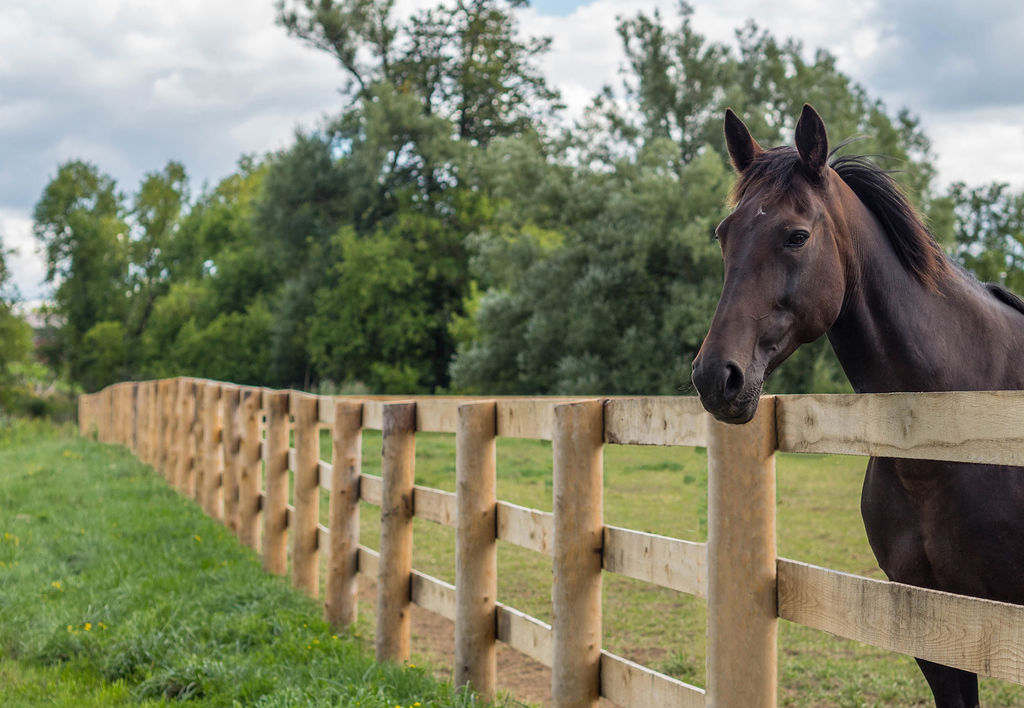
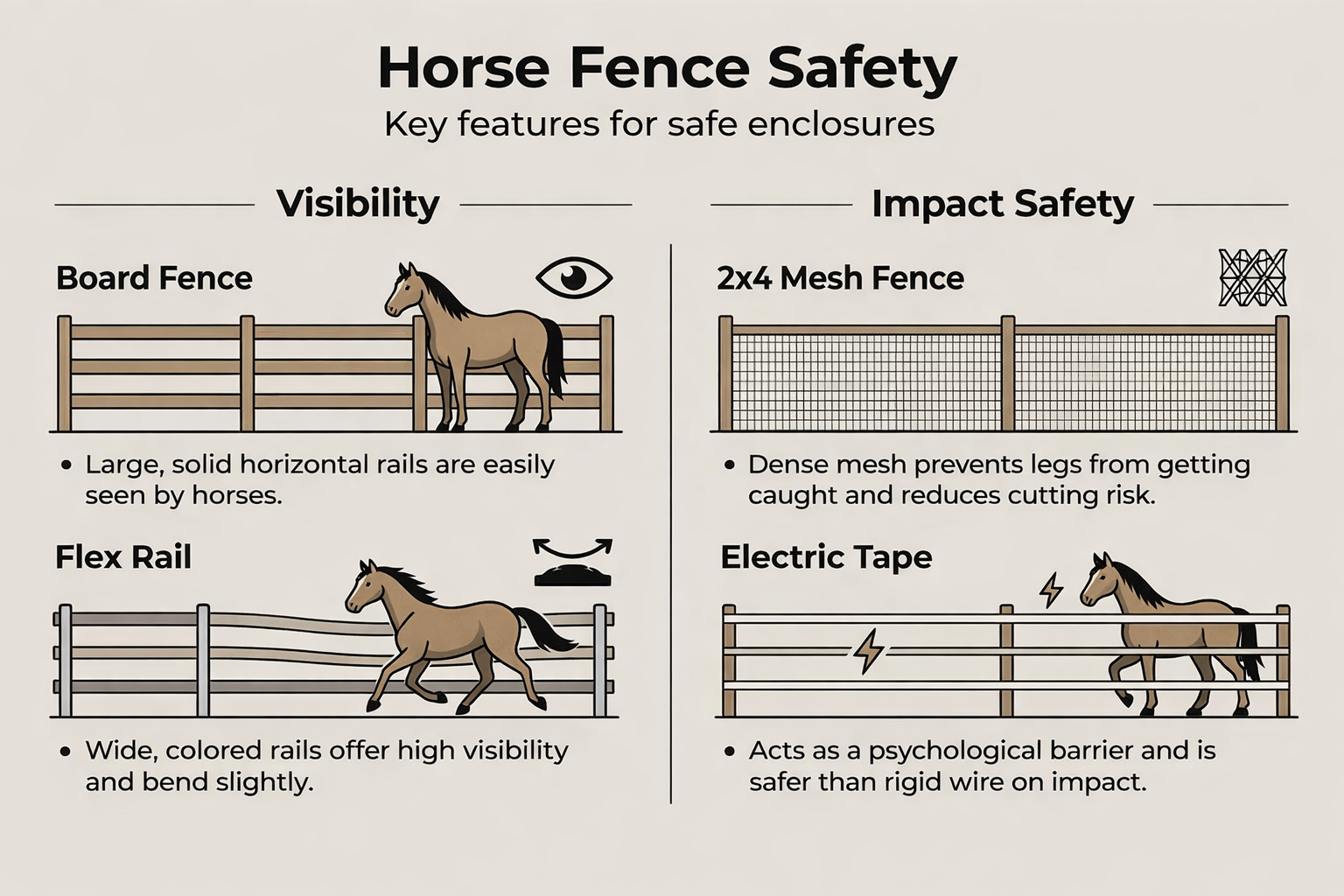
Board fencing remains a top choice for many facilities because horses can see it clearly and it gives way somewhat on impact rather than cutting. Flex fencing, made from polymer materials, takes that logic further. It absorbs impact, resists weathering, and won’t splinter. Barbed wire, on the other hand, is widely considered unsuitable for horses. It’s low-visibility and causes lacerations on contact.
Pro Tip: Match your fence type to your horse population. Foals and young horses need smaller mesh openings to prevent leg entrapment. Stallions need taller, sturdier barriers. Older, calm horses in a managed herd may do well with electric tape if they’ve been properly conditioned.
For a full breakdown of your options, the fencing options for horse farms resource covers materials, layouts, and cost considerations in detail. Choosing the right fence from the start saves you money and prevents injuries down the road.
After considering which fences are safest for horses, planning for long-term safety and budget is next.
Best practices for fence installation and maintenance
Even the best fence becomes a hazard if it’s installed poorly or left to deteriorate. The fence maintenance guidelines from UGA Extension are clear: regular inspections, proper tension, correct post spacing, vegetation control, and terrain awareness are all non-negotiable parts of a safe fencing system.
Here’s a practical installation checklist to start with:
- Set posts at correct spacing. Wood board fences typically need posts every 8 to 10 feet. Coated High Tensile wire fences can span up to 30 feet between posts with proper bracing.
- Dig posts deep enough. A minimum of one-third of the post length should be below ground. For a 6-foot post, that means at least 2 feet underground. Posts should be installed below the frost line in colder climates.
- Use corner bracing. Corners take the most stress. Proper H-brace or diagonal brace assemblies prevent leaning and sagging over time.
- Maintain correct tension. Wire fences that sag become entanglement hazards. Check tension seasonally, as temperature changes cause expansion and contraction.
- Clear vegetation regularly. Weeds and brush growing into fence lines accelerate rot, hide damage, and create footholds for horses to push against.
Pro Tip: Walk your entire fence line at least once a month. Bring a notepad or use your phone to log any issues. A small repair caught early costs a fraction of what a full section replacement does after a horse gets through.
Here’s a quick reference for inspection frequency:
| Fence component | Inspection frequency | Action trigger |
|---|---|---|
| Wire tension | Monthly | Visible sag or slack |
| Post stability | Monthly | Wobble or lean |
| Board condition | Monthly | Cracks, splinters, rot |
| Vegetation | Every 2 weeks | Growth touching fence |
| Gate hardware | Weekly | Stiff, loose, or broken |
If you’re seeing consistent damage in the same spots, it’s worth reviewing signs you need new horse fencing before a small issue becomes a safety emergency. For targeted fixes, the guide on repairing damaged horse fences walks through common repair scenarios step by step. Products like durable flex fencing and premium 4 flex fence are worth considering if you’re replacing sections and want lower long-term maintenance.
While most fencing focuses on horse containment, the landscape may demand a more nuanced approach.
Designing for real-world challenges: Wildlife and temporary needs
Your fence doesn’t exist in isolation. Deer, elk, coyotes, and other wildlife interact with your fencing constantly, and those interactions can damage your fence, stress your horses, and create unexpected safety risks. Designing with wildlife in mind isn’t just good land stewardship — it actively protects your investment.
The wildlife-friendly fencing guidance from Colorado State University Extension outlines how smooth wires and strategic gaps allow wildlife passage while maintaining livestock containment. Key design principles include:
- Keep the bottom wire at least 16 to 18 inches off the ground to allow smaller animals to pass underneath without getting trapped
- Use smooth wire on the top strand rather than barbed wire, which can injure deer and other animals that attempt to jump over
- Avoid tight mesh at ground level in areas with high deer traffic — entanglement injuries can damage fencing and create gaps
- Space wires appropriately so deer can pass through without becoming stuck, while still keeping horses contained
- Consider wildlife corridors when laying out your fence line, routing fences away from known travel paths where possible
“A fence that fights wildlife will lose. Design with the landscape, not against it, and you’ll spend far less time on emergency repairs.”
Temporary and portable fencing adds another layer of flexibility. Rotational grazing programs benefit enormously from portable electric tape or step-in post systems that let you move fence lines seasonally. If you travel with horses to shows or trail rides, portable corral panels or electric tape setups give you safe containment anywhere.
For a full look at permanent and portable options, the quality horse fencing resources at System Equine cover both scenarios in practical detail. The right combination of permanent perimeter fencing and flexible interior or temporary options gives you maximum control over your land and your horses’ safety.
Having addressed the various fencing scenarios and benefits, let’s consider an often-missed expert perspective on prioritizing safety.
Why flexibility and visibility matter more than sheer strength
Here’s the uncomfortable truth most fencing salespeople won’t tell you: the strongest fence is not always the safest fence. We’ve seen facilities invest heavily in rigid, high-gauge steel fencing and then deal with more injuries than neighbors using flexible polymer boards. Why? Because a horse that hits a rigid fence transfers all of that impact energy directly to its body.
University research backs this up. The UGA Extension benchmarks consistently prioritize visibility and flexibility over rigidity for impact safety. A fence your horse can see clearly is one it’s less likely to run into. A fence that gives slightly on contact is one that causes far less damage when contact does happen.
Commercial marketing often emphasizes tensile strength, durability ratings, and load capacity. Those specs matter for containment, but they don’t tell you how a fence behaves when a 1,200-pound animal hits it at speed. Always cross-reference commercial claims with university extension recommendations from sources like UGA and CSU. That’s the standard we hold ourselves to at System Equine, and it should be yours too.
Enhance your horse’s safety with proven fencing solutions
Putting the right fencing in place is one of the most impactful decisions you can make for your horses’ long-term safety. At System Equine, we’ve been helping farm owners and facility managers get this right since 1987, with products and guidance built on real-world experience and research-backed standards.
Whether you’re starting from scratch or upgrading an existing setup, explore our best fencing options to find the right fit for your property and horse population. Our flex fence solution is one of our most trusted products for facilities prioritizing both visibility and impact safety. And if your current fencing needs attention, our horse fence repairs resource gives you the guidance to act before a small problem becomes a serious one.
Frequently asked questions
What is the safest fencing type for horses?
Visible, flexible fencing like flex or board fences is generally safest when installed at proper height and tension. These materials allow horses to see the fence clearly and absorb impact better than rigid alternatives, reducing injury from flight response.
How high should horse perimeter fencing be?
A safe perimeter fence should be at least 54-56″ high. Paddock fences should sit at horse eye level plus several inches to discourage jumping or leaning.
How often should I inspect horse fences?
Monthly fence line walks are the standard recommendation. Check tension, post stability, board condition, and vegetation growth at every inspection.
Are there fencing options that allow wildlife passage?
Yes. Smooth wires and strategic gaps allow deer and other wildlife to pass without becoming entangled, while still keeping horses safely contained inside the fence line.
What’s a common fencing mistake to avoid?
Using rigid, low-visibility fencing is one of the most common errors. Prioritize visibility and flexibility over raw strength to reduce impact injuries when horses make contact with the fence.
Recommended
- How To Introduce Your Horses To Electric Fences Safely (Guide)
- 4 Signs It’s Time for New Horse Farm Fencing
- Repairing Damaged Horse Fences – Quick Fixes (2026)
- Premium 4″ Flex Fence – Strong, Safe & Durable Solution
Don’t forget to follow us on social media to see more of our work!