What Actually Works in Real Barns (and What Doesn’t)

Horse stall flooring problems show up the same way in almost every barn: ammonia smell, wet spots that never dry, mats that move, rotting stall walls, and rising bedding costs. These issues are rarely caused by one bad product. They happen when the stall floor system isn’t working together.
This guide from our experts at System Equine explains the real causes of common stall flooring problems — and the proven fixes used in working barns, from boarding facilities to high-end private stables.
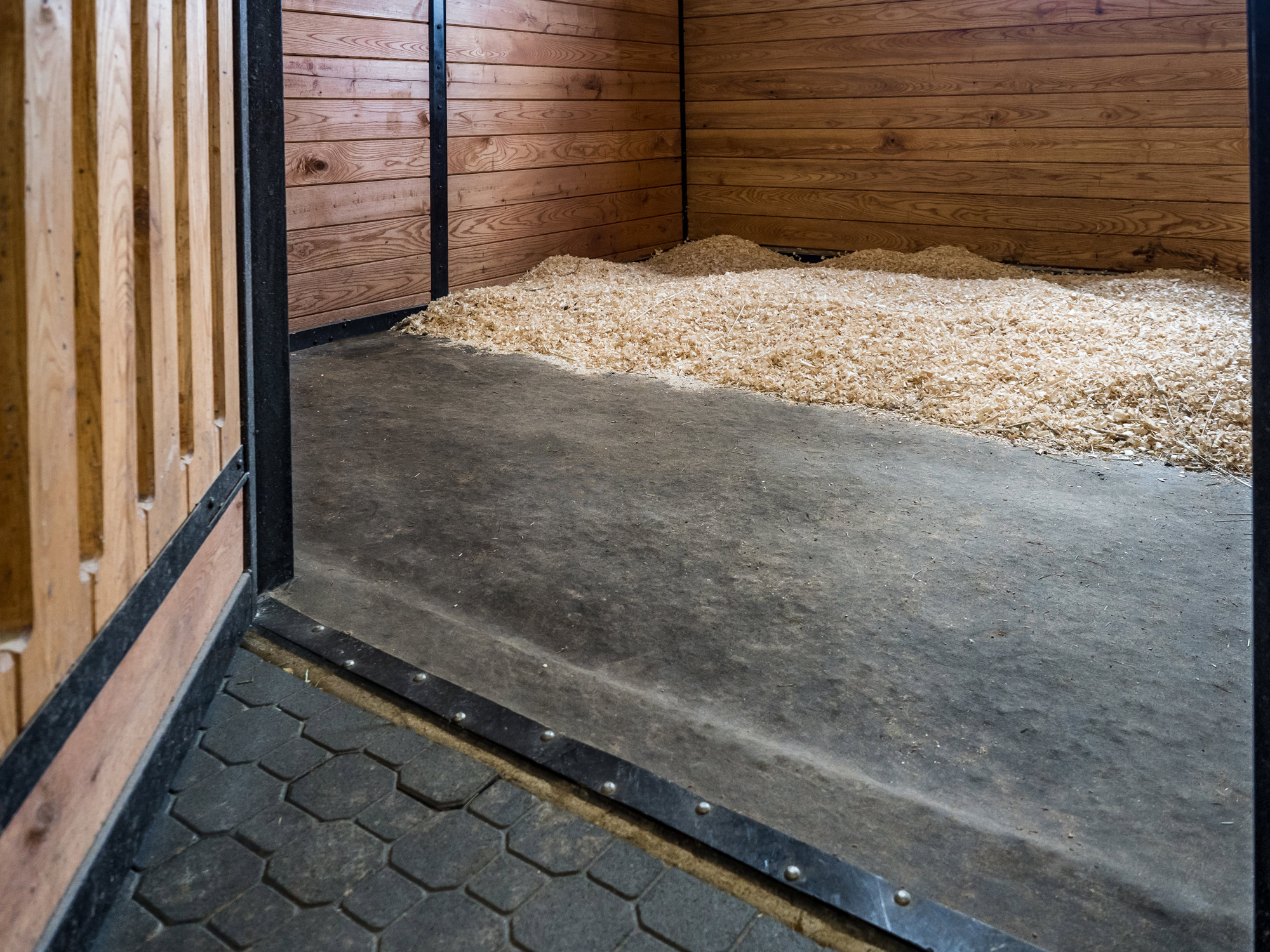
The Reality: Most Horse Stalls Use Mats Over a Base
And the success or failure comes down to three things:
- The base material (concrete vs compacted stone)
- How the mats fit
- How urine is managed in the bedding
Get those right, and stalls stay dry and odor-free. Get them wrong, and no mat will save you.
Problem 1: Ammonia Smell in Horse Stalls
What it looks like
- Strong odor when you walk into the stall
- Smell worsens in summer or when doors are closed
- Smell returns quickly after “deep cleaning”
Why it happens
- Urine is not being absorbed in the bedding fast enough
- Mats have gaps, allowing urine to escape to the edges
- Urine migrates under the mats
- Once urine gets into concrete, it becomes very difficult to remove permanently
Concrete is porous. Over time, it absorbs urine and releases odor even after cleaning.
What actually fixes it
1) Keep urine in the bedding — not under the mats
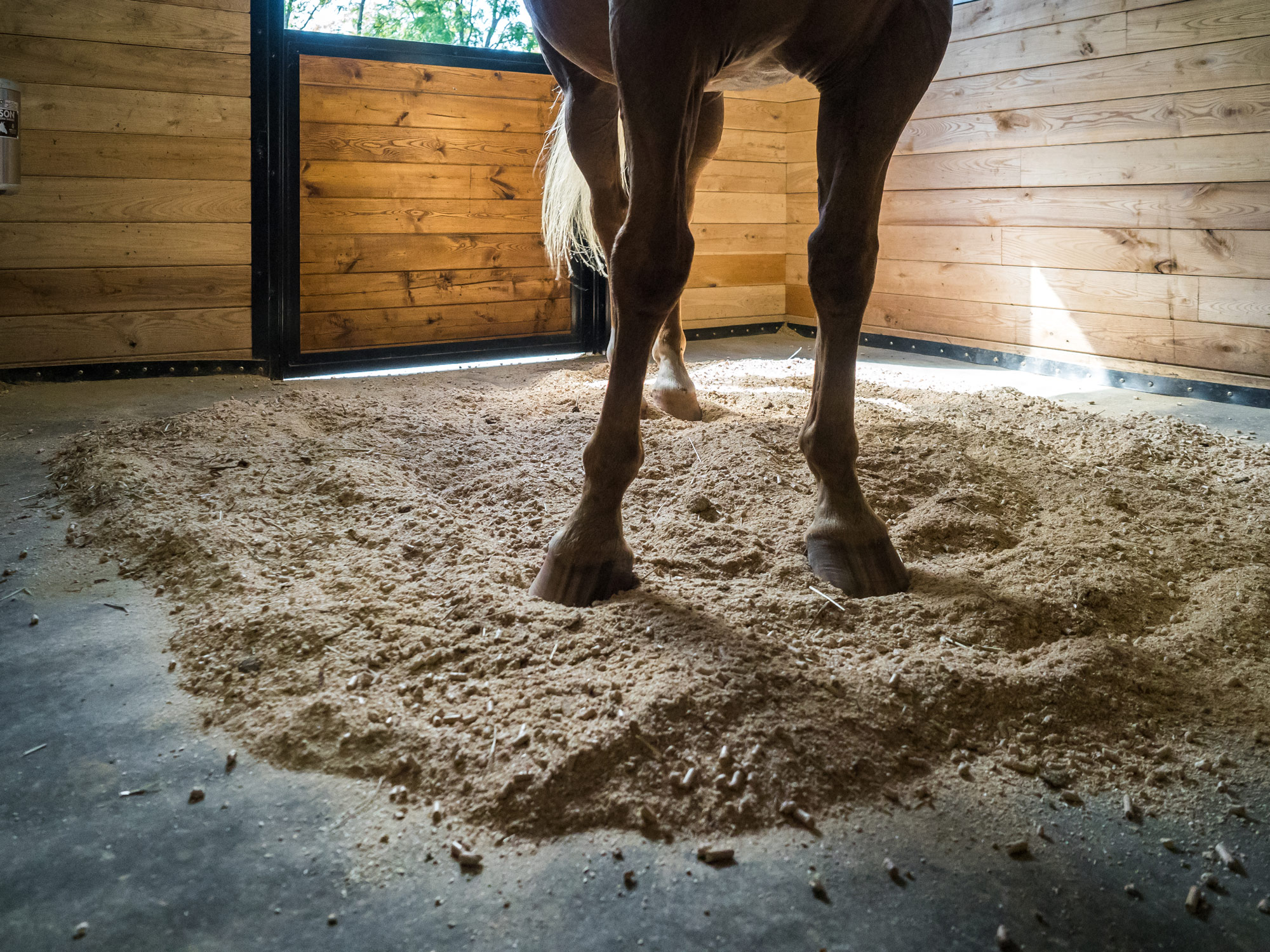
Bedding is designed to absorb urine. Mats are not.
If bedding is thin or inconsistent, urine finds seams and edges and runs underneath the mat system.
Best practice:
- Maintain a consistent absorbent base layer of shavings or equivalent
- Add extra bedding in known wet zones
- Remove wet spots daily
2) Fit mats tightly from wall to wall
Loose mats create urine pathways.
Correct installation:
- Mats cut tight side wall to side wall
- Minimal seams
- No perimeter gaps
- Corners trimmed precisely
A ½” gap is enough to funnel urine underneath.
3) Use interlocking rubber mats
Interlocking mats:
- Reduce seam separation over time
- Prevent mat creep
- Maintain a tighter system long term
Problem 2: Smell Getting Worse After “Upgrading” Mats
Real-world mistake
Some barns install grooved or channeled underside mats believing they improve drainage or airflow.
Why this usually fails in stalls
In a stall over concrete:
- Grooves create pathways for urine to get under the mat
- Once under the mat, the moisture is hidden
- The “air space” accelerates ammonia smell
- Mats are rarely lifted often enough to clean properly
Important distinction:
Grooved underside mats can make sense in wash bays — but in stalls, they often worsen odor. Recommendation is flat mats on top and flat mats on bottom.
Correct approach for concrete stalls
✅ Flat top / flat bottom mats
✅ Tight fit
✅ Interlocking seams
✅ Proper bedding depth
This keeps urine where it belongs: in the bedding, not underneath.
Problem 3: Mats Sliding, Creeping, or Curling
What you see
- Mats slowly move forward
- Seams open up
- Edges curl and become trip hazards
Why it happens
- Mats are not tight to walls
- No interlocking system
- Moisture acting like lubrication underneath
- Uneven base
Fix
- Interlocking mats
- Wall-to-wall fit
- Flat, well-prepared base
- Proper bedding so urine doesn’t constantly wet the underside
Problem 4: Concrete Floors That “Hold” Smell Forever
Common scenario
A barn lifts mats annually to power-wash the concrete. The smell comes back within days.
Why this happens
- Urine has soaked into the concrete over years
- Micro-cracks and pores trap odor
- Even sealed concrete eventually gets compromised
Once concrete is contaminated, complete odor removal is extremely difficult.
Best Long-Term Solution: Avoid Concrete in Horse Stalls
Many of the best-performing barns do not use concrete in stalls at all.
Preferred base: Highly Compacted Limestone Screenings
When built correctly, limestone screenings:
- Do not trap odor the way concrete does
- Are more forgiving underfoot
- Can be refreshed and re-compacted over time
- Work extremely well under rubber mats
What “Done Right” Actually Means
This is not loose gravel.
Proper build-up:
- Excavation to depth
- Compacted sub-base
- Limestone screenings installed in lifts
- Compacted to refusal
- Laser-leveled flat
- Mats installed tight on top (interlocking preferred)
This system stays dry, stable, and odor-resistant.
Problem 5: Rotting Stall Walls and Rusting Hardware
What you see
- Blackened or soft wood at the bottom of stall walls
- Rusted fasteners
- Odor that never goes away
Root cause
- Urine migrating under mats
- Wicking into wood and steel
- No moisture break between floor and wall
Fix
- Tight mat fit
- Adequate bedding
- Elevated wall bases or non-absorbent kick materials
- Prevent urine from ever reaching the wall-floor junction
Problem 6: Rising Bedding Costs
Why bedding gets expensive
- Bedding compensates for poor mat fit
- Urine spreads under mats and resurfaces
- Wet areas grow instead of staying localized
Fix
A properly functioning system:
- Keeps wet spots contained
- Allows targeted removal
- Makes bedding use predictable
Good floors reduce, not increase, bedding usage.
Best-Practice Stall Flooring Systems (Realistic)
Option A: Existing Concrete Stalls (Best Retrofit)
- Flat top / flat bottom interlocking rubber mats
- Cut tight wall-to-wall
- Adequate absorbent bedding
- Aggressive daily wet-spot removal
- Accept that concrete is the weak link long term
Option B: New Build or Major Renovation (Best Overall)
- Highly compacted limestone screenings base
- Interlocking rubber mats on top
- Proper bedding depth
- Easy to maintain and refresh over decades
Final Takeaway: Fix the System, Not the Symptom
Most stall flooring problems are not “bad mats.”
They are:
- Poor fit
- Thin bedding
- Urine getting under mats
- Concrete acting as an odor sponge
The best barns succeed because they:
- Keep urine in the bedding
- Fit mats tightly
- Avoid grooves under mats in stalls
- Choose base materials that don’t trap odor forever
When the system is right, stalls stay dry, horses are more comfortable, and staff spend less time fighting the same problems over and over.
Don’t forget to follow us on social media to see more of our work!