PART 1 OF 3 — BARN PLANNING 101
How to Design a Horse Barn That Actually Works
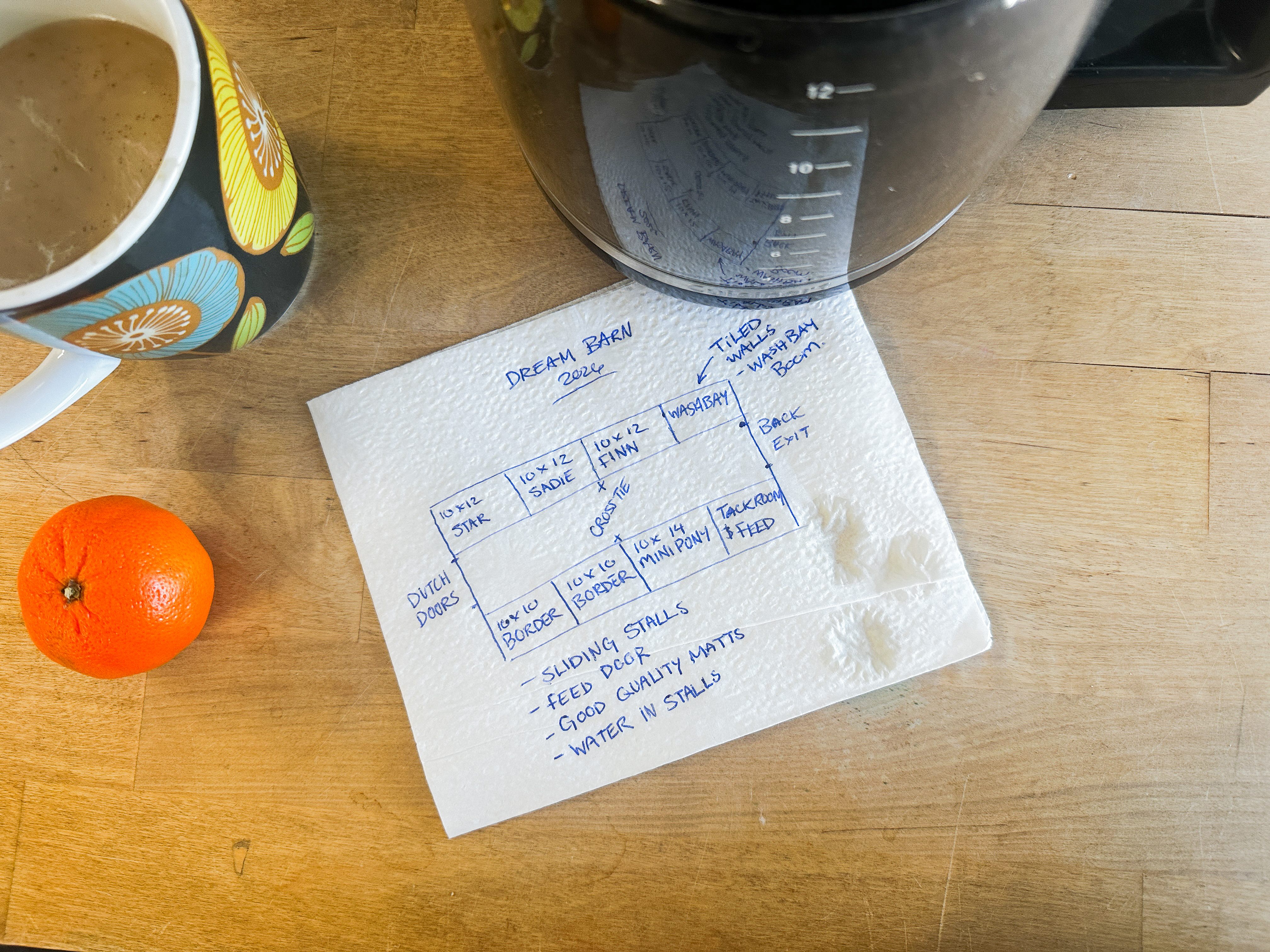
Designing or upgrading a horse barn is one of the most significant investments a horse owner makes. Done well, it supports your horses’ health, simplifies your daily routine, and holds its value for decades. Done poorly, it creates safety risks, inefficiencies, and expensive corrections that could have been avoided at the planning stage.
Over 39 years of working with horse owners, trainers, and facility managers across North America, one pattern consistently separates successful barn projects from frustrating ones: the best barns are planned before they are built.
This article walks through the foundational decisions in horse barn design — what to think through, what the numbers actually mean, and the mistakes we see most often in real-world projects. If you are planning a new barn, expanding an existing facility, or simply trying to understand what to prioritize, this is where to start.
1. Before the Layout: Site Selection Matters More Than Most People Expect
Most barn planning conversations start with layout. They should start earlier — with where the barn sits on the property. Site decisions made at the beginning of a project are nearly impossible to correct once construction begins.
Drainage is the most consequential site consideration. A barn positioned in a low area, on poorly draining soil, or at the base of a slope will fight moisture problems for its entire lifespan. Standing water in paddocks and aisles creates footing hazards and health risks. Water infiltrating the foundation degrades flooring systems and accelerates structural wear. The ground around the barn should slope away from the building at a minimum grade of 2 to 5 percent. Sites that require significant grading work to achieve this are worth evaluating carefully before committing to them.
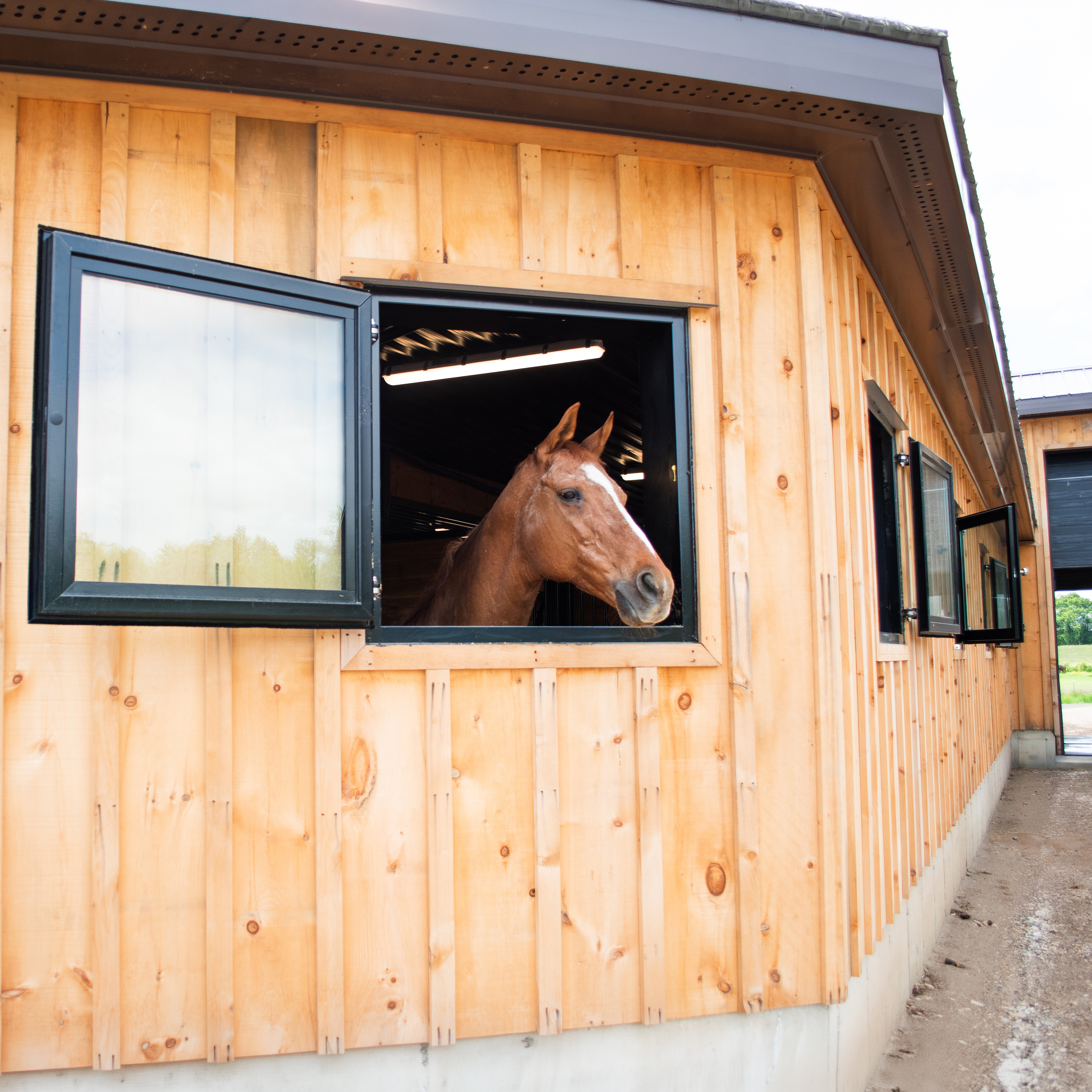
Orientation affects both ventilation and energy performance. A barn with its ridge running east–west, with the primary openings facing south, captures natural light during winter months and limits direct sun exposure during summer. In most North American climates, this reduces heating and cooling demands and creates a more stable interior temperature year-round. Prevailing wind direction should also factor into orientation decisions — positioning the barn so the dominant wind direction aligns with the open ends of a centre-aisle layout promotes cross-ventilation throughout the building.
Access routes need to accommodate more than daily horse movement. Feed and bedding deliveries, veterinary and farrier trucks, manure removal equipment, and in an emergency, a fire apparatus — all need clear access. Industry safety guidance recommends a minimum 20-foot fire lane around all barn structures. Overhead clearances need to accommodate trailers and equipment with full loads. These are easy to design in from the start and difficult to retrofit later.
Separation from hay and bedding storage is a fire safety issue that deserves specific attention. Hay with a moisture content above 15 percent can undergo spontaneous internal heating, which in large stored quantities becomes a combustion risk. Equine architects and fire safety professionals consistently recommend storing bulk hay in a separate structure, positioned at least 100 feet from the main barn. If a separate structure is not feasible, fire-rated construction for in-barn storage areas and strict limits on the quantity stored at any time are the minimum precautions to take.
The time to address site, drainage, orientation, and access is before excavation begins. These decisions cost very little to make correctly at the planning stage and significantly more to correct after the fact.
2. Start With Function: How Will Your Barn Be Used Every Day?
Before selecting a stall system, choosing materials, or finalizing a floor plan, the most valuable question to answer is: what does this barn need to do every day, for the people and horses that will use it?
This sounds obvious. In practice, it is the question most often skipped in favour of moving directly to square footage and stall count. The result is barns that look well-designed on paper and create friction in daily operation.
A useful planning exercise is to walk through a full day in the barn from start to finish — first horse check, feeding rounds, mucking, grooming and tacking up, turnout, farrier and veterinary access, evening feed, late-night check — and note every point where the design creates an extra step, a bottleneck, or a handling challenge. Those friction points are worth designing out before construction.
Key functional questions to answer before finalizing a layout:
- How many horses will be housed regularly, and is that number likely to change?
- What is the daily routine — feeding, turnout, cleaning — and in what sequence does it happen?
- Will multiple people be working in the space simultaneously, and how does that affect traffic flow?
- Where will veterinary and farrier work happen, and does the design support it?
- How will feed and bedding be delivered, stored, and distributed to stalls?
- What happens in an emergency — is there a clear, unobstructed exit path for horses and people?
The answers to these questions should drive layout decisions. Feed room placement near the centre of the stall row saves significant accumulated travel time over a year of daily feeding. Cross-tie placement that avoids aisle congestion during high-traffic periods reduces handling incidents. Wash stall drainage that channels water away from the aisle prevents a daily slip hazard.
Every extra step you take daily becomes a long-term cost. Every design decision that creates friction adds up across hundreds of barn days each year.
3. Barn Layout: The Three Core Configurations
Most horse barn layouts fall into one of three basic configurations. Understanding their trade-offs helps match the design to the operation.
The centre-aisle barn positions stalls in two rows facing a wide central corridor. It is the most common configuration for operations housing four or more horses, and for good reason. The covered aisle provides a sheltered workspace for grooming, tacking up, cross-tying, and veterinary or farrier work regardless of weather. Large overhead doors at each end, when opened, create strong cross-ventilation through the length of the building. The aisle also provides direct visual access to all stalls from almost any point in the barn, which supports monitoring. The trade-off is a larger building envelope and higher construction cost compared to single-row options, and ventilation in the stall zone requires intentional design — ridge vents, open stall fronts, and adequate end-door height.
The shed row barn arranges stalls in a single row, typically with an overhang or covered porch along the front. It is simpler to build, less expensive per stall, and provides excellent natural ventilation because each stall door opens directly to the outside. Horses also benefit from direct visual access to their environment rather than looking across an aisle. The trade-off is reduced all-weather workspace and less shelter for handlers during cleaning and care in poor conditions.
The modified or L-shaped barn combines elements of both, often placing a centre aisle section for primary stalls and a shed row extension for secondary use — additional stalls, hay and equipment storage, or a wash area. This configuration can accommodate growth and provides layout flexibility on irregular properties, though it requires more deliberate planning around workflow and traffic flow between the two sections.
Regardless of configuration, the aisle width decision has significant long-term consequences. A 12-foot aisle is the recognized minimum for safe horse-and-handler movement, cross-tying, and passage of equipment like wheelbarrows. In busier facilities or those with larger horses, 14 feet is more practical and is widely recommended by experienced barn designers. If tractors or skid steers will be used for cleaning, aisle width needs to accommodate their turning radius, and the end doors need to match the aisle width with a minimum of 10 to 12 feet of height for equipment clearance.
Aisle width is one of the most common places where barn projects accept a compromise to save on building footprint. In a working barn, the daily consequence of an undersized aisle is felt every single day.
4. Ventilation: The Most Overlooked Factor in Horse Health
If there is one area of barn design where the gap between what owners plan and what horses actually need is widest, it is ventilation.
The health consequences of poor barn ventilation are well documented. Ammonia from urine accumulation, dust from hay and bedding, and mould spores from damp conditions all contribute to inflammatory airway disease in horses. Barns with well-designed ventilation systems consistently show lower rates of respiratory illness in resident horses. The risk is highest for horses that spend significant time stalled, and it compounds over months and years of exposure.
Effective barn ventilation relies on the interaction of several design elements:
- Ridge vents or a vented ridge cap along the roof peak allow warm, moist air to exhaust continuously as it rises
- Eave vents or open soffits provide the low-level air intake that feeds the ridge exhaust — without intake openings, ridge vents have nothing to draw through the space
- Gable vents or cupolas improve airflow exchange in still-air conditions and are particularly valuable in centre-aisle barns where cross-ventilation from end doors alone is insufficient
- Open grillwork on stall fronts and upper partition sections allows air to move through the stall interior rather than pooling in the aisle only
- End doors that are tall and wide enough to open fully when conditions allow — cross-ventilation between open end doors is one of the most effective passive airflow strategies in a centre-aisle barn
Mechanical ventilation through ceiling fans or adjustable wall fans supplements natural ventilation on still days and in hot climates where passive flow is insufficient. Thermostatic or manual control allows adjustment across seasons. The key point is that mechanical ventilation should supplement a well-designed passive system, not substitute for one.
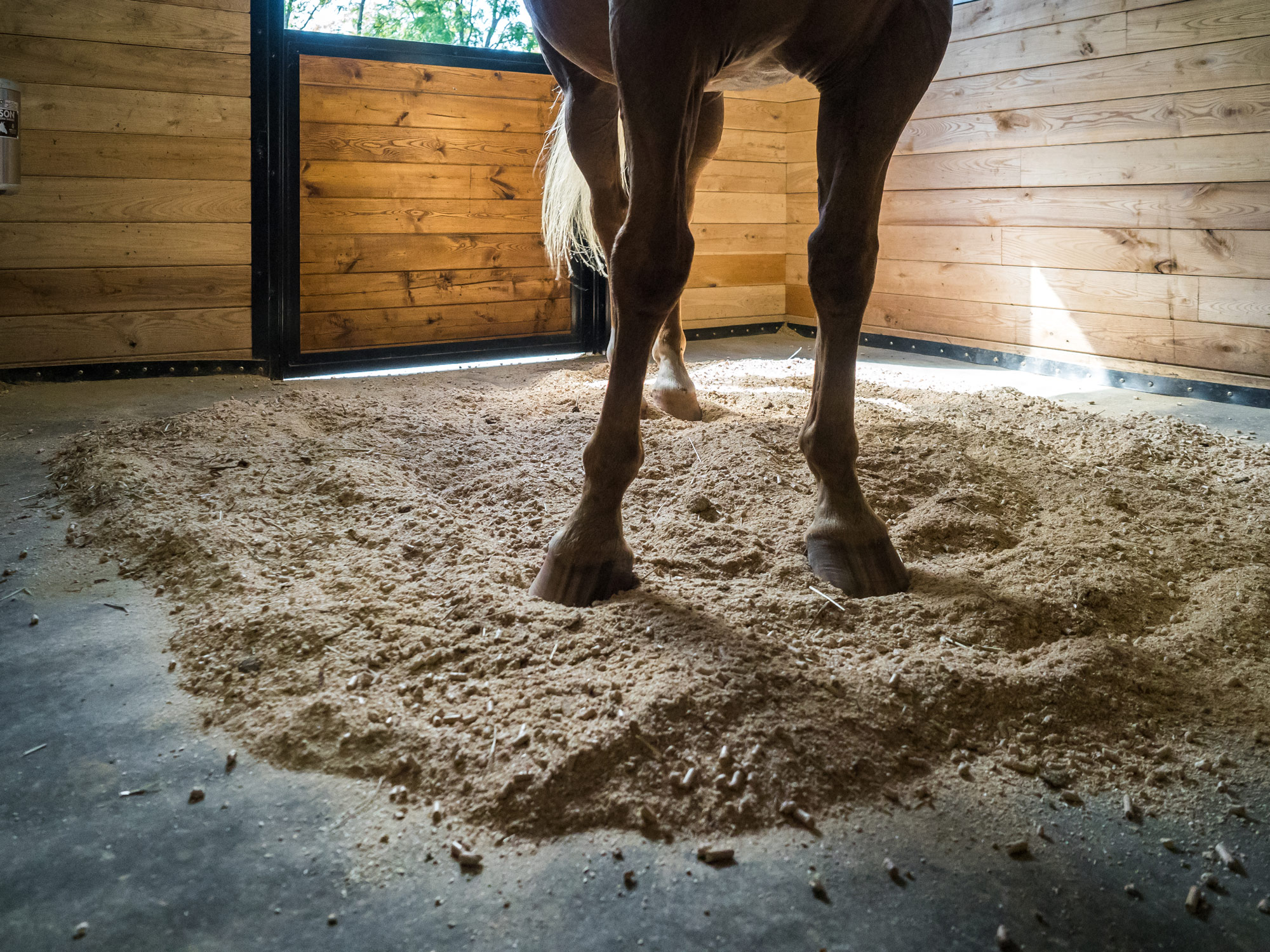
A practical test for ventilation adequacy: if you can detect ammonia smell when entering the barn, the ventilation is not working well enough. At floor level, where a resting horse’s head is positioned during sleep, ammonia concentrations are highest. This is the air the horse breathes most during its rest period.
Ventilation is one of the few barn investments that cannot be adequately retrofitted after construction. Stall systems can be upgraded. Poor airflow in a sealed barn structure is extremely difficult and expensive to correct.
5. Stall Systems, Doors, and Materials: Investing in What Holds Up
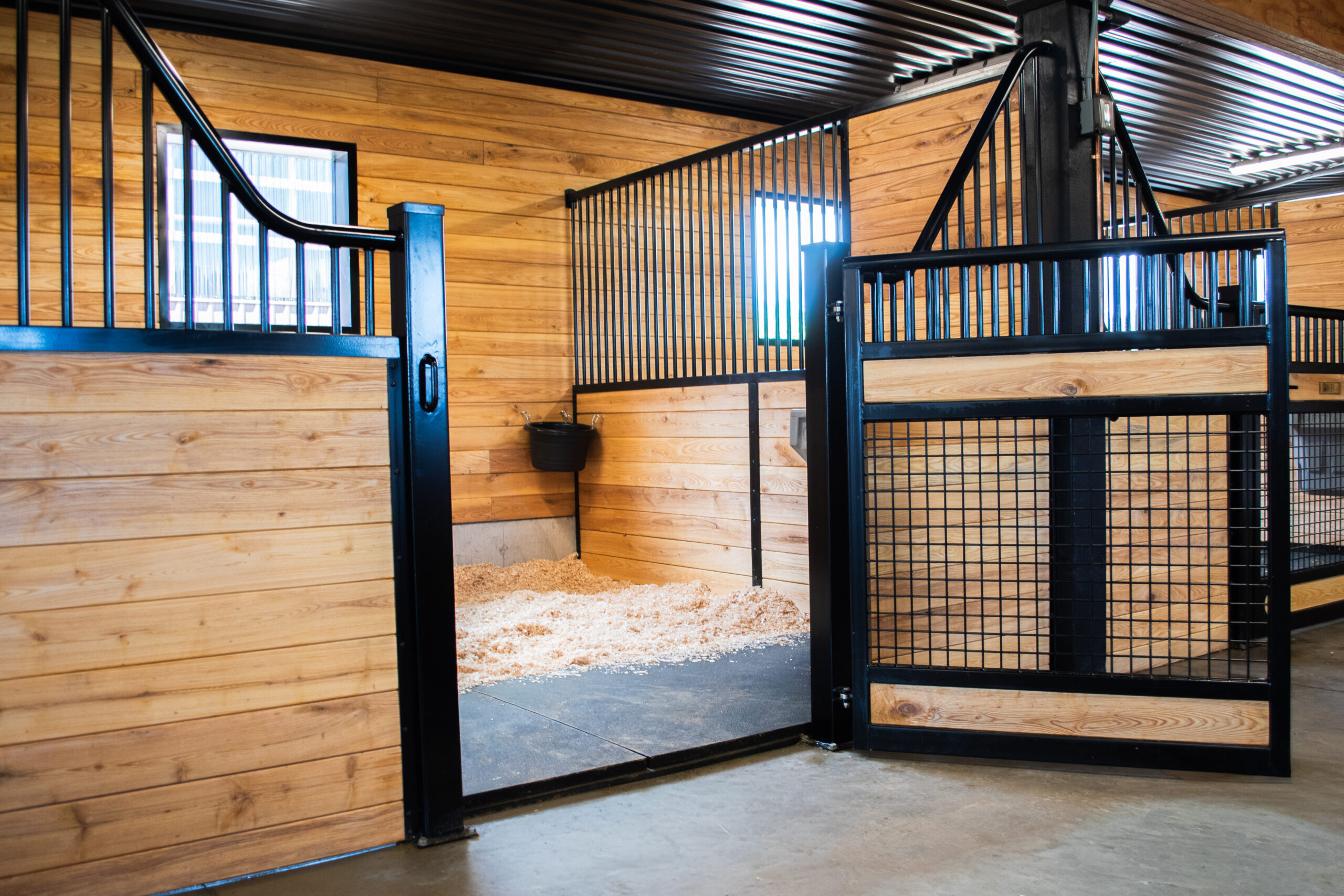
The stall system is the single piece of the barn that every horse interacts with every day for its entire life at that facility. It is also the component that most directly affects daily handler safety and efficiency. This is not the place to optimize for lowest cost.
Stall sizing should be driven by the horses that will actually occupy the space, not by the minimum standards. The 12’ x 12’ configuration is the recognized baseline for an average riding horse, and it is genuinely a minimum — not a comfortable standard. Horses over 16 hands, horses with limited turnout time, or horses that are prone to stress behaviours typically need more room. Foaling stalls require a minimum of 16’ x 20’. The cost difference between a correctly sized stall and an undersized one is modest at the time of construction and significant in the long-term welfare and safety consequences.
Stall construction quality comes down to a few specific criteria:
- Steel gauge — heavier gauge steel withstands daily contact, kicking, and the physical force of a horse pressing against a partition; light gauge bends, fatigues, and fails
- Weld quality — smooth, properly finished welds eliminate the sharp edges and projections that cause lacerations; poorly finished fabrication creates injury risk that compounds over years of use
- Finish quality — G90 pre-galvanized steel provides corrosion resistance at the structural level; powder coating at an automotive-grade standard over galvanized steel adds a durable, cleanable surface that holds up in a humid, high-traffic environment
- Bar spacing — vertical bars in open grill sections should be spaced to prevent hoof or head entrapment; the standard is 2 to 3 inches maximum in upper grill sections
Stall doors are where daily friction shows up most clearly. Sliding doors are strongly preferred over swinging doors for most applications. A swinging door into the aisle is a collision risk for horses being led past; a swinging door into the stall creates handling problems. Sliding doors need smooth operation, quiet movement (which reduces horse stress during entry and exit), and bottom track systems that resist bedding and debris accumulation. One-hand operation is the practical standard — a handler managing a horse should not need both hands to open or close a stall door.
Hardware quality throughout the stall system carries more weight than most buyers expect. Many horses learn to work simple bolt latches open. Purpose-designed equine hardware requiring a two-step operation, or designs that horses cannot manipulate, prevents escapes and the safety incidents that follow. Interior fixtures — bucket brackets, hay rack mounts, tie rings — should be recessed or designed to eliminate projections at horse head height.
The cost difference between adequate and inadequate stall hardware is small at the time of purchase. The cost of a safety incident involving an escaped horse or a hardware-related injury is not.
6. Support Spaces: The Rooms That Make the Barn Work
A barn’s support spaces — feed room, tack room, wash stall, and storage areas — are often treated as secondary decisions after the stall layout is finalized. They should be planned concurrently, because their placement has a direct effect on daily workflow efficiency and horse safety.
The feed room should be centrally located relative to the stall row. A feed room at one end of a 12-stall barn means the handler walks the full aisle length to reach the furthest stalls on every feeding. Centred placement cuts that distance in half. The room should be horse-proof — horses that access grain storage can consume dangerous quantities in a short time. Metal storage containers with secure lids are the appropriate choice for grain and concentrated feeds. The room should also be well-lit and organized well enough that supplements and medication schedules can be read clearly during early morning or late evening feeding rounds.
The tack room needs to stay clean, dry, and humidity-controlled to protect leather equipment from mould and rot. Separating the tack room from the feed room is worth the additional space — feed storage attracts rodents, and rodents are destructive to leather and tack. Wall-mounted saddle racks at appropriate heights, bridle hooks, and a boot shelf near the entrance are the standard layout elements. In boarding operations, individual lockable storage for each boarder’s equipment is a practical and valued feature.
Wash stalls require drainage designed from the outset. The wash area should be isolated from electrical outlets and positioned so water runoff does not migrate into the aisle or adjacent stall areas. Non-slip rubber flooring or textured concrete, secure tie points at appropriate heights, and a hot and cold water supply are the functional requirements. A wash stall that drains poorly creates a standing water hazard that is used daily.
Hay storage placement deserves specific attention for fire safety reasons. Bulk hay storage is best kept in a structure separate from the main barn — equine architects recommend a minimum of 100 feet of separation. The fire risk from improperly stored or damp hay in proximity to horses is significant and well-documented. If in-barn storage is the only option, it should be in a fire-rated enclosure and limited to a small operational quantity — no more than a few days’ supply.
7. Planning Your Budget: What to Prioritize and Where Flexibility Exists
Every barn project has a budget, and most barn projects encounter pressure to reduce costs somewhere. Understanding which decisions have long-term consequences and which are genuinely flexible is worth thinking through before that pressure arrives.
The structural shell, the stall system, and the ventilation design are the three areas that define the barn’s long-term performance. These are not places to reduce specification. A structural shell that is underdimensioned for the snow loads or wind exposure of its climate creates ongoing risk. A stall system that is specified to a minimum cost threshold will require repair and eventual replacement within a timeframe that erodes the apparent saving. A ventilation system that is compromised to reduce construction cost creates horse health consequences that accumulate over years.
Where genuine flexibility exists:
- Cosmetic finishes — interior paint colour, trim details, and decorative elements can be deferred or simplified without affecting performance
- Premium options in support spaces — a basic functional tack room serves the same purpose as an elaborately finished one; the latter can be an upgrade when the budget allows
- Expansion capacity — planning for future stalls or a second wash stall at the foundation and utility stage costs very little and saves significantly compared to retrofitting; the finishes in those spaces can come later
- Lighting fixtures — LED barn lighting is highly cost-effective and energy-efficient; the fixture style is a cosmetic decision that does not need to be premium from day one
The principle worth holding: spend the budget where it affects structural integrity, horse safety, and daily operational efficiency. Defer cosmetic decisions. The barn you will be satisfied with ten years from now is the one that functions well every day, not the one that looked impressive at the open house.
The least expensive option at the time of construction is rarely the most cost-effective choice over the life of the barn.
8. Common Barn Planning Mistakes — and How to Avoid Them
These are the patterns we see most consistently across projects where owners later wish they had made different decisions:
Designing around available space rather than operational workflow. The floor plan gets drawn around the property constraints, and the daily routine is expected to adapt to whatever results. The better approach is to map the daily workflow first and let that drive the layout.
Underestimating aisle width. A 10-foot aisle feels workable during a site visit. After six months of daily use with horses, equipment, and multiple handlers, it feels constraining. The extra two feet of aisle width costs comparatively little at the framing stage and pays returns every day.
Treating ventilation as a secondary decision. Ventilation is often left to be ‘sorted out later’ — with a fan here or a vent added there after the building is closed in. The passive ventilation system of a barn — ridge vents, eave intakes, open partition design — needs to be designed into the structure from the beginning. Retrofitting it afterward is expensive and often structurally constrained.
Choosing materials based on purchase price alone. The stall system, hardware, and structural materials that are specified by upfront cost rather than lifecycle performance consistently underperform. The relevant comparison is not purchase price versus purchase price — it is total cost over ten or fifteen years of use, including maintenance, repair, and replacement.
Not planning for expansion or change. Horse operations grow, change in focus, and accommodate different horses over time. A barn designed with no provision for additional stalls, no utility rough-in for a future wash stall, and no flexibility in the structural grid will be expensive to adapt. Planning for future capacity at the foundation stage costs a fraction of retrofitting it later.
Skipping the site selection process. The barn that is positioned on a convenient area of the property rather than the correct area of the property will manage drainage, mud, and access issues for its entire operational life.
Most of these mistakes are easy to avoid with early planning. Almost all of them are significantly more expensive to correct after construction than to prevent before it.
Build It Once. Build It Right.
A well-planned horse barn is not just easier to use — it is safer for horses, safer for handlers, more efficient in daily operation, and more valuable as a long-term asset. The planning work done before construction begins is the highest-return investment in the entire project.
The decisions covered in this article — site selection, functional workflow, layout configuration, ventilation, stall specification, support space placement, and budget discipline — are the foundation. Get these right and the barn works for you every day for decades. Get them wrong and the barn creates friction, cost, and risk that compounds over time.
The best horse barns are planned. Everything else follows from that.
Up Next: Part 2 — Stall Design & Safety
Part 2 takes a deep dive into horse stall design specifically — partition height, door systems, hardware, ventilation at the stall level, flooring, and the material decisions that separate a stall system that holds up from one that creates ongoing problems. If you are planning or specifying stalls, Part 2 is where the details that matter most are covered.
Need help planning your barn layout?
If you are in the early stages and want a second set of eyes on your design, layout, or site considerations, we are happy to walk through it with you. No pressure — just practical input from 39 years of real-world equine facility projects.
System Equine — Your Equine Solutions Partner
Don’t forget to follow us on social media to see more of our work!