
TL;DR:
- Stall grills are essential safety, airflow, and socialization features in horse barns.
- Proper grill selection improves horse well-being and simplifies management tasks.
- Regular inspection and maintenance ensure long-term safety and durability of stall grills.
Stall grills are one of the most functional components in a well-built barn, yet many horse owners treat them as an afterthought or assume they’re purely decorative metalwork. That assumption can lead to real problems. The right grill setup directly affects your horse’s safety, air quality in the stall, socialization opportunities, and your ability to monitor animals efficiently. Whether you’re building a new facility or upgrading an existing one, understanding what stall grills do and how to choose them wisely is one of the most practical decisions you can make for your horses and your barn operation.
Table of Contents
- What is a horse stall grill?
- Why are stall grills essential for horse barns?
- Comparing stall grill types: Which is right for you?
- Installation and maintenance best practices
- A new perspective on stall grills: More than metal bars
- Explore custom stall grills and barn solutions
- Frequently asked questions
Key Takeaways
| Point | Details |
|---|---|
| Stall grills defined | Horse stall grills are safety-focused metal bars in stalls that enable airflow, visibility, and socialization. |
| Essential barn safety | High-quality grills prevent injuries and improve barn conditions for horses and handlers. |
| Variety of options | Grill types vary by material, configuration, and flexibility to suit different equine needs. |
| Maintenance matters | Routine care and inspection ensure stall grills remain effective and safe over time. |
What is a horse stall grill?
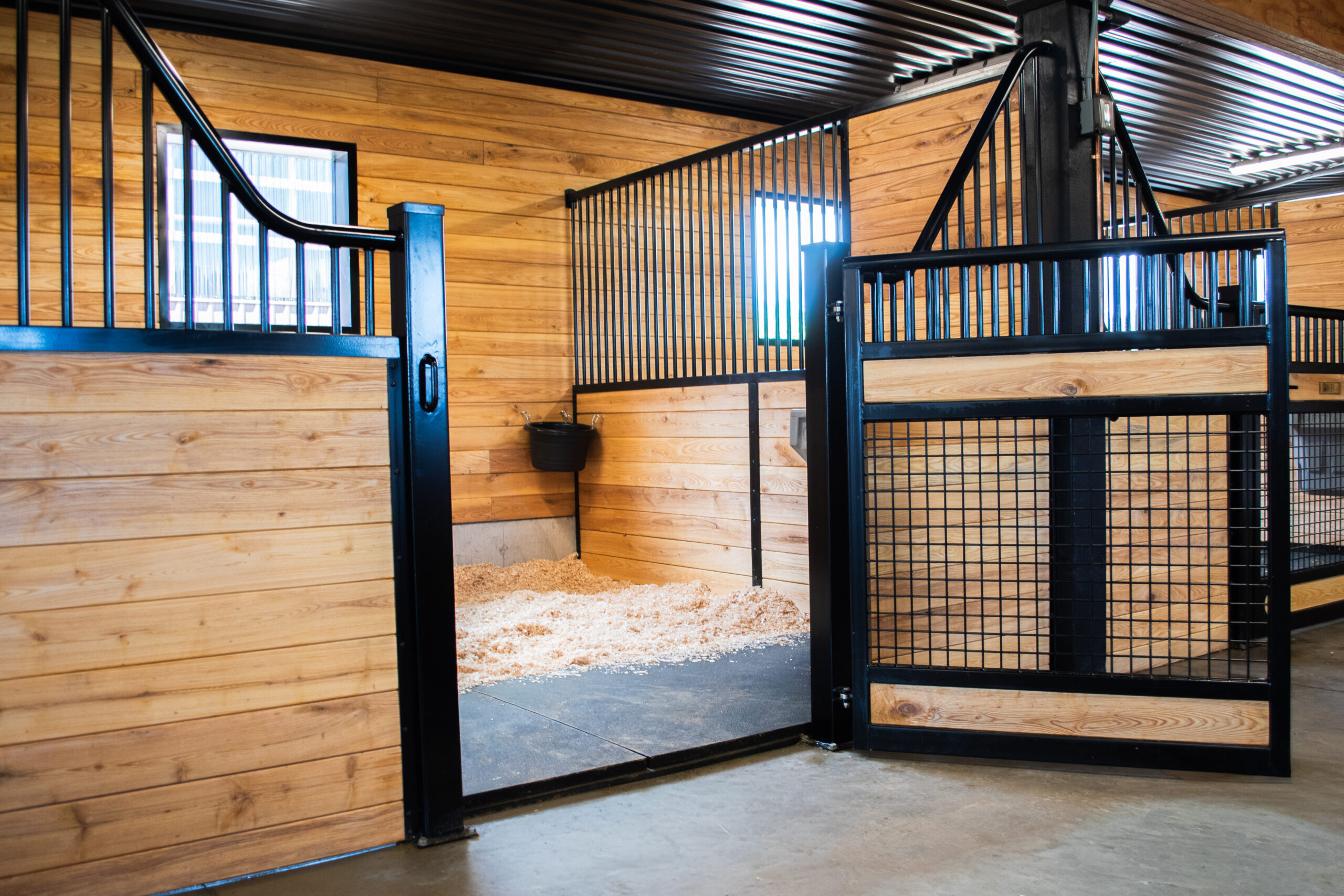
A stall grill is a metal or reinforced component installed in stall doors, partitions, or windows to allow airflow and visibility while containing horses safely. As noted in our horse stall design guide, a grill is a structural feature that separates a horse from neighboring stalls or the barn aisle without blocking the exchange of air or the line of sight. Most grills are fabricated from steel or aluminum, often finished with powder coating or hot-dip galvanizing to resist the harsh moisture and ammonia environment inside a barn.
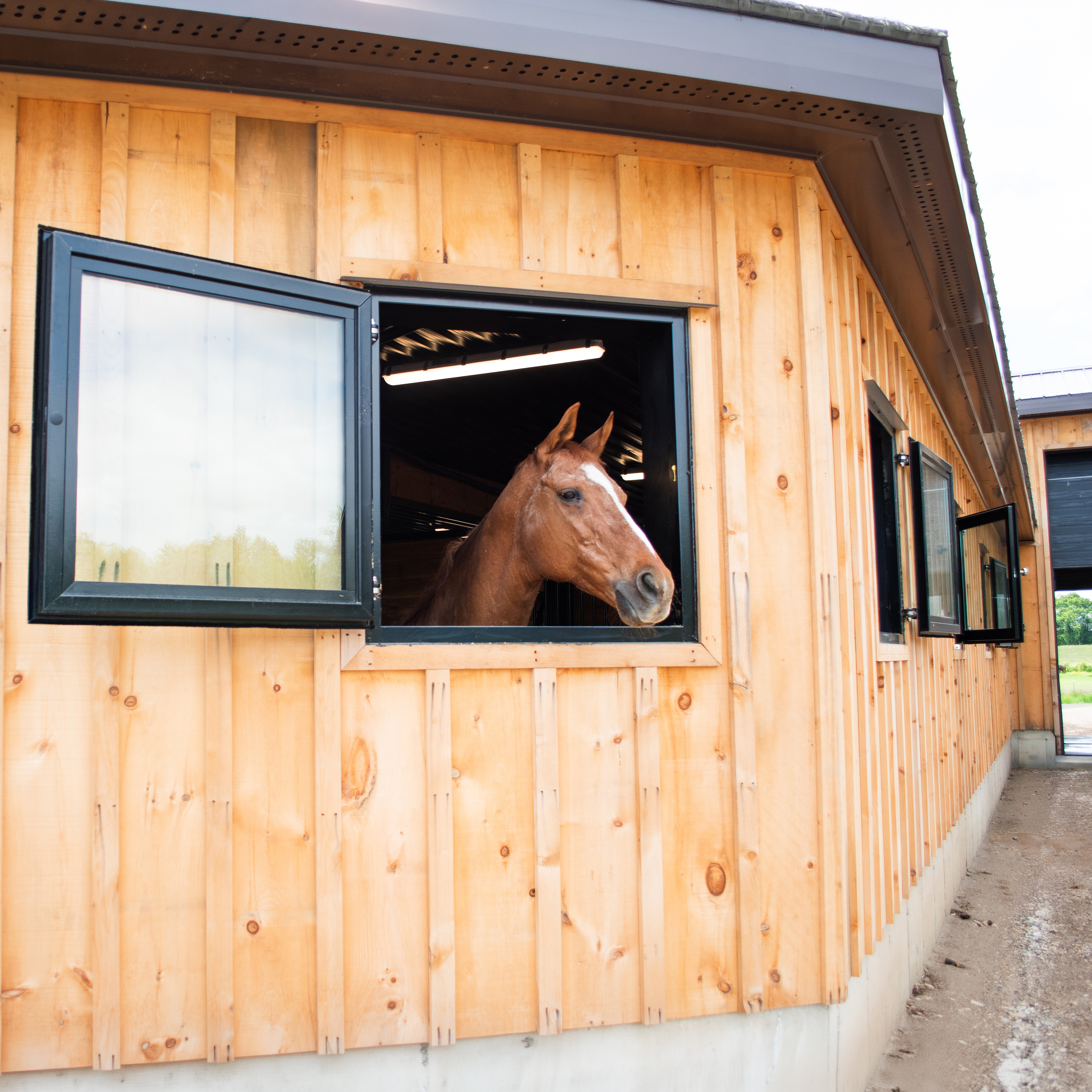
Grills are typically placed in the upper half of stall doors, along partition walls between adjacent stalls, and above solid lower panels in stall fronts. Some barns also use stall window grills to promote cross-ventilation while preventing a horse from reaching through to the outside. A grill can also be placed on the lower portion of the fronts. It you are looking at doing that we recommend the maximum space in between the bars to be 1 1/4″ in between or 2″ on centre with at 7/8″ bar.

Main features of a horse stall grill at a glance:
| Feature | Details |
|---|---|
| Material | Steel, aluminum, or galvanized metal |
| Finish | Powder-coated, galvanized, or painted |
| Placement | Stall doors, partitions, windows |
| Typical height | Upper 30 to 48 inches of a stall panel |
| Primary function | Safety, airflow, visibility, socialization |
The most common grill types you’ll encounter include:
- Vertical bar grills: Parallel vertical bars spaced to prevent a horse from getting a hoof caught while still allowing visual contact
- Horizontal bar grills: Bars run side to side; less popular due to the climbing risk in young or curious horses. If selecting this style, space the bars further apart to reduce entrapment risk.
- Yoke grills: Feature a curved or notched opening that allows horses to extend their heads into the aisle safely, promoting social engagement
- Removable grills: Panels designed to be taken out easily, giving handlers flexible access for foaling, veterinary work, or stall reconfigurations
Each type integrates with the broader stall infrastructure, including door tracks, partition frames, and kick boards. The grill is rarely a standalone decision. It works together with flooring, feeding hardware, and door systems to create a complete, functional living space for your horse.
Why are stall grills essential for horse barns?
With a clear definition in mind, the next step is to understand why stall grills are more than just an add-on. They’re a core safety and welfare feature every quality facility should prioritize.
“Proper stall grills reduce the risk of injury and support horse well-being by promoting airflow and visual contact.” This single principle drives every design choice we recommend at System Equine.
Here are the four primary reasons stall grills belong in every well-managed barn:
- Preventing injury. Horses that are confined without visibility into adjacent stalls become anxious and may kick, paw, or attempt to breach solid barriers. Grills let horses see and acknowledge neighbors, reducing that tension. Properly spaced vertical bars also eliminate the risk of a hoof or leg becoming trapped. The ideal spacing we have found is 2 3/8″ in between the bars or 3.25″ on center for 7/8″ bars. This spacing is good for ventilation and sight lines but small enough so horses do not get their hoofs trapped.
- Promoting social interaction. Horses are herd animals. The ability to see and smell neighboring horses reduces isolation stress, which can trigger stable vices like weaving, cribbing, or wood chewing. A grill is one of the simplest ways to support behavioral health without changing your stall layout.
- Improving airflow. Solid stall fronts and doors trap ammonia, dust, and moisture at nose level, which is damaging to a horse’s respiratory health over time. Grills allow passive air movement through the stall, helping maintain air quality without relying entirely on mechanical ventilation.
- Allowing observation. From a management standpoint, grills let you assess a horse’s condition, behavior, and feeding status with a quick walk down the aisle. Early signs of colic, injury, or distress are far easier to catch when you have a clear visual line into each stall.
For guidance on how grills fit into the full stall picture, our stall partitions section covers how panels, grills, and kick boards work as a system.
Pro Tip: If you manage a busy barn with frequent stall reconfigurations, yoke or removable grills are the most flexible option. They adapt to your operational needs without requiring permanent structural changes.
Comparing stall grill types: Which is right for you?
Not all grills are built the same, and choosing the wrong type for your operation can create maintenance headaches or safety gaps. The stall buyer’s guide confirms that different grill types offer distinct advantages depending on horse management goals, barn climate, and cost considerations.
Grill type comparison:
| Type | Material flexibility | Ease of cleaning | Safety rating | Best use case |
|---|---|---|---|---|
| Vertical bar | High | Easy | Excellent | Most barn types |
| Horizontal bar | Moderate | Moderate | Good | Low-traffic stalls |
| Yoke | High | Moderate | Excellent | Show barns, social horses |
| Removable | High | Easy | Good | Foaling, vet access, flex stalls |
Ready to find the right stall grill for your barn?
System Equine has been designing and manufacturing premium stall grills since 1987. Browse our full range of custom configurations, finishes, and sizes — built to fit your operation.
Before selecting a grill type, ask yourself these questions:
- Does your horse crib, weave, or exhibit aggressive behavior toward neighbors?
- Is your barn in a humid climate where rust-resistant finishes matter more?
- Do you need frequent stall access for breeding, foaling, or medical treatment?
- What is your budget for initial installation versus long-term replacement costs?
- Does barn aesthetics matter for a show facility or client-facing property?
For show barns, yoke grills are popular because they give a polished, professional look while supporting social behavior in high-value horses. Breeding operations often prefer removable grills to allow fast reconfiguration during foaling season. Retirement facilities benefit most from standard vertical grills that prioritize safety with minimal maintenance demands.

For a full range of options, browse our custom horse stalls page where you can explore grill configurations alongside complete stall systems designed for specific operations.
Installation and maintenance best practices
Once you’ve chosen the right stall grill, proper installation and routine maintenance are what keep it performing safely over the long term.
Pre-installation planning:
Start by measuring the exact opening dimensions for each stall door or partition panel. Grills need to fit without gaps that a hoof or muzzle could breach. Confirm the stall frame material so you can select compatible mounting hardware. Plan grill placement so the bottom edge sits above the kick board height to eliminate pinch points.
Step-by-step installation process:
- Measure and mark the mounting points on the stall frame, verifying that spacing is level and square.
- Pre-drill pilot holes if attaching to steel or hardwood frames to avoid splitting or stripping.
- Secure the grill panel using screws and brackets.
- Test all moving parts (hinges, latches, removable pins) before loading the stall.
- Inspect bar spacing one final time to confirm no openings exceed safe clearance guidelines.
Routine maintenance checks:
As covered in our stall doors maintenance guide, routine inspection and cleaning of stall grills prevent hazards and extend durability. Plan a monthly inspection that includes:
- Checking welds for cracks or separation at bar joints
- Looking for rust spots, especially at mounting hardware contact points
- Testing latch and pin mechanisms for smooth operation
- Removing debris, manure, and feed buildup from bar surfaces
Replace a grill immediately if you find bent bars, broken welds, or corrosion that has weakened the structure. A compromised grill is a direct injury risk.
Pro Tip: Powder-coated or hot-dip galvanized grills offer significantly better rust resistance than painted steel alone. In humid climates or poorly ventilated barns, this finish choice can extend the useful life of a grill by years. Hot-dip galvanized is the best overall finish although it does not look or feel as nice as powder coating.
A new perspective on stall grills: More than metal bars
Here’s something we’ve observed after decades working with barn builders and horse owners: most facilities make grill decisions based on price or habit rather than strategy. They order whatever came standard with the stall system and never revisit the choice. That’s a missed opportunity.
Grill selection shapes daily barn life in ways that aren’t obvious until something goes wrong. A horse that’s anxious at feeding time because it can’t see its neighbor. A handler who can’t quickly assess a sick animal. A stall that never fully dries out because solid panels block passive airflow. These are all grill problems in disguise.
We believe the right approach starts with the horse’s specific behavioral profile and the facility’s operational demands, not the catalog default. Our horse stall design expertise consistently shows that facilities investing in purpose-matched grills report fewer injuries, lower maintenance costs, and better animal welfare outcomes over time. The upfront cost difference between a standard and a well-matched grill is almost always recovered within the first year through reduced repairs and fewer behavioral incidents. Think of grill selection as a management tool, not a material specification. Stall front grills can have a feed opening, feed door or swoop in them for greater flexibility.
Explore custom stall grills and barn solutions
If you’re ready to upgrade your barn or want personalized recommendations, we’re here to help you find the right fit.
At System Equine, we’ve been designing and manufacturing high-quality stall grills and complete barn systems since 1987. Our team works with facilities of every size, from private hobby barns to large commercial operations, to match the right grill type, finish, and configuration to your specific needs. Whether you’re starting from scratch or retrofitting existing stalls, explore our shop horse stalls page for the full range of options. You can also review our horse stalls guide and stall design planning resources to build a complete picture before you buy.
Frequently asked questions
What are the main types of horse stall grills?
The most common types include vertical, horizontal, yoke, and removable grills, each offering different benefits for airflow, safety, and horse interaction. Review grill type advantages in our buyer’s guide to match options to your specific barn setup. Add in feed openings for feed doors for feeding flexibility.
How do horse stall grills improve barn safety?
Stall grills prevent injuries, increase airflow, and allow horses and humans to observe each other, supporting overall barn safety. Proper stall grills also reduce behavioral stress by allowing visual contact between neighboring horses.
How often should stall grills be inspected or replaced?
Inspect grills monthly for signs of rust, bending, or broken welds and replace them when the structure is compromised. Routine inspection catches early damage before it becomes a safety hazard.
Are custom stall grills worth the investment?
Custom-designed grills address unique barn layouts and specific horse behavioral needs, often enhancing both safety and longevity. For most facilities, the added value far outweighs the modest price difference over standard options.
Recommended
- Window Grills – Find The Perfect Horse Stall Window Grill
- Your Complete Horse Stall Design & Planning Guide [2026]
- How to Choose the Best Horse Stall Designer [2026 Guide]
- Stall Doors for Horses: Signs It’s Time to Replace & Upgrade – System Equine
Don’t forget to follow us on social media to see more of our work!