Expert horse fence guidance from Ontario’s most experienced installer
How to plan and install horse fencing in Ontario — the complete guide.
Choosing and installing the right horse fence is one of the most important decisions you’ll make for your property. The wrong fence is expensive to replace, potentially dangerous for your horses, and a source of ongoing maintenance headaches. This guide covers everything you need to know — fence types, materials, post spacing, rail height, installation methods, and the questions to ask before you start.
Choosing the Right Fence Type
Step 1: Choose the right fence type for your horses and your property.
Not every fence is appropriate for every situation on a horse property. The right fence type depends on the animals you are containing, the zone of the property, the pressure the fence will be under, and your aesthetic and maintenance preferences. Here is how to think through each zone.
For general horse paddocks and pastures
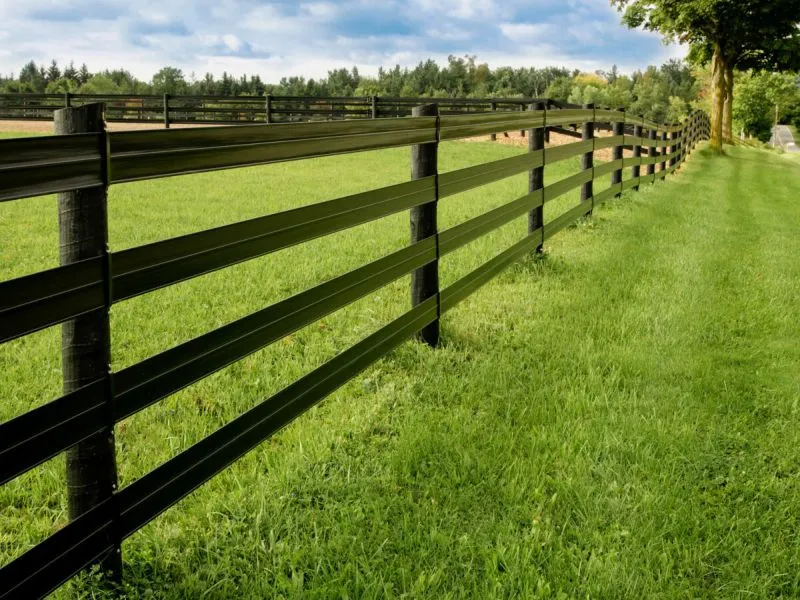
Flex Fence is the leading choice for most Ontario horse paddocks — it is visible, flexible on impact, virtually maintenance-free, and backed by a Lifetime Limited Warranty on the 5.25″ Plus rail. Wire mesh (no-climb) with a Flex or hardwood topline is a strong alternative, particularly for multi-species properties or to help protect against predators.
For stallion paddocks and corrals
Board fencing — white oak or ash on 6″ cedar posts at 8’ centres — is the recommendation for any area where a horse will put significant pressure on the fence. Stallion paddocks, corrals, working yards, and sorting areas all fall into this category.
For riding rings and arena borders
PVC post and rail is the standard choice for riding ring borders in Ontario. The clean white rail is professional, precise, and requires zero maintenance. Two, Three or four rails are typical for riding ring installations. Other option is Pressure Treated board fencing, 2 rail with a flat board on top for sitting on. Add in a board at the sand layer to keep .
For estate driveways and property borders
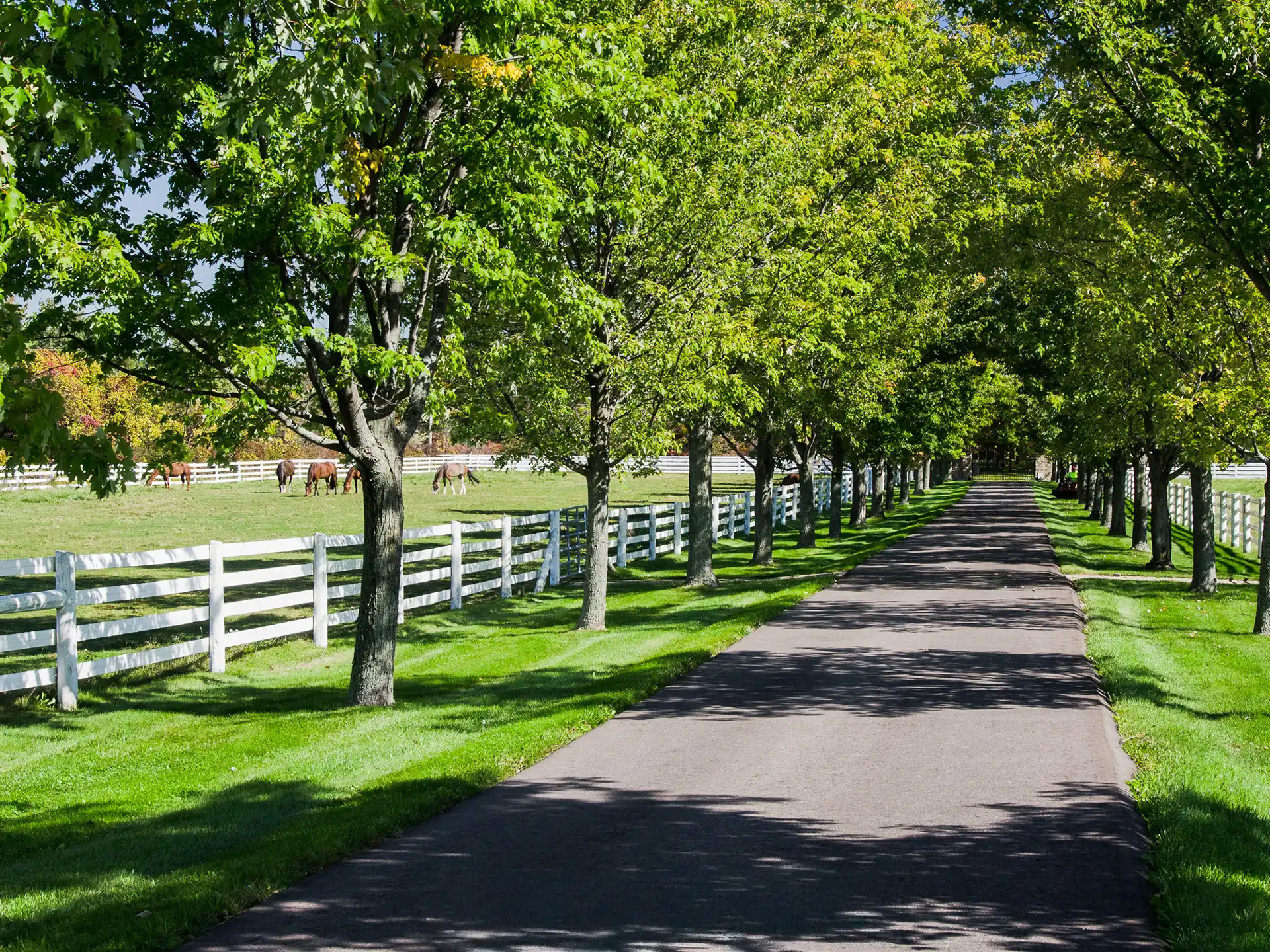
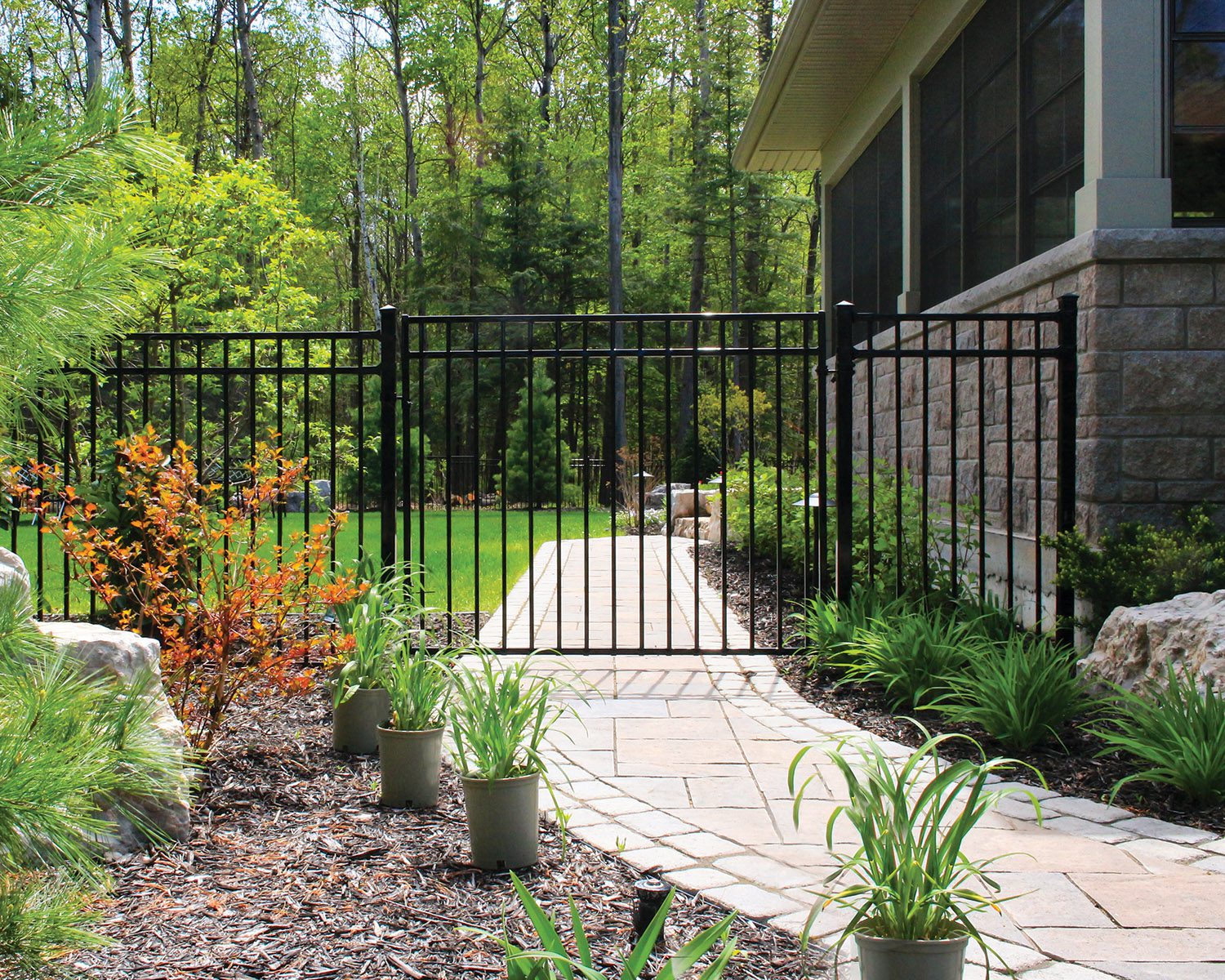
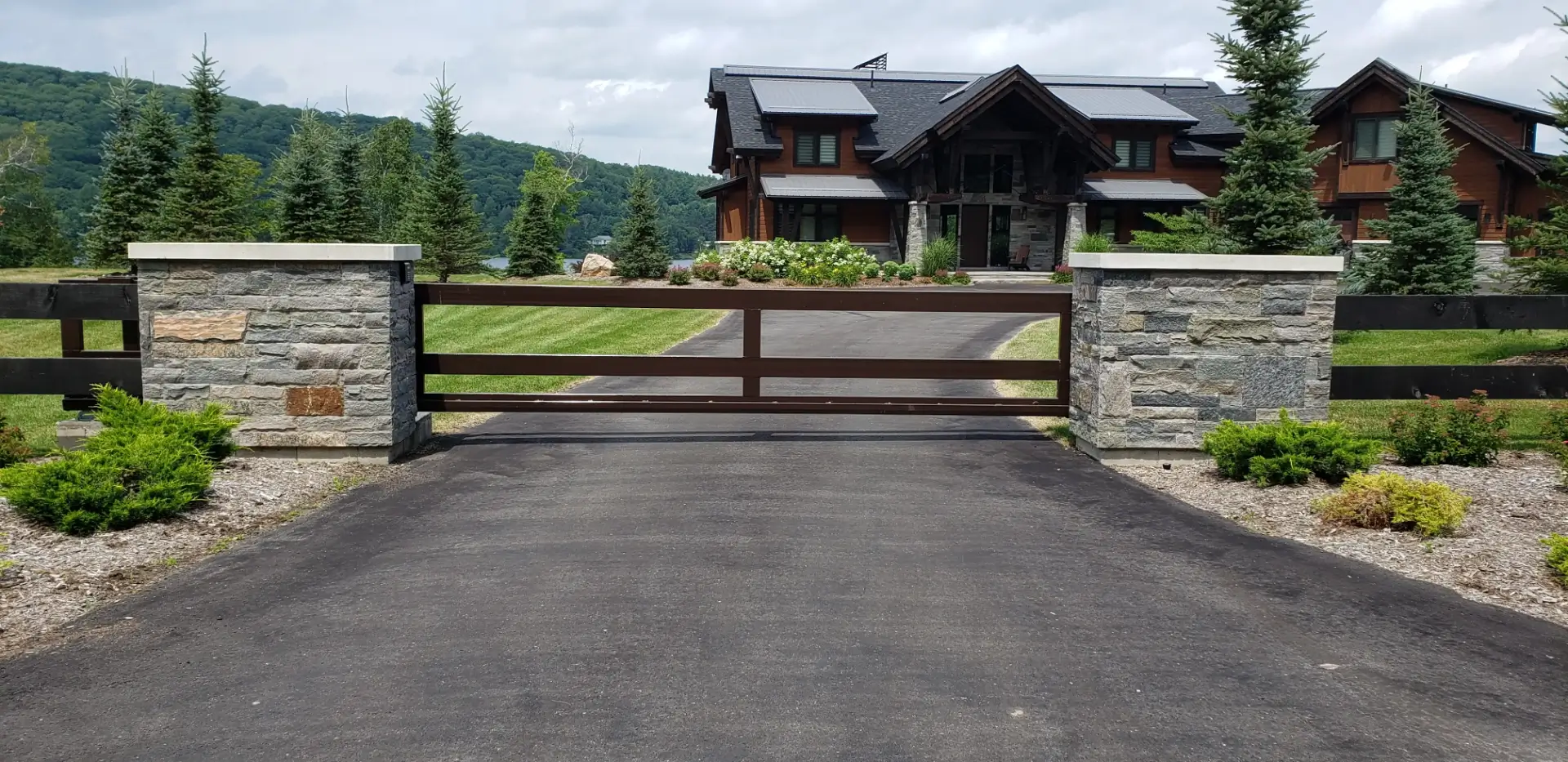
PVC post and rail or modular iron — depending on your aesthetic preference and budget. Both deliver a premium appearance that holds its look for decades. Modular iron coordinates with automated driveway gate systems.
For multi-species properties (horses + sheep, goats, or alpacas)
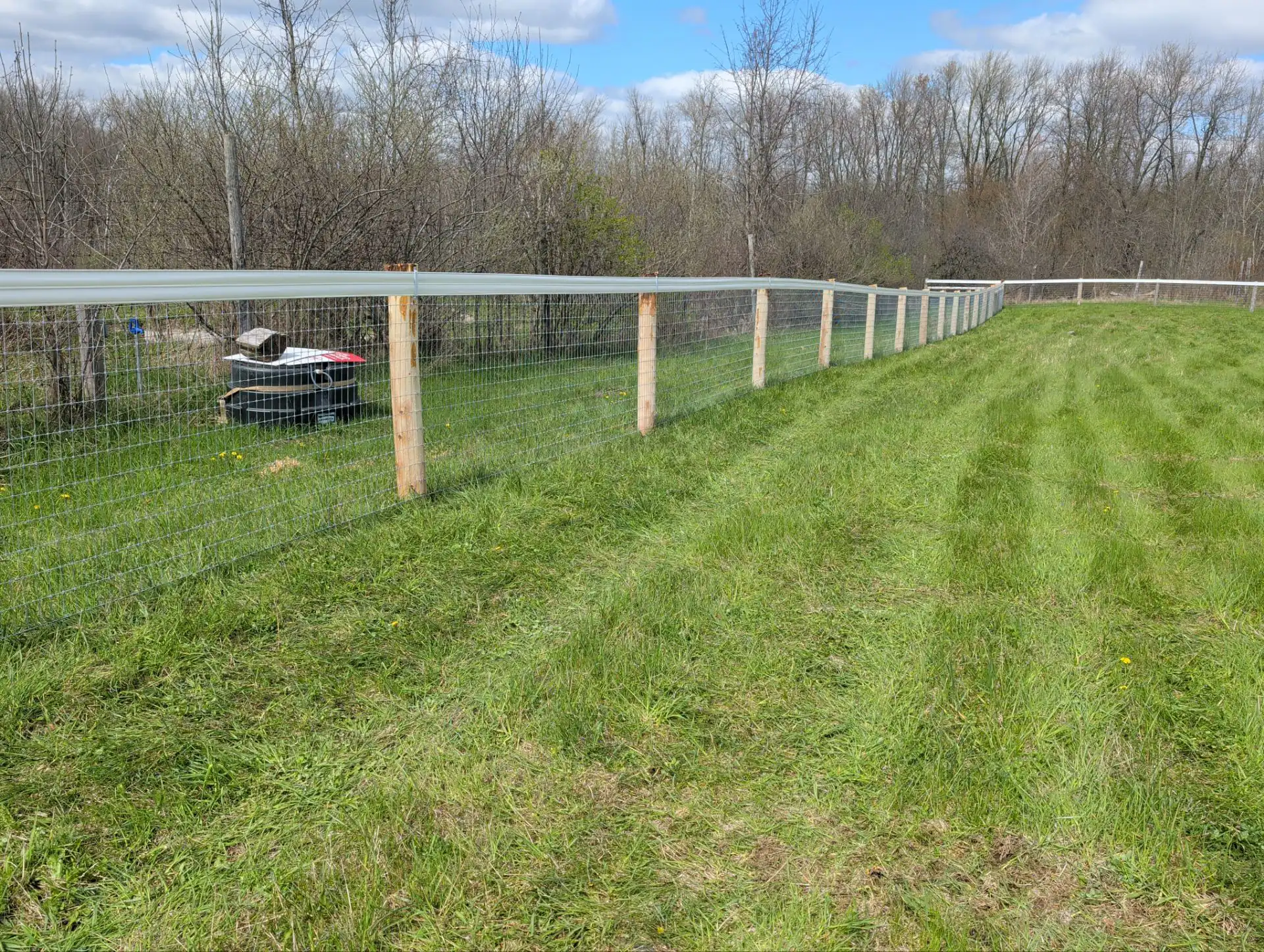
Wire mesh with small openings — fixed-knot in a sheep/goat/alpaca configuration — with a hardwood or Flex topline. The mesh contains the small animals and prevents predator entry; the topline gives horses a visible fence line to respect.
Step 2: Understand the key specifications for horse fencing.
Horse fence specifications are not arbitrary. Post spacing, rail height, rail count, and post diameter all have reasons behind them — grounded in how horses behave around fencing and what it takes to contain them safely.
Fence height — horses
Minimum 48 inches (4 feet) for standard horses; 54-60 inches (5 feet) recommended for warmbloods and large breeds
Fence height — stallions
Minimum 60 inches (5 feet); 66–72 inches preferred for active stallions
Post spacing — Flex Fence
10–12 feet on centre standard
Post spacing — PVC
8 feet on centre — required for 16-foot rails to align correctly
Post spacing — board fence
8 feet on centre on 6″ cedar posts
Post spacing — wire mesh
8–12 feet on centre depending on mesh type and terrain
Post depth
Minimum 3–3.5 feet depending on post height and soil conditions — more depth in sandy or loose soil
Rail count — horses
3 rails minimum for most horses; 4 rails for a more solid visual barrier or for active horses
Rail count — stallions
4 rails minimum; 5 rails for maximum containment
Top rail electrification
Recommended for any shared fence line and for stallion paddocks — one contact rail trains fence respect
Step 3: Compare fence materials for your application.
Each fence material has genuine strengths and genuine limitations. Understanding these helps you make the right choice for each zone of your property — and avoid making an expensive mistake.
Flex Fence
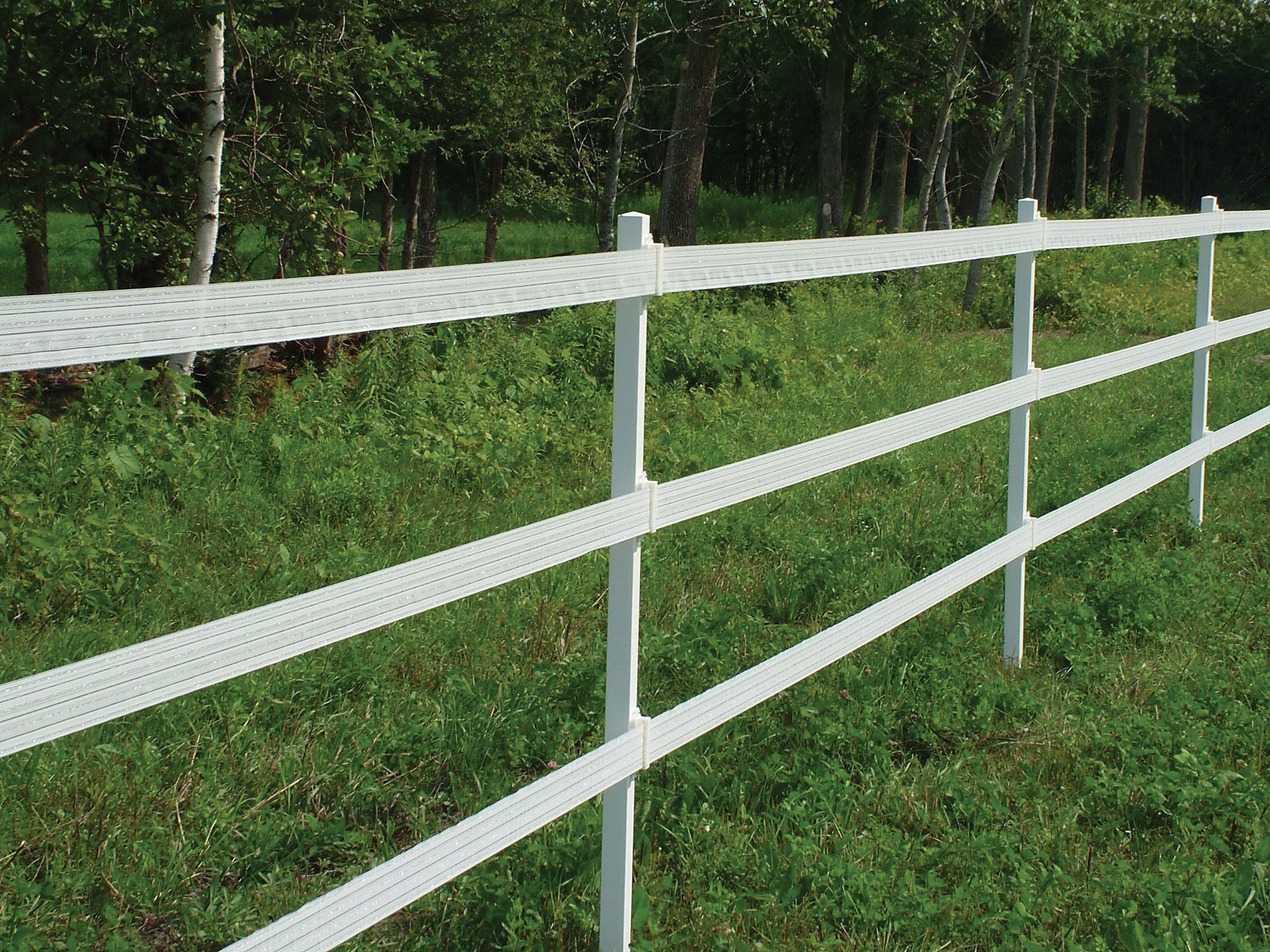
High-tensile wire in polymer rail. Flexes on impact. Highly visible. Virtually no maintenance. Lifetime warranty on 5.25″ Plus. Best all-around horse paddock fence.
PVC post & rail
Rigid polymer post and rail. Premium appearance. Zero maintenance. Lifetime warranty. Not a primary containment fence without electric strands. Best for rings, driveways, borders.
Board fence — white oak
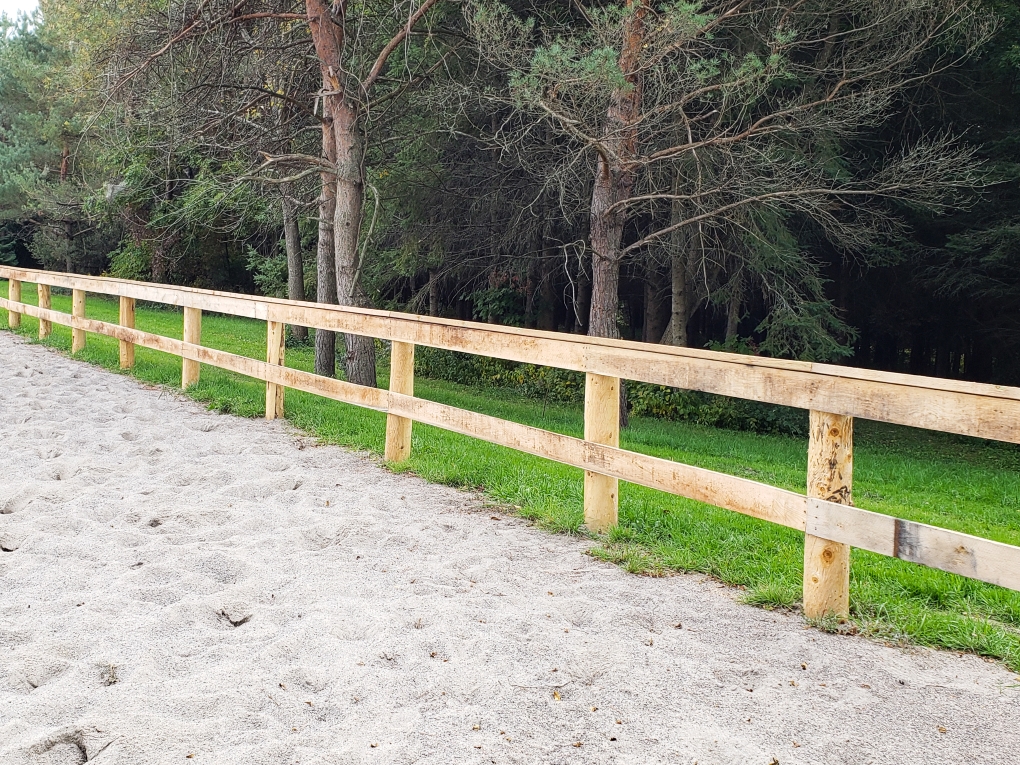
Premium hardwood. Strongest fixed barrier. High visibility. Can be painted or stained. Higher installation cost. Best for stallion paddocks, corrals, show rings.
Board fence — pressure treated
Strong and durable. Good longevity. Can be painted. Uniform, weathers naturally. Not good if you have horses that chew.
No-climb wire mesh
Very safe — hooves cannot pass through. Low profile. Requires hardwood or Flex topline for horse visibility. Good for multi-species. 12’ spacing if used with flex Rail 8’ Spacing for board fencing.
Electric — Shockline
Visible electric rail. Matches Flex Fence appearance. Excellent behaviour management. Must be correctly energized and grounded. Standalone or add-on.
Electric — tape
Easy install, not as much tension on the rail. Good visibility. Can be used as temporary fencing.
Chain link
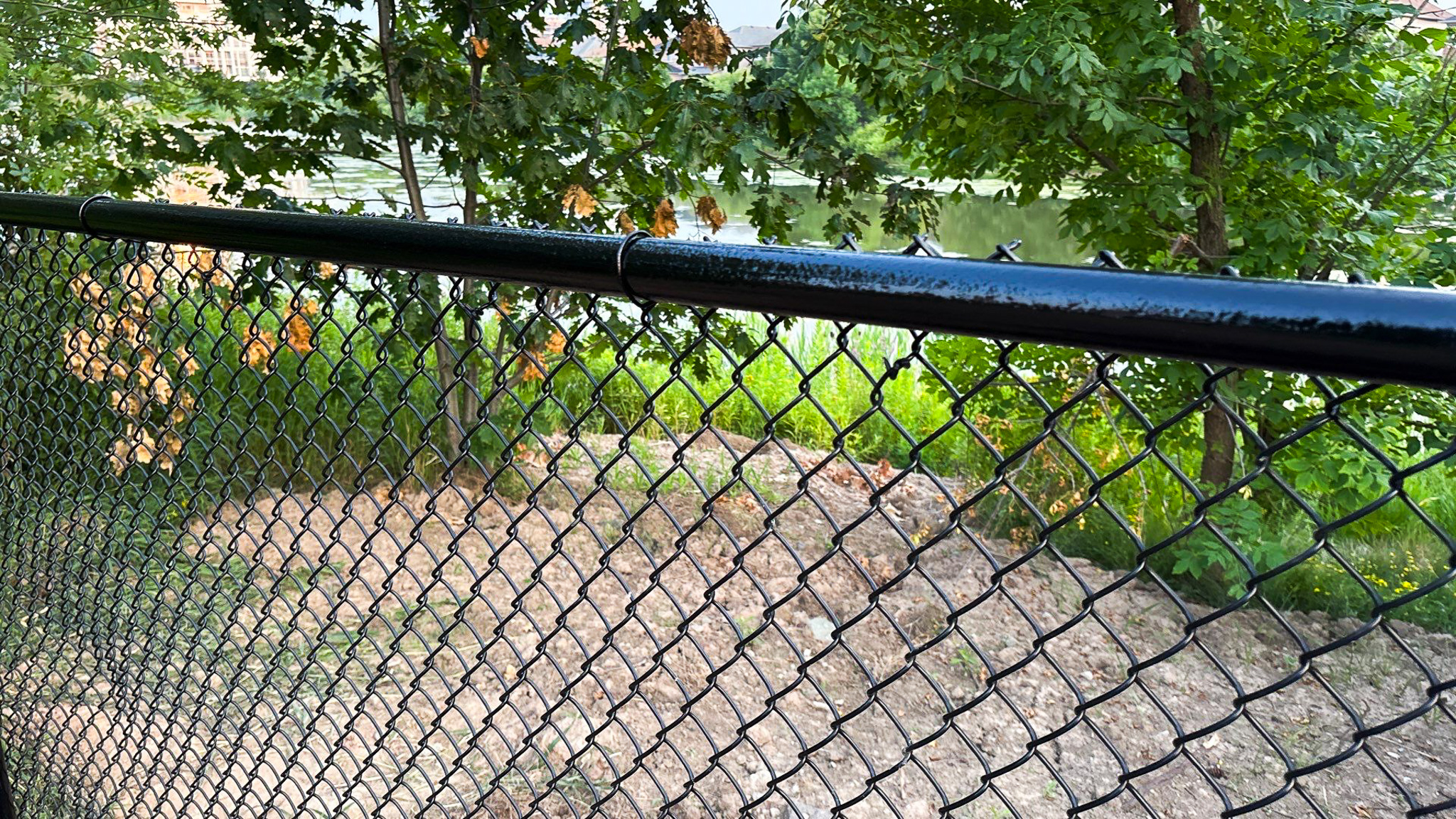
Strong perimeter option. Not ideal as primary horse fence. Best for facility perimeters, dogs, and commercial security.
Step 4: Understand what a professional installation looks like.
The difference between a fence that lasts 40 years and one that needs repairs within three seasons is almost always in the installation — not the product. Here is what a correct horse fence installation involves.
Plan
Measure the fence line, determine post locations, decide on gate positions, and confirm all specifications before any posts go in the ground. Changes are easy on paper. Changes after posts are pounded are expensive.
Posts
Posts pounded plumb and at consistent depth using professional post-pounding equipment — not hand-augered. Consistent depth means consistent frost resistance. Plumb posts mean a straight, professional fence line.
Hardware
All brackets, tensioners, and end hardware installed to manufacturer specification. For Flex Fence, this means the sliding bracket system is installed correctly so the rail can flex on impact. For PVC, it means clips are in place to prevent rail migration.
Rails
Rails installed with correct tension and at the correct heights. For Flex Fence, tensioners are set to manufacturer-specified tension — too loose and the fence looks poor and performs poorly; too tight and the system cannot flex as designed.
Gates
Gates hung level and plumb, with hinge posts sized for the gate weight. A gate that drags on installation day will only get worse. All latches and closures tested before the installation team leaves.
Handoff
Walk the completed fence before the crew leaves. Know what to watch in the first season. Understand your warranty terms and what is and is not covered.
The mistakes that cost Ontario horse property owners the most.
Under-specifying post depth
Ontario’s freeze-thaw cycles are severe. Posts that are not deep enough heave out of the ground in the first few winters and never sit plumb again. The minimum is 3 feet; 4 feet is better in areas with heavy frost penetration or sandy soil.
Choosing the wrong fence type for the zone
Using PVC in a stallion paddock or a corral will cost you significantly more in replacements and repairs than installing board fence or Flex Fence from the start. Match the fence type to the pressure it will be under. This is the most expensive mistake on horse properties.
Under-powering electric fencing
An electric fence energizer that is too small for the fence length and vegetation load will produce a shock that horses quickly learn to ignore. Once horses push through electric fence, they tend to keep doing it. Correct energizer sizing is not optional.
Skipping the topline on wire mesh
Wire mesh without a visible topline is a fence horses regularly do not see until they are running through it, or leaning and bending the top over. A Flex Fence rail, hardwood board, or electric tape at the top of the mesh is a small additional cost that prevents injuries and fence damage.
Under-sizing End, Corner and gate posts
Gate posts that are the same size as line posts are not strong enough for the dynamic load of a gate swinging in the wind or under daily use. For any tension style fencing, needs to be braced, with our installation we use a 6” x 10’ long post for all ends and corners. For steel gates over 14’ a larger 7” post should be used.
DIY on Flex Fence or PVC
Both Flex Fence and PVC require precise post spacing and specific hardware installation to perform correctly and maintain their warranty. Incorrect installation voids the manufacturer warranty. The cost of professional installation is almost always recovered in better performance and longer fence life. We are the Bob Villa of horse fencing.
Frequently Asked Questions
Horse fence planning — common questions
For most horses, 48 inches (4 feet) is the practical minimum for a paddock fence. For warmbloods, large sport horses, and any horse that has demonstrated jumping or fence-testing behaviour, 60 inches (5 feet) is recommended. For stallions, 60–72 inches depending on the individual animal.
Three rails is the minimum for a fence that horses will respect in a normal paddock situation. Four rails provides a more solid visual barrier and is recommended for active horses, horses prone to fence-testing, and all stallion paddocks. The space between rails should not be large enough for a horse to put its head through — entanglement injuries occur when horses reach through fences.
Both are excellent choices. Flex Fence is preferred for most paddock applications because it flexes on impact — reducing injury risk if a horse runs into the fence — and requires virtually no maintenance. Board fence is preferred for high-pressure areas (stallion paddocks, corrals) where the rigid physical barrier is a priority. Many properties use both — Flex Fence for open paddocks and board fence for high-pressure zones.
Some fence types — particularly basic board fence and high-tensile wire — are more DIY-accessible than others. Flex Fence and PVC both require specific hardware installation and post spacing to maintain product warranty and perform correctly. For any installation that involves post pounding, professional equipment is strongly recommended over hand augering for long-term post stability in Ontario conditions.
The most useful preparation is to know your approximate fence line lengths, the number of paddock openings (gates), and the animals you are fencing for. If you can photograph your property from above (Google Maps works well), that gives a starting point for our online planning tools. Our sales team draws and measures your property on screen with you during the first call — you do not need a precise plan before you contact us.
Resources:
Google Earth
Ontario Ag Maps
System Fence Mapping Tool
No-climb wire mesh with a hardwood or Flex topline eliminates the risk of hoof or leg entanglement and has no sharp edges or rigid surfaces at impact. Flex Fence is the second safest — it flexes on impact rather than presenting a rigid barrier. Both are significantly safer than barbed wire (which should never be used for horses) and old-style high-tensile smooth wire without topline visibility.
Ready to go deeper? Explore each fence type in detail.

Ready to get started
Ready to plan your fence? Talk to our team.
Call or email us. We pull up our online planning tools, draw and measure your property on screen with you, and give you a clear cost estimate — often on the first call. No obligation, no pressure.
Port Hope to Windsor • North to Collingwood & Meaford • All of Southern & Central Ontario